



In today’s rapidly evolving digital landscape, the demand for high-speed, reliable, and future-proof communication infrastructure has never been greater. As data centers, enterprise networks, smart buildings, and telecommunications providers push the boundaries of connectivity, fiber optic technology continues to emerge as the backbone of modern information transfer. Among the various configurations available, the 4 pair fiber optic cable stands out as a balanced solution that combines performance, scalability, and cost-efficiency. Designed to support multiple channels of data transmission with minimal signal loss, this cable type is increasingly adopted across industries where bandwidth and reliability are non-negotiable.
A 4 pair fiber optic cable typically refers to a cable assembly containing four duplex fiber pairs—essentially eight individual optical fibers—encased in a protective sheath. Each pair consists of one fiber for transmitting data and another for receiving, enabling full-duplex communication. These cables are commonly constructed using single-mode or multimode fiber, depending on the application’s distance and bandwidth requirements. Single-mode fibers are ideal for long-haul transmissions, such as between cities or across large campuses, due to their ability to carry signals over tens of kilometers with minimal attenuation. Multimode variants, on the other hand, are better suited for shorter distances within data centers or office complexes, offering high bandwidth at a lower cost.
One of the primary advantages of a 4 pair fiber optic cable is its scalability. Unlike traditional copper cabling, which faces limitations in bandwidth and susceptibility to electromagnetic interference, fiber optics provide a clean, interference-free medium capable of supporting current and next-generation network speeds. Whether deploying 10 Gigabit Ethernet, 40G, or even 100G networks, a 4 pair configuration ensures sufficient capacity for parallel data streams, link aggregation, or redundancy. This makes it an excellent choice for backbone connections, inter-switch links, and structured cabling systems where future expansion is anticipated.
Moreover, the physical design of a 4 pair fiber optic cable enhances durability and ease of installation. Most variants come with robust jackets made from materials like LSZH (Low Smoke Zero Halogen) or PVC, providing resistance to fire, moisture, and mechanical stress. Many also feature reinforced strength members such as aramid yarn (Kevlar), which protect the delicate glass fibers from tension and bending during pulling and routing. The compact size of these cables allows for efficient use of conduit space, reducing clutter in crowded pathways and simplifying cable management—an essential consideration in densely populated network environments.
Another key benefit lies in signal integrity. Fiber optic cables transmit data using pulses of light rather than electrical signals, eliminating issues related to crosstalk, grounding, and electromagnetic interference. This ensures consistent performance even in electrically noisy environments, such as industrial facilities or near high-voltage equipment. Additionally, because fiber is immune to radio frequency interference (RFI), it provides secure and stable transmission for sensitive applications in healthcare, finance, and government sectors.

The deployment of a 4 pair fiber optic cable also supports energy efficiency and sustainability goals. Compared to copper-based systems, fiber requires less power to transmit data over long distances, reducing the overall energy footprint of network operations. Its longevity further contributes to sustainability; fiber optic cables have a typical lifespan exceeding 25 years, minimizing the need for frequent replacements and associated electronic waste.
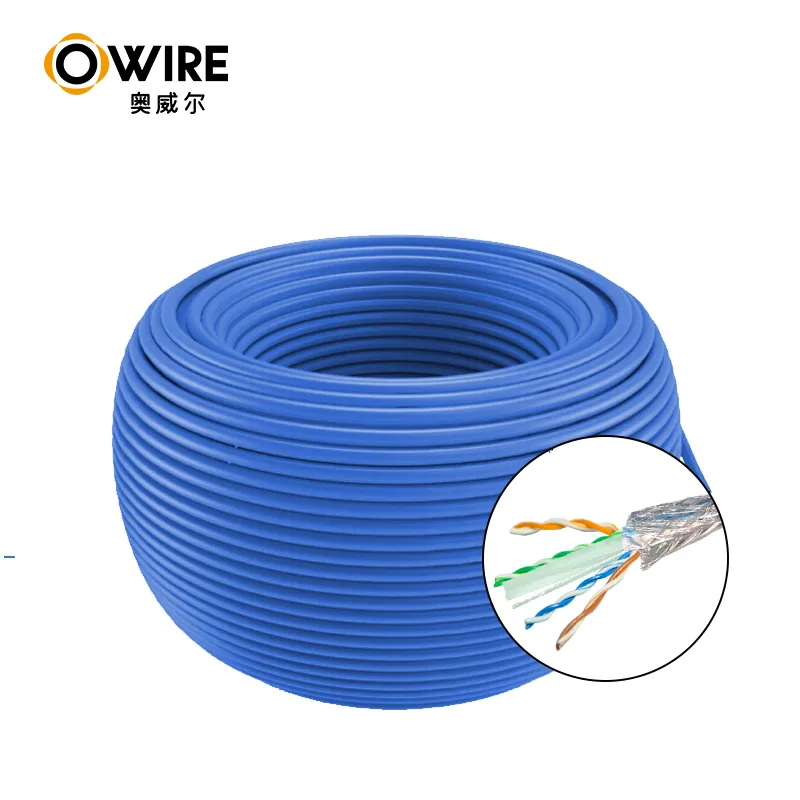
When selecting a 4 pair fiber optic cable, quality and consistency are paramount. Not all cables perform equally, and factors such as core alignment, connector polish, and jacket material can significantly impact performance. This is where trusted brands like OWIRE distinguish themselves in the market. OWIRE has built a reputation for delivering high-performance fiber optic solutions engineered to meet international standards and real-world demands. Their 4 pair fiber optic cables are manufactured with precision, using premium-grade glass and advanced coating technologies to ensure low insertion loss and high return loss.
OWIRE offers both single-mode and multimode variants of the 4 pair fiber optic cable, catering to diverse networking needs. Their products are rigorously tested for compliance with TIA/EIA and ISO/IEC standards, guaranteeing compatibility with mainstream networking hardware. Whether you’re setting up a new data center, upgrading an enterprise LAN, or expanding a telecom network, OWIRE provides dependable connectivity with minimal downtime risk.
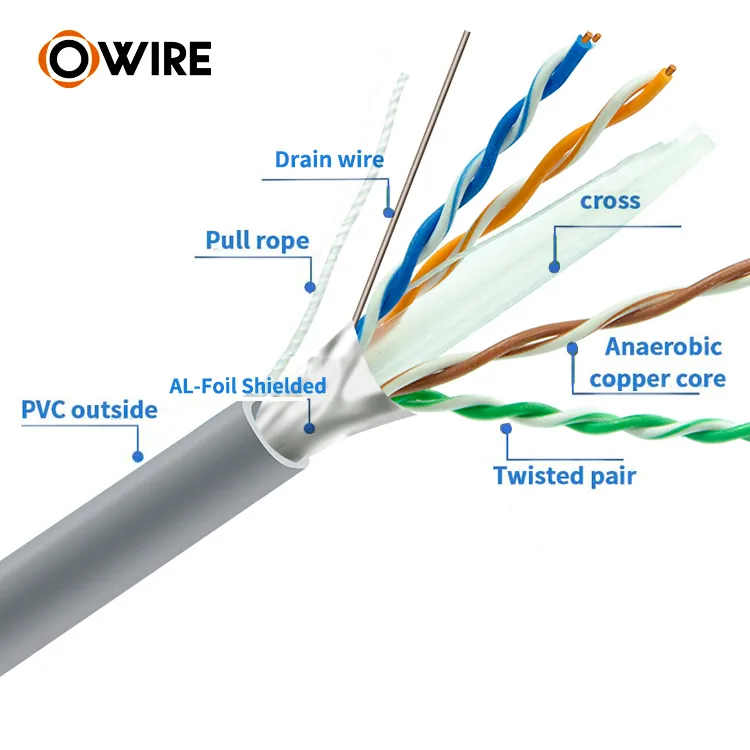
What sets OWIRE apart is not just product quality but also versatility and customer focus. Their 4 pair fiber optic cables are available in various lengths, connector types (such as LC, SC, or MTP), and jacket ratings (including plenum, riser, and outdoor), allowing seamless integration into different environments. For instance, their plenum-rated cables meet strict fire safety codes required in commercial buildings, while ruggedized outdoor versions withstand harsh weather conditions and UV exposure. Furthermore, OWIRE supports custom configurations, enabling organizations to tailor solutions based on specific architectural or operational constraints.
Installation and maintenance are also simplified with OWIRE’s design philosophy. Their connectors feature intuitive plug-and-play mechanisms, reducing the time and skill required for termination. Color-coded boots and labeled bootstraps help technicians identify polarity and fiber types quickly, minimizing human error during deployment. The company also provides comprehensive technical documentation and responsive customer service, ensuring users have access to expert guidance when needed.
Beyond hardware, OWIRE emphasizes lifecycle support. They offer warranties that reflect confidence in product durability, along with resources for troubleshooting and best practices in fiber handling. For IT managers and network engineers, this translates into reduced total cost of ownership and peace of mind knowing that critical infrastructure components are backed by a reliable manufacturer.
In practical applications, the 4 pair fiber optic cable proves invaluable. In educational institutions, it enables seamless streaming of high-definition content across classrooms and supports cloud-based learning platforms. Hospitals rely on it for transferring large medical imaging files—like MRIs and CT scans—instantly between departments without latency. Financial firms use it to maintain low-latency trading networks where milliseconds matter. Even in smart city projects, fiber forms the invisible highway connecting surveillance systems, traffic controls, and public Wi-Fi hotspots.
As we move toward technologies like 5G, IoT, and edge computing, the role of robust fiber infrastructure becomes even more critical. A 4 pair fiber optic cable offers the right balance of capacity and flexibility to serve as a foundational element in these emerging ecosystems. It supports not only current network loads but also prepares organizations for exponential data growth driven by AI, machine learning, and augmented reality applications.
In conclusion, the 4 pair fiber optic cable represents a smart investment for any organization committed to high-performance networking. Its combination of speed, reliability, and future-readiness makes it a superior alternative to outdated copper systems and a cornerstone of modern digital infrastructure. When sourcing such cables, choosing a reputable brand like OWIRE ensures that performance, safety, and longevity are never compromised. With OWIRE’s commitment to innovation and quality, businesses can deploy their fiber networks confidently, knowing they are equipped to handle today’s demands and tomorrow’s challenges. As connectivity continues to define progress, embracing advanced solutions like the 4 pair fiber optic cable is not just an option—it’s a necessity.