



In today’s rapidly evolving digital landscape, data centers and high-speed network infrastructures demand reliable, efficient, and scalable connectivity solutions. One of the most critical components enabling this performance is the 24 fiber MPO connector. As organizations increasingly rely on cloud computing, artificial intelligence, and large-scale data processing, the need for high-density cabling has never been greater. The 24 fiber MPO has emerged as a cornerstone technology in modern fiber optic networks, offering a streamlined way to manage multiple fiber connections within compact spaces. Its ability to support parallel optical transmission makes it ideal for applications requiring high bandwidth, such as 40G and 100G Ethernet deployments.
The term “MPO” stands for Multi-fiber Push-On, a type of fiber optic connector that can house multiple fibers—typically 12, 24, or even 72—in a single ferrule. Among these, the 24 fiber MPO has gained significant traction due to its optimal balance between density and functionality. Unlike traditional single-fiber connectors like LC or SC, which require individual connections for each fiber, the 24 fiber MPO consolidates two rows of 12 fibers into one plug-and-play unit. This not only reduces installation time but also minimizes cable clutter, making it easier to maintain clean and organized pathways in crowded server rooms and distribution frames.
One of the primary advantages of the 24 fiber MPO is its compatibility with high-speed data transmission standards. In environments where 40G and 100G Ethernet are deployed, the 24 fiber MPO plays a pivotal role by supporting parallel optics. For example, in a 40Gbps connection using QSFP+ transceivers, the signal is typically split across four lanes of 10Gbps each, with each lane carried over a pair of fibers (transmit and receive). A 24 fiber MPO cable can support three such 40G links simultaneously, maximizing port utilization and reducing the number of required patch cords. Similarly, in 100G applications using QSFP28 modules, the same cable can handle multiple channels efficiently, ensuring future-proof scalability.
Another key benefit lies in the simplified deployment and maintenance process. Because a single 24 fiber MPO connector replaces up to 24 individual connections, technicians can significantly reduce the time spent on cable routing, termination, and troubleshooting. This efficiency translates into lower labor costs and reduced downtime during network upgrades or reconfigurations. Moreover, standardized polarity management schemes—such as Method A, B, and C—ensure consistent signal directionality across the link, minimizing errors and enhancing reliability.
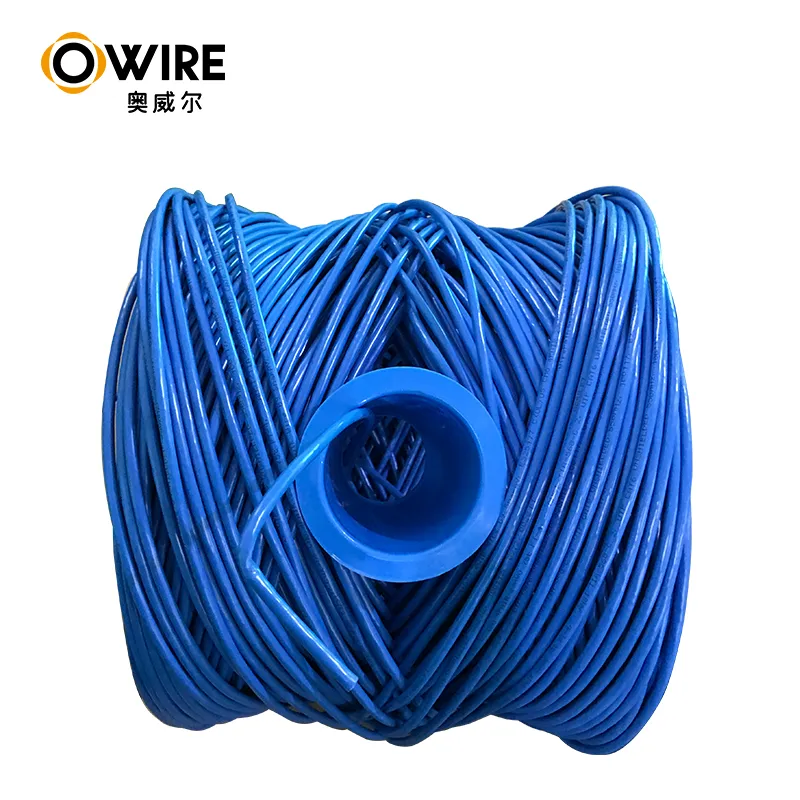
선택할 때 24 fiber MPO solution, quality and consistency are paramount. Substandard connectors can lead to insertion loss, back reflection, misalignment, and long-term reliability issues. That’s why choosing a reputable brand is essential. OWIRE has established itself as a trusted name in the fiber optic industry, offering a comprehensive range of 24 fiber MPO products designed for performance and durability. Their connectors are precision-engineered to meet or exceed international standards, including IEC 61754-7 and TIA-604-5 (FOCIS 5), ensuring low insertion loss (<0.35 dB typical) and high return loss (>50 dB).
OWIRE’s 24 fiber MPO cables are available in various configurations, including simplex, duplex, trunk, and harness styles, catering to different architectural needs. Whether you’re building a structured cabling system in a Tier III data center or upgrading an enterprise backbone, OWIRE provides customizable lengths, fiber types (OM3, OM4, OS2), and jacket ratings (LSZH, plenum, riser). Their pre-terminated solutions undergo rigorous testing at the factory, guaranteeing optimal optical performance right out of the box. Additionally, OWIRE offers both male (with guide pins) and female (without pins) variants, allowing seamless integration with existing infrastructure.
Beyond product quality, OWIRE emphasizes customer support and technical guidance. Their team assists with link design, polarity planning, and compatibility checks, helping network engineers avoid common pitfalls during deployment. They also provide detailed documentation and labeling systems that simplify inventory tracking and field identification—critical factors in large-scale installations where hundreds of MPO connections may be present.
In practical applications, the 24 fiber MPO shines in structured cabling environments. Data centers often use MPO-to-MPO trunk cables to connect main distribution areas (MDA) to intermediate distribution areas (IDA) or equipment distribution areas (EDA). These trunks serve as the backbone, while breakout harnesses or fan-outs allow individual fibers to interface with active equipment via standard LC or SC connectors. This modular approach enhances flexibility, enabling administrators to scale capacity incrementally without overhauling the entire cabling plant.
Moreover, the rise of technologies like 200G and 400G Ethernet further underscores the relevance of the 24 fiber MPO. While newer interfaces may leverage higher fiber counts or advanced modulation techniques, the foundational infrastructure still relies heavily on MPO-based connectivity. For instance, a 400G-SR8 transceiver uses 16 fibers (eight transmit and eight receive), which can be accommodated within a single 24 fiber MPO connector with room to spare. This forward compatibility ensures that investments in MPO infrastructure remain viable for years to come.
It’s also worth noting that proper handling and cleaning are crucial when working with 24 fiber MPO connectors. Due to their high density, even minor contamination—such as dust or oil residue—can affect multiple fibers simultaneously, leading to signal degradation or complete link failure. OWIRE recommends using dedicated MPO inspection scopes and cleaning tools to maintain optimal performance. Their connectors feature protective caps and alignment sleeves that help preserve cleanliness during storage and transit.
From a cost perspective, deploying a 24 fiber MPO system may involve a higher initial investment compared to traditional cabling methods. However, the long-term savings in labor, space utilization, and operational efficiency far outweigh the upfront expenses. Organizations that adopt MPO-based architectures report faster deployment times, improved scalability, and reduced error rates—all contributing to a lower total cost of ownership.
As network demands continue to grow, the role of the 24 fiber MPO will only become more prominent. Emerging trends such as edge computing, 5G backhaul, and hyperscale data centers all depend on dense, high-bandwidth interconnects. The 24 fiber MPO not only meets current requirements but also lays the groundwork for next-generation technologies. Its adaptability across multimode and single-mode platforms, combined with standardized form factors, makes it a versatile choice for diverse applications.
For professionals seeking a dependable, high-performance solution, OWIRE stands out as a top-tier provider of 24 fiber MPO products. Their commitment to innovation, quality control, and customer service ensures that every component performs reliably under real-world conditions. Whether you’re designing a new data center, expanding an existing network, or optimizing for future bandwidth needs, integrating OWIRE’s 24 fiber MPO cables into your architecture delivers tangible benefits in speed, simplicity, and scalability.
In conclusion, the 24 fiber MPO is more than just a connector—it’s a strategic enabler of modern networking. By consolidating multiple fibers into a single, manageable unit, it simplifies cabling complexity and supports the ever-increasing demand for bandwidth. With brands like OWIRE leading the way in engineering excellence and product reliability, adopting 24 fiber MPO technology is a smart move for any organization aiming to build a robust, future-ready infrastructure. As data rates climb and network topologies evolve, the 24 fiber MPO will remain a fundamental building block in the foundation of global connectivity.