



Fiber optic technology has become a cornerstone of modern communication systems, enabling high-speed data transfer over long distances with minimal signal loss. One of the essential components in fiber optic networks is the fiber optic splitter, a passive device that divides an optical signal into multiple paths. Among the various types of splitters available, the **1×8 fiber optic splitter** plays a particularly important role in distributing optical signals efficiently across multiple endpoints.
The **1×8 fiber optic splitter** is designed to take a single optical input and split it into eight separate output signals. This makes it ideal for use in fiber-to-the-home (FTTH) networks, local area networks (LANs), and other telecommunications applications where one signal needs to be distributed to multiple users or devices. Unlike active optical components that require power, splitters are passive devices, which means they do not require external energy to function. This makes them highly reliable and cost-effective for network operators.
The internal structure of a **1×8 fiber optic splitter** typically uses either fused biconical taper (FBT) technology or planar lightwave circuit (PLC) technology. FBT splitters are often used in smaller-scale applications and are known for their cost-effectiveness. However, PLC splitters, which are fabricated using semiconductor technology, offer superior performance in terms of uniformity, reliability, and scalability. For applications requiring precise signal distribution and minimal loss, the PLC-based **1×8 fiber optic splitter** is generally preferred.
One of the main advantages of the **1×8 fiber optic splitter** is its ability to maintain signal integrity while distributing the optical signal across multiple channels. This is particularly important in high-speed data networks where signal degradation can lead to reduced performance and user dissatisfaction. The device ensures that each of the eight output channels receives a consistent and usable signal strength, allowing for stable and efficient communication.
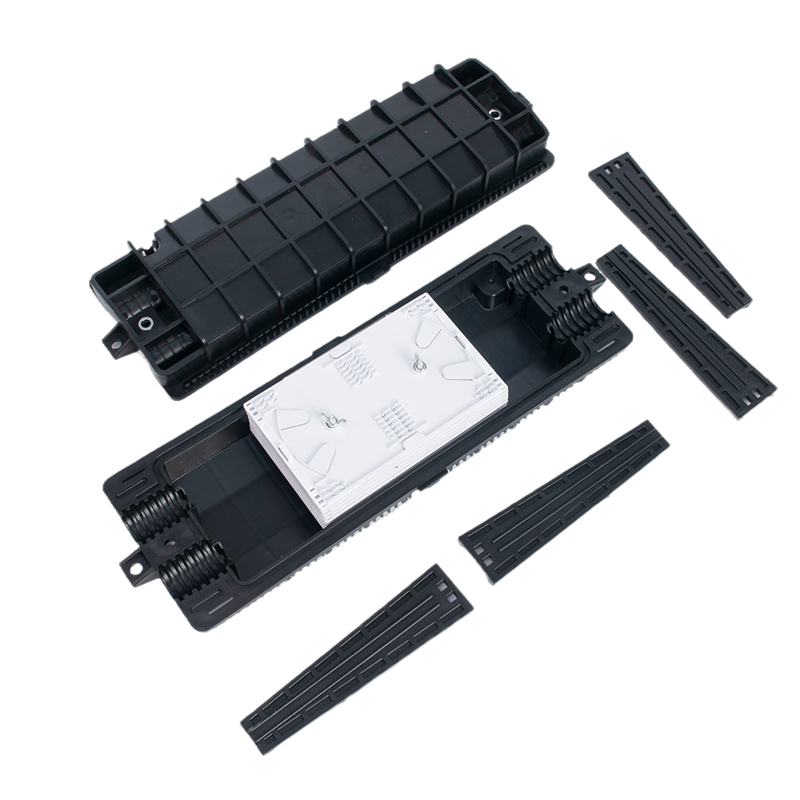
In practical deployments, the **1×8 fiber optic splitter** is often housed in a compact and durable casing that protects the delicate optical components from environmental factors such as moisture, dust, and mechanical stress. These enclosures come in various forms, including box-type, tray-type, and rack-mountable units, allowing for easy integration into different network architectures. Whether installed in a central office, a fiber distribution hub, or a customer premises, the splitter provides a reliable and scalable solution for expanding network coverage.
When selecting a **1×8 fiber optic splitter**, it’s important to consider factors such as insertion loss, uniformity, and return loss. Insertion loss refers to the amount of signal loss that occurs as the light passes through the splitter. Lower insertion loss is always preferable, as it ensures that the output signals remain strong enough for effective communication. Uniformity, on the other hand, measures how evenly the signal is distributed among the output ports. High uniformity ensures consistent performance across all connected devices.
Another key consideration is the brand and quality of the splitter. In this regard, **OWIRE** has established itself as a trusted name in the fiber optic industry. Known for producing high-quality optical components, OWIRE offers a range of **1×8 fiber optic splitters** that combine superior performance with robust design. Their splitters are built using advanced PLC technology and are engineered to meet international standards for optical performance and reliability. Whether you’re deploying a small-scale network or a large FTTH system, choosing an OWIRE splitter ensures that your infrastructure is built on a solid foundation.
OWIRE’s **1×8 fiber optic splitter** models are designed to support a wide range of wavelengths, making them compatible with various optical communication systems. They are also equipped with high-quality fiber pigtails that ensure seamless integration with existing network cables. Additionally, OWIRE provides comprehensive technical support and product documentation, helping users make informed decisions and ensuring smooth installation and operation.
In conclusion, the **1×8 fiber optic splitter** is an essential component in modern fiber optic networks, enabling efficient signal distribution to multiple endpoints. Whether used in residential broadband deployments, enterprise networks, or backbone infrastructure, it offers a reliable and cost-effective way to expand network capacity. When choosing a splitter, selecting a reputable brand like **OWIRE** ensures that you receive a product that meets the highest standards of quality and performance. As fiber optic networks continue to evolve and expand, the role of devices like the **1×8 fiber optic splitter** will only become more critical in supporting the ever-growing demand for high-speed connectivity.