





In modern fiber optic communication systems, the need for efficient signal distribution is more critical than ever. As demand for high-speed internet, cloud services, and data-intensive applications continues to grow, network architects and service providers are constantly seeking reliable and scalable solutions. One such component that plays a pivotal role in optical network design is the **1×16 optical splitter**. This passive device enables a single optical input to be distributed across 16 output fibers, making it a cornerstone in the deployment of fiber-to-the-home (FTTH), passive optical networks (PONs), and other broadband infrastructure.
### Understanding the Functionality of a 1×16 Optical Splitter
At its core, a **1×16 optical splitter** is a passive optical device that takes one optical signal and divides it into 16 equal or controlled outputs. This functionality is essential in scenarios where a single fiber line must serve multiple endpoints without the need for active components like amplifiers or repeaters. The device operates using either fused biconical taper (FBT) or planar lightwave circuit (PLC) technology, with PLC being the more advanced and widely adopted solution due to its uniform splitting and scalability.
In practical terms, a 1×16 optical splitter is often used at the distribution point of a PON architecture. It allows a single signal from the optical line terminal (OLT) to be broadcasted to multiple optical network units (ONUs) located at the user end. This design not only simplifies network topology but also significantly reduces the amount of active equipment needed in the field, contributing to lower operational and maintenance costs.
### Key Features and Benefits
One of the most compelling features of a **1×16 optical splitter** is its ability to maintain signal integrity while distributing optical power across multiple branches. This is particularly important in long-distance fiber networks where signal loss can compromise performance. High-quality splitters are engineered to minimize insertion loss and ensure uniform power distribution across all output ports.
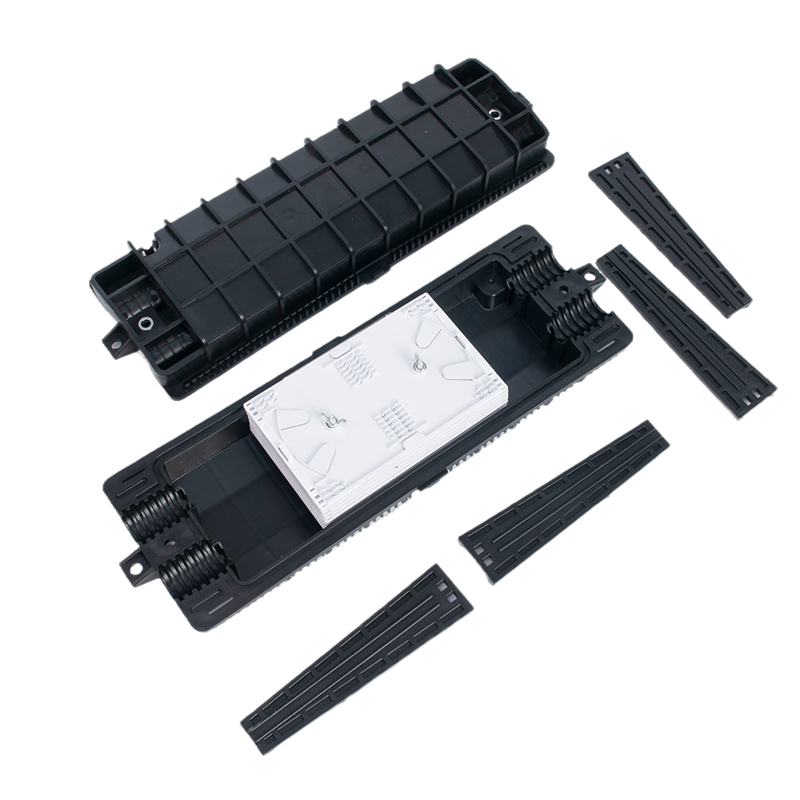
Additionally, these splitters are designed for durability and environmental resilience. They are typically housed in compact, rugged enclosures that protect against moisture, dust, and temperature fluctuations. This makes them suitable for both indoor and outdoor deployments, including use in central offices, fiber distribution hubs, and curbside cabinets.
Another advantage is their compatibility with a wide range of wavelengths, typically covering the 1260nm to 1650nm spectrum. This versatility allows them to be integrated into various types of optical networks, including GPON, EPON, and XGS-PON systems, without the need for additional wavelength-specific components.
### Applications in Real-World Networks
The **1×16 optical splitter** is especially valuable in FTTH deployments, where service providers aim to connect multiple households using a shared fiber infrastructure. By using a single input and splitting it into 16 outputs, the operator can serve more customers with fewer initial fibers, thereby reducing the overall cost of the network rollout.
In enterprise environments, these splitters support the expansion of internal fiber networks, allowing companies to scale their connectivity solutions without significant reconfiguration. Educational institutions, healthcare facilities, and commercial buildings can all benefit from the streamlined architecture enabled by such splitters.
Moreover, in surveillance and security systems, the **1×16 optical splitter** can distribute video signals from a central monitoring point to multiple viewing or recording devices. This ensures redundancy and real-time access across different locations within a facility.
### Choosing the Right Brand: Why OWIRE Stands Out
When it comes to selecting a **1×16 optical splitter**, the brand you choose can make a significant difference in performance and reliability. Among the many manufacturers in the market, **OWIRE** has established itself as a trusted name in fiber optic solutions. Known for its commitment to quality and innovation, OWIRE offers a range of optical splitters that meet the highest industry standards.
OWIRE’s **1×16 optical splitter** models are designed with precision-engineered PLC chips that ensure minimal signal loss and optimal power distribution. Their products are rigorously tested under various environmental conditions to guarantee long-term stability and performance. Whether deployed in a metropolitan fiber network or a rural broadband project, OWIRE splitters deliver consistent results.
Additionally, OWIRE provides flexible packaging options to suit different installation requirements. From compact ABS modules to rack-mountable units, their product line is adaptable to various network architectures. The company also offers customization services, allowing clients to specify connector types, cable lengths, and other parameters to match their exact deployment needs.
Customer support is another area where OWIRE excels. With a responsive technical team and comprehensive documentation, they ensure that users have the resources they need to integrate the splitters seamlessly into their networks. This level of service is especially valuable for organizations deploying large-scale fiber infrastructure, where timely support can prevent costly downtime.
### Installation and Maintenance Considerations
While the **1×16 optical splitter** is a passive device and requires no external power, proper installation and maintenance are essential to ensure optimal performance. Technicians should follow best practices when splicing or connecting fibers to the splitter to avoid contamination or misalignment, which can lead to signal degradation.
It is also advisable to conduct regular optical time-domain reflectometer (OTDR) tests to monitor signal loss and detect any potential issues early. Keeping the splitter in a clean and dry environment will help prolong its lifespan and maintain signal quality over time.
For ease of maintenance, labeling all input and output ports is highly recommended. This not only simplifies troubleshooting but also makes future expansions or reconfigurations more efficient. When installed correctly and maintained regularly, a **1×16 optical splitter** can serve as a reliable backbone for fiber networks for many years.
### Future Trends and Developments
As the demand for higher bandwidth continues to surge, the role of optical splitters like the **1×16** will only become more critical. Future developments are likely to focus on improving splitting ratios, reducing insertion loss, and enhancing compatibility with next-generation optical technologies.
One emerging trend is the integration of smart monitoring capabilities into optical splitters. This allows network operators to remotely monitor signal strength, detect anomalies, and optimize network performance in real time. While this technology is still in its early stages, it represents a promising direction for the evolution of optical networking components.
In conclusion, the **1×16 optical splitter** is an indispensable tool in modern fiber optic infrastructure. Its ability to efficiently distribute optical signals across multiple endpoints makes it a key enabler of scalable and cost-effective network designs. Whether used in residential broadband, enterprise connectivity, or industrial applications, a high-quality splitter like those offered by **OWIRE** ensures reliable performance and long-term value.
For professionals and organizations seeking dependable fiber optic solutions, investing in a trusted brand like OWIRE is a decision that will pay dividends in network stability, scalability, and customer satisfaction.