
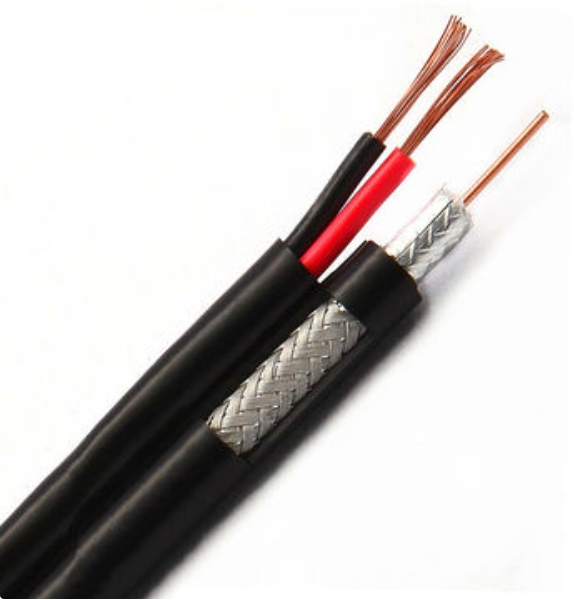
In today’s fast-evolving digital landscape, the demand for reliable and cost-effective networking solutions continues to grow. As homes and businesses alike seek ways to extend connectivity without the complexity or expense of traditional cabling, innovative technologies are emerging to meet these needs. One such solution gaining traction is 2 wire ethernet, a method that simplifies network deployment by utilizing just two wires to transmit data across distances where standard Ethernet would otherwise require four pairs. This approach not only reduces material costs but also streamlines installation in retrofit scenarios, making it an attractive option for both residential and commercial applications.
The concept behind 2 wire ethernet revolves around maximizing efficiency in data transmission using minimal physical infrastructure. Traditional Ethernet standards like Cat5e or Cat6 rely on four twisted pairs—eight wires—to carry data signals at high speeds. However, in many cases, especially over shorter distances or when lower bandwidth is acceptable, all eight wires aren’t strictly necessary. 2 wire ethernet leverages this fact by transmitting data across just two conductors, effectively halving the required copper while still maintaining functional network performance. This makes it particularly useful in situations where existing wiring is limited or upgrading cabling is impractical.
One of the primary advantages of 2 wire ethernet is its compatibility with legacy systems. In older buildings, installing new network cables can be disruptive and expensive. Running thick bundles of Cat6 through walls, ceilings, and floors often involves significant labor and structural modifications. With 2 wire ethernet, installers can repurpose existing telephone lines, speaker wires, or even doorbell circuits—many of which already have two-conductor wiring—to carry network traffic. This not only saves time and money but also preserves the integrity of historical structures where invasive renovations are undesirable.
นอกจากนี้ 2 wire ethernet supports point-to-point connections ideal for specific use cases such as connecting surveillance cameras, access control systems, or remote sensors. For example, security professionals deploying IP cameras in hard-to-reach locations may find it cumbersome to run full Ethernet cables from each device back to a central switch. By using 2 wire ethernet adapters, they can transmit video and power (in some configurations) over a single pair, reducing clutter and simplifying maintenance. The technology is especially effective when paired with Power over Ethernet (PoE) variants that deliver both data and electrical power over the same two-wire line.
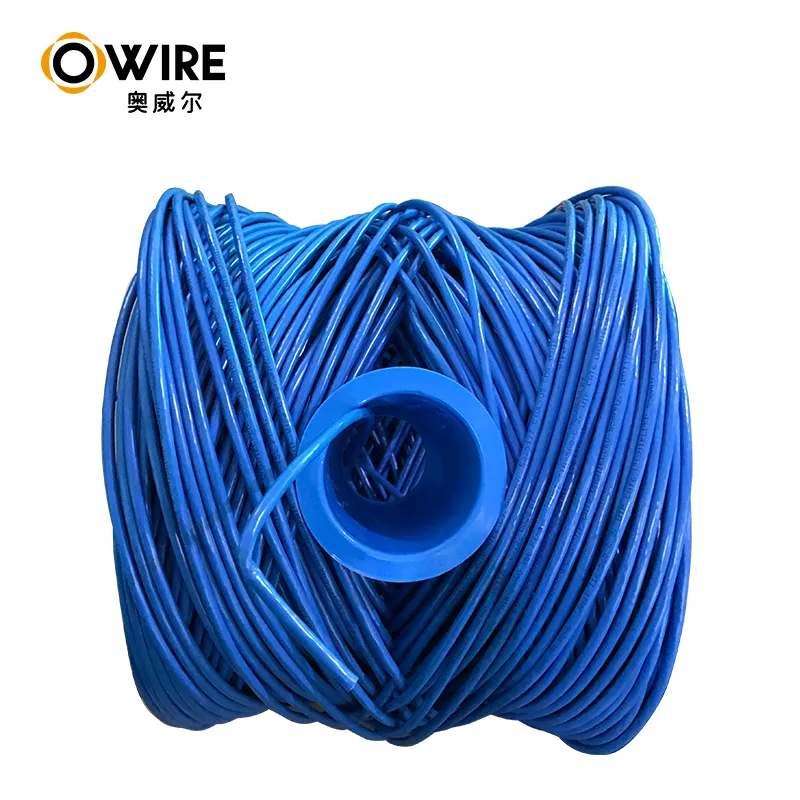
Performance-wise, 2 wire ethernet typically operates at speeds suitable for basic networking tasks—ranging from 10 Mbps to 100 Mbps depending on the implementation and distance. While this doesn’t match the gigabit capabilities of modern four-pair Ethernet, it’s more than sufficient for applications like VoIP phones, smart building controls, or IoT devices that don’t demand high throughput. Signal integrity remains strong over distances up to several hundred meters, far exceeding the 100-meter limit of standard Ethernet when used with appropriate repeaters or signal boosters.
Another compelling aspect of 2 wire ethernet is its scalability. Multiple nodes can be daisy-chained along a single two-wire line, enabling network expansion without additional trunk cables. This topology is commonly referred to as a bus or linear configuration, and when properly terminated, it ensures stable communication across all connected devices. Though not suited for large-scale enterprise networks requiring low latency and high redundancy, it excels in niche environments where simplicity and economy take precedence.
When considering equipment for a 2 wire ethernet setup, selecting the right brand is crucial for reliability and ease of integration. Among the leaders in this space is OWIRE, a company specializing in innovative networking solutions designed for real-world challenges. OWIRE’s product line includes compact 2 wire ethernet converters that seamlessly bridge conventional RJ45 networks with two-conductor wiring. These devices feature plug-and-play operation, robust metal housings for durability, and support for extended temperature ranges—making them ideal for industrial or outdoor deployments.
OWIRE’s commitment to quality is evident in their attention to detail. Their converters employ advanced signal processing to minimize interference and ensure consistent performance, even in electrically noisy environments. Additionally, many OWIRE models offer built-in surge protection, safeguarding connected equipment from voltage spikes—a common concern when running cables outdoors or alongside power lines. With straightforward configuration and broad compatibility, OWIRE makes it easy for technicians and DIY enthusiasts alike to adopt 2 wire ethernet without specialized training.
Installation with OWIRE products follows a simple process: one converter connects to a standard Ethernet port on a router or switch and links to the two-wire cable. At the other end, a second converter receives the signal and outputs a standard Ethernet connection for the end device. No software setup is required, and link status indicators provide immediate feedback on connection health. This level of simplicity lowers barriers to entry and accelerates deployment timelines, especially in multi-site projects.
Beyond hardware, OWIRE provides comprehensive technical support and documentation, helping users troubleshoot issues and optimize performance. Their customer service team is responsive and knowledgeable, offering guidance on everything from cable selection to grounding practices. For integrators managing multiple installations, OWIRE also offers bulk pricing and customized firmware options, adding further value for professional users.
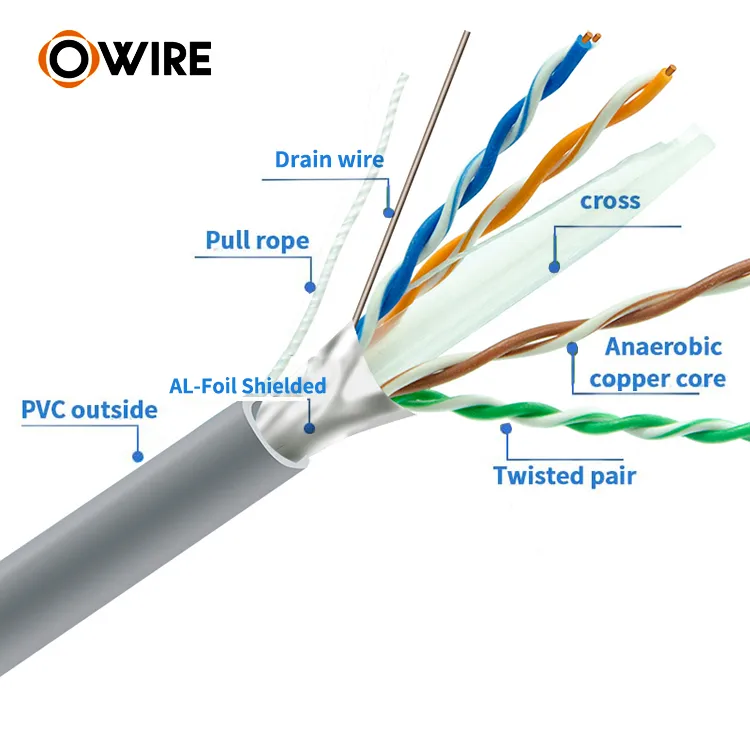
Despite its benefits, 2 wire ethernet is not without limitations. Bandwidth constraints mean it’s unsuitable for high-definition video streaming, large file transfers, or latency-sensitive applications like online gaming or real-time trading systems. Additionally, because it deviates from IEEE Ethernet standards, interoperability with third-party gear may vary unless explicitly supported. Users should carefully assess their bandwidth requirements and future growth plans before committing to a two-wire architecture.
Security is another consideration. Since 2 wire ethernet often runs over unshielded or repurposed cables, it may be more susceptible to eavesdropping or electromagnetic interference compared to shielded Cat6a or fiber optic lines. In sensitive environments, additional encryption at the application layer is recommended to protect data integrity. Nonetheless, for closed-loop systems such as factory automation or private surveillance networks, the risk is generally manageable.
เมื่อมองไปข้างหน้า บทบาทของอีเทอร์เน็ตแบบ 2 สายมีแนวโน้มที่จะขยายตัวเนื่องจาก Internet of Things (IoT) ยังคงเติบโตอย่างต่อเนื่อง เซ็นเซอร์ ตัวควบคุม และอุปกรณ์ Edge หลายพันล้านเครื่องจะต้องมีการเชื่อมต่อที่ราคาไม่แพงและเชื่อถือได้ ซึ่งมักจะอยู่ในตำแหน่งที่ Wi-Fi หรือสายเคเบิลแบบเดิมให้บริการได้ไม่ดี อีเธอร์เน็ตแบบ 2 สายมีจุดกึ่งกลาง: เชื่อถือได้มากกว่าไร้สายในพื้นที่ที่มีสัญญาณรบกวน แต่ยังง่ายกว่าและราคาถูกกว่าอีเทอร์เน็ตแบบเต็ม ในขณะที่ผู้ผลิตปรับแต่งเทคนิคการปรับและอัลกอริธึมการแก้ไขข้อผิดพลาด การปรับปรุงในอนาคตอาจรองรับความเร็วที่สูงขึ้นและการเข้าถึงที่ยาวขึ้น ซึ่งจะทำให้เส้นแบ่งระหว่างระบบเครือข่ายแบบเดิมและสมัยใหม่พร่ามัวมากขึ้น
โดยสรุป อีเทอร์เน็ตแบบ 2 สายแสดงถึงโซลูชันเชิงปฏิบัติสำหรับการเชื่อมช่องว่างการเชื่อมต่อในสภาพแวดล้อมที่จำกัด ด้วยการลดความซับซ้อนของสายเคเบิลและใช้ประโยชน์จากโครงสร้างพื้นฐานที่มีอยู่ ช่วยให้ปรับใช้ได้รวดเร็วและประหยัดยิ่งขึ้นในอุตสาหกรรมต่างๆ มากมาย ไม่ว่าคุณจะอัพเกรดสำนักงานขนาดเล็ก รักษาความปลอดภัยคลังสินค้า หรือทำให้ฟาร์มเป็นแบบอัตโนมัติ เทคโนโลยีนี้มอบผลประโยชน์ที่จับต้องได้ในกรณีที่วิธีการแบบเดิมๆ ไม่เพียงพอ สำหรับผู้ที่กำลังมองหาพันธมิตรที่เชื่อถือได้ในพื้นที่นี้ OWIRE โดดเด่นด้วยผลิตภัณฑ์ที่ทนทาน ใช้งานง่าย และมีชื่อเสียงในอุตสาหกรรมที่แข็งแกร่ง เนื่องจากความต้องการด้านเครือข่ายที่ยืดหยุ่นมีการพัฒนา อีเทอร์เน็ตแบบ 2 สายซึ่งขับเคลื่อนโดยแบรนด์ต่างๆ เช่น OWIRE จะยังคงมีบทบาทสำคัญในการกำหนดรูปแบบโลกที่เชื่อมต่อถึงกัน