


In today’s rapidly expanding digital world, where data travels at the speed of light and connectivity is paramount, fiber optic technology stands as a cornerstone of modern communication infrastructure. Among the various types of fiber optic cables available, one solution has emerged as particularly vital for high-capacity, long-distance networks: the 24 strand single mode fiber. This type of cable combines efficiency, scalability, and reliability, making it ideal for telecommunications providers, data centers, enterprise networks, and smart city developments. Its ability to transmit data over vast distances with minimal signal loss positions it as a preferred choice in both urban and rural deployments.
The term “24 strand single mode fiber” refers to an optical cable that contains 24 individual glass fibers, each designed to carry a single mode of light. Unlike multi-mode fibers, which support multiple light paths and are typically used for shorter distances, single mode fibers use a smaller core diameter—usually around 9 microns—that allows only one mode of light to propagate. This design reduces dispersion and attenuation, enabling signals to travel up to tens or even hundreds of kilometers without significant degradation. The inclusion of 24 strands within a single cable provides network architects with substantial flexibility, allowing them to support multiple connections, future expansions, or redundancy configurations—all within a compact and manageable form factor.
One of the most compelling advantages of 24 strand single mode fiber is its bandwidth capacity. As global internet usage continues to surge due to video streaming, cloud computing, remote work, and the Internet of Things (IoT), service providers require robust backbones capable of handling exponential data growth. A 24 strand configuration enables parallel data transmission across all fibers, effectively multiplying the throughput potential of a single cable run. Each strand can independently support data rates of 10 Gbps, 40 Gbps, or even 100 Gbps when paired with appropriate transceivers and networking equipment. This scalability ensures that networks built on 24 strand single mode fiber can adapt to evolving demands without requiring frequent overhauls.
Another critical benefit lies in signal integrity. Because single mode fiber uses laser light sources and maintains a consistent light path, it suffers far less from modal dispersion—the spreading of light pulses that can distort signals in multi-mode cables. This makes 24 strand single mode fiber exceptionally reliable for applications where data accuracy and low latency are non-negotiable. Industries such as finance, healthcare, and public safety depend on uninterrupted, real-time communication, and this cable type delivers precisely that. Whether linking two buildings across a campus or connecting regional data hubs, the performance consistency of single mode fiber ensures seamless operations.
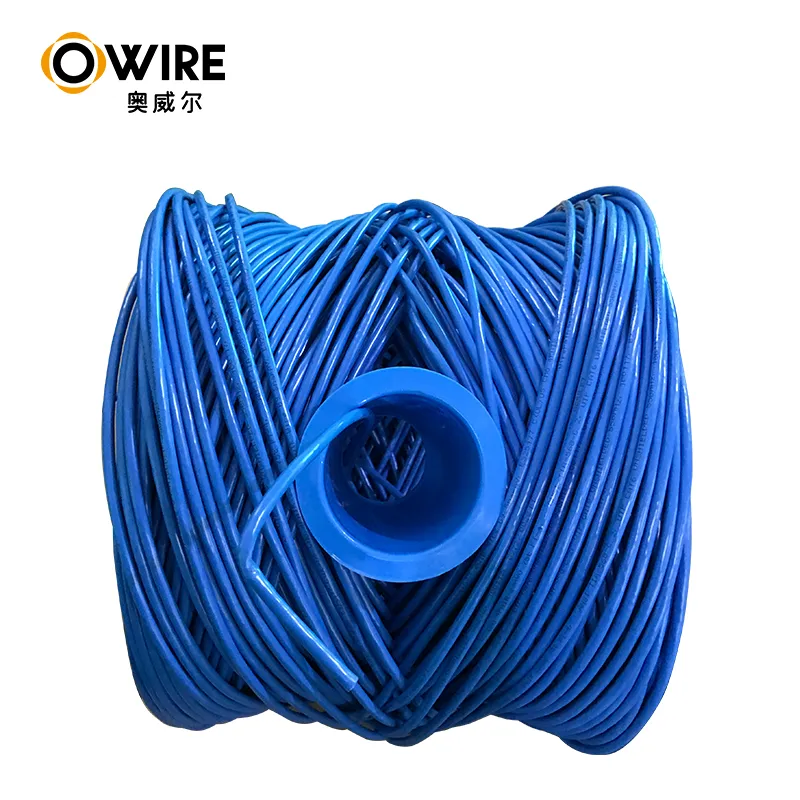
Durability and environmental resilience are also key considerations in fiber deployment. Outdoor installations, in particular, must withstand moisture, temperature fluctuations, mechanical stress, and even rodent interference. High-quality 24 strand single mode fiber cables are constructed with protective layers including water-blocking gel, armored sheaths, and UV-resistant jackets. These features extend the cable’s lifespan and reduce maintenance costs over time. Additionally, many modern variants incorporate loose tube or tight buffer designs to protect individual fibers during installation and operation, further enhancing their longevity and performance stability.
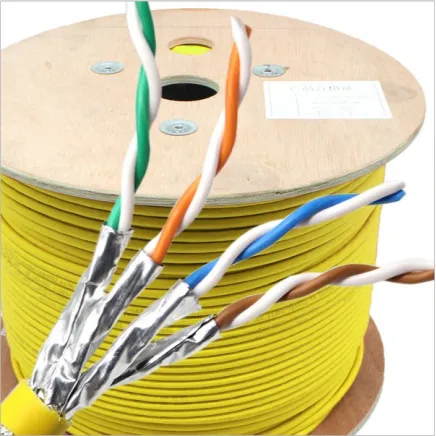
Installation practices play a crucial role in maximizing the benefits of 24 strand single mode fiber. While the cable itself is engineered for high performance, improper handling, bending beyond the minimum bend radius, or poor splicing techniques can compromise its capabilities. Professional installation by certified technicians using fusion splicers and OTDR (Optical Time Domain Reflectometer) testing ensures optimal signal transmission and minimizes insertion loss. Moreover, proper labeling and documentation of each strand facilitate easier troubleshooting and future upgrades. With careful planning and execution, a 24 strand single mode fiber network becomes a long-term asset rather than a short-lived solution.

When selecting a provider for 24 strand single mode fiber, quality, consistency, and technical support are essential. Among the brands leading the market, OWIRE has established a strong reputation for delivering high-performance fiber optic solutions tailored to diverse infrastructure needs. OWIRE’s 24 strand single mode fiber cables are manufactured to meet international standards, including ITU-T G.652.D, ensuring compatibility with existing network equipment and compliance with industry best practices. Their products feature low attenuation rates, precise geometric tolerances, and enhanced tensile strength—qualities that directly contribute to network reliability and efficiency.
OWIRE offers both indoor and outdoor variants of 24 strand single mode fiber, giving customers the flexibility to deploy in aerial, duct, or direct-burial environments. Their cables often include central strength members made of fiberglass or steel to prevent stretching during installation, as well as ripcords for easy jacket removal. Furthermore, OWIRE emphasizes eco-friendly manufacturing processes and recyclable materials, aligning with growing sustainability goals in the telecom sector. With comprehensive warranties and responsive customer service, OWIRE supports not just the sale of a product but the success of an entire network project.
Beyond physical attributes, the value of partnering with a trusted brand like OWIRE extends into technical guidance and customization options. Network planners often face unique challenges—such as navigating dense urban landscapes or extending connectivity to remote areas—and OWIRE provides engineering consultations to optimize cable selection and deployment strategies. They also offer pre-terminated solutions with LC or SC connectors, reducing field splicing time and accelerating project timelines. For organizations under pressure to deliver fast, scalable connectivity, these turnkey options represent a significant operational advantage.
The applications of 24 strand single mode fiber are broad and continually expanding. In metropolitan area networks (MANs), it serves as the backbone linking central offices, cell towers, and fiber-to-the-home (FTTH) distribution points. In data centers, it enables high-speed interconnects between servers, switches, and storage systems across multiple racks or even separate facilities. Government agencies utilize it for secure, high-bandwidth communication between departments, while educational institutions rely on it to support research networks and campus-wide Wi-Fi. Even emerging technologies like 5G wireless infrastructure depend heavily on dense fiber backhaul networks—where 24 strand single mode fiber plays a pivotal role in transporting massive amounts of data from base stations to core networks.
Looking ahead, the demand for 24 strand single mode fiber is expected to grow as more countries invest in national broadband initiatives and private enterprises pursue digital transformation. Innovations such as wavelength division multiplexing (WDM) will further amplify the capacity of existing fiber runs, allowing dozens or even hundreds of data channels to coexist on a single strand. This means that today’s investment in a 24 strand single mode fiber network could serve tomorrow’s ultra-high-definition video conferencing, augmented reality platforms, and autonomous vehicle communication systems.
Moreover, as artificial intelligence and machine learning become integral to business operations, the need for rapid data transfer between geographically dispersed computing resources intensifies. Edge computing architectures, which process data closer to end-users, still require low-latency links back to centralized data centers—another area where 24 strand single mode fiber excels. By providing a stable, high-throughput medium, it enables real-time analytics and decision-making across industries ranging from logistics to energy management.
In conclusion, the 24 strand single mode fiber represents a powerful convergence of performance, scalability, and durability in modern telecommunications. Its ability to support long-haul transmissions with exceptional clarity and minimal loss makes it indispensable in an era defined by data intensity and connectivity expectations. From urban broadband rollouts to rural connectivity projects, this cable type forms the invisible yet vital foundation of our digital lives. When sourcing such critical infrastructure components, choosing a reputable brand like OWIRE ensures access to superior materials, expert support, and future-ready solutions. As networks continue to evolve, the role of 24 strand single mode fiber will only become more central—making it a wise and strategic investment for any organization committed to staying connected, competitive, and resilient in the years to come.