Trang chủ > Fiber Optic Cable > Page 3
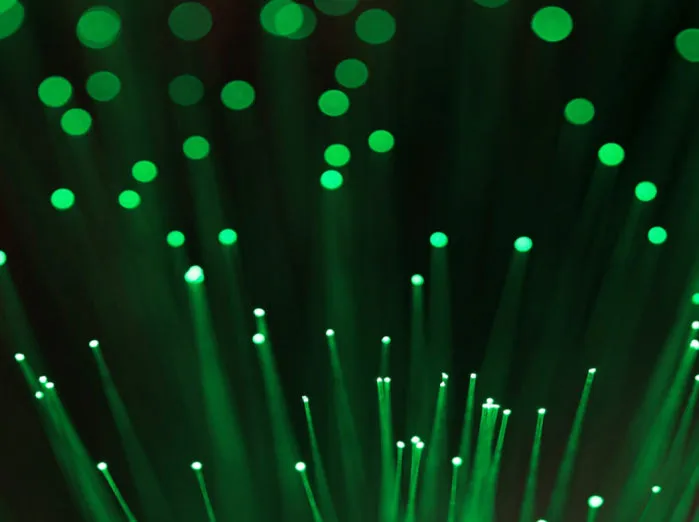
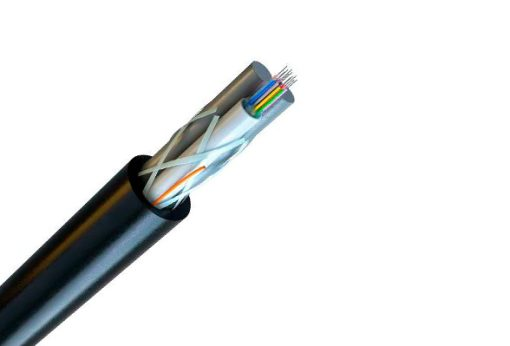
An optical fiber cable is a type of cable that contains one or more optical fibers, which are thin strands of glass or plastic used to transmit light signals over long distances. The fibers are bundled together inside a protective jacket made of materials like PVC or polyethylene.
The core of an optical fiber is extremely thin, typically around the diameter of a human hair, and is surrounded by cladding that has a lower refractive index than the core. This causes light to be reflected inside the core as it travels down the fiber, which allows it to travel long distances without significant loss of signal strength.
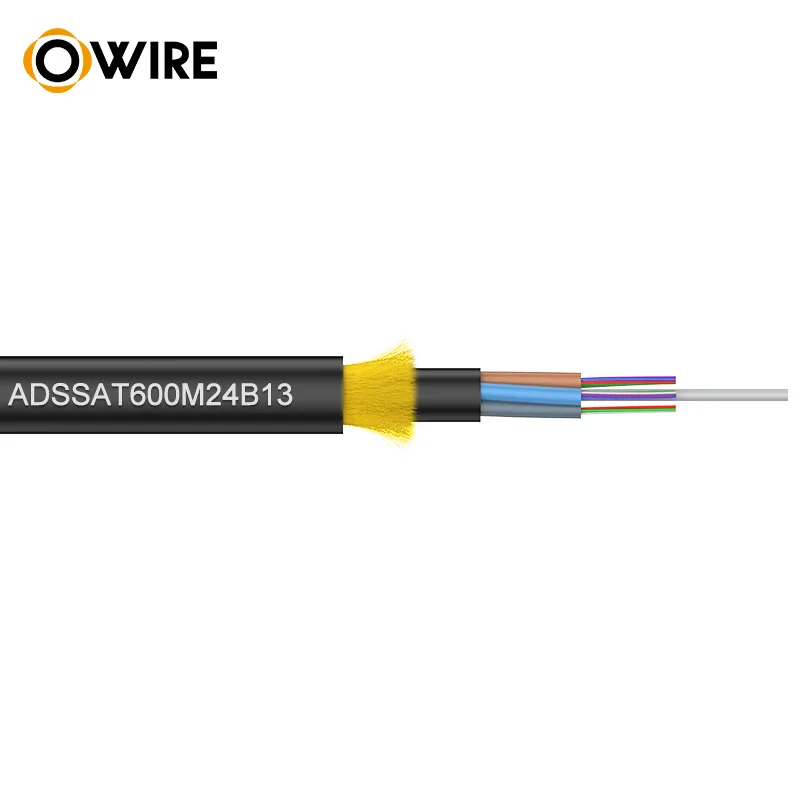
Vỏ bọc đôi ADSS sợi aramid Tất cả cáp quang tự hỗ trợ điện môi Nhà sản xuất lõi 2-288
(ADSS)Single jacket sheath aramid yarn All Dielectric Self-Supporting Optical Fiber Cable
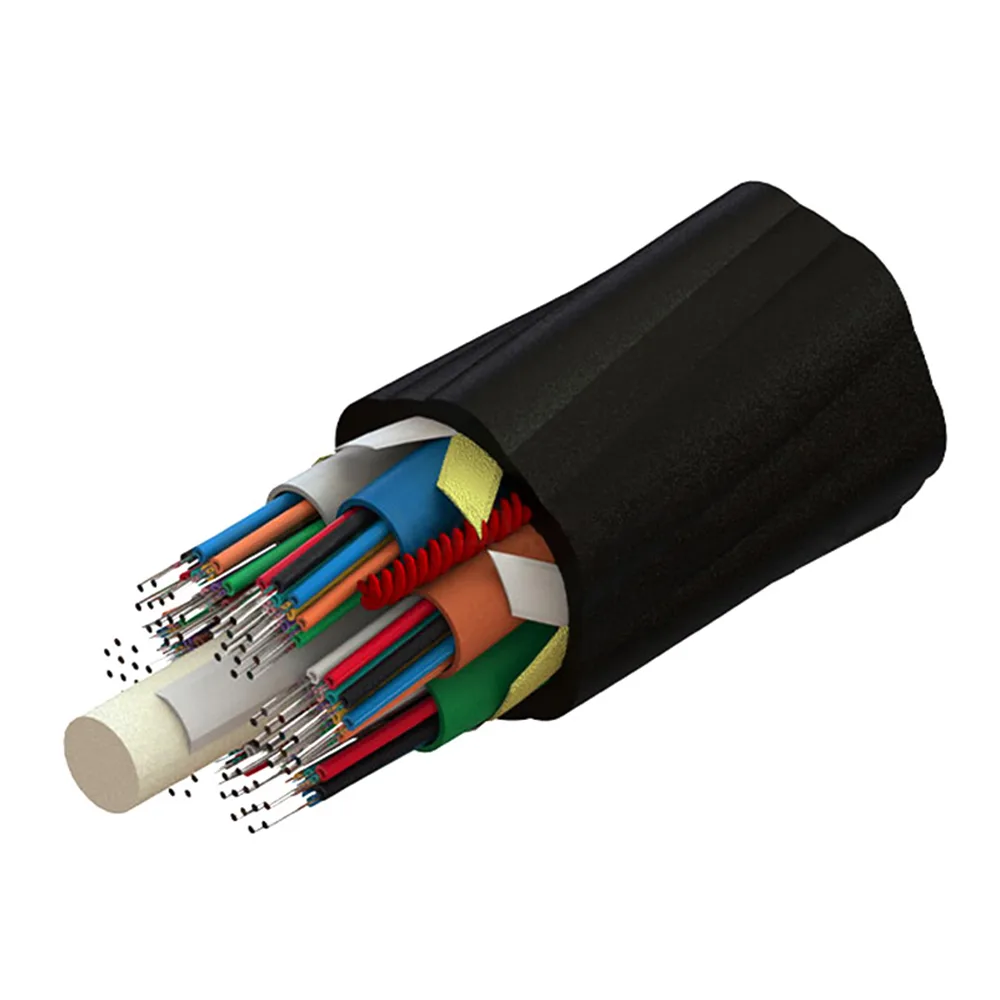
Buried Duct Air blown Fiber optic cable
GYCFHTY
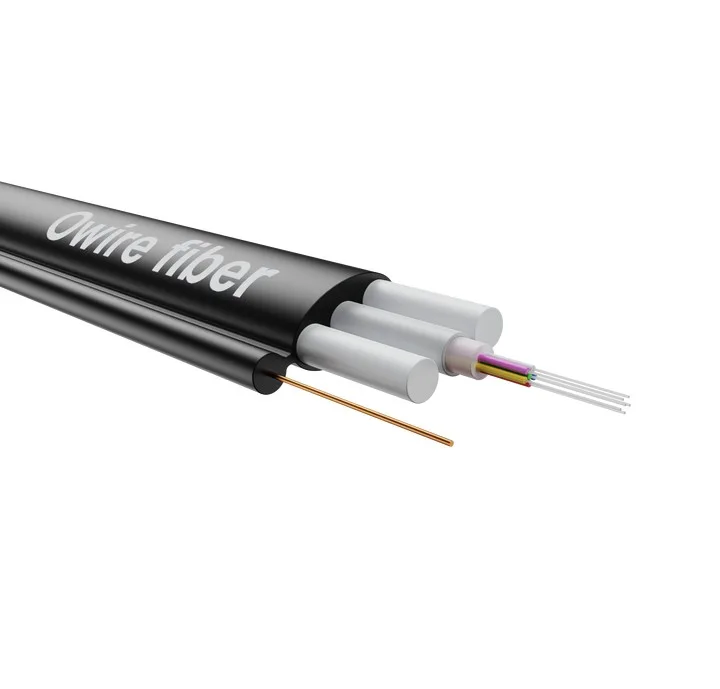
FTTH Flat Single-tube dielectric outdoor drop Fiber Optic cable
FTTx Flat Drop Flexible Fiber Optic Cable for the Last Link direct buried, conduit Underground or self-supporting aerial
figure fig 8 outdoor areial overhead handing PSP/APL armored anti rodent messenger fiber optic cable GYXTC8A
The fibers, 250μm , are positioned in a loose tube made of a high modulus plastic. The tubes are filled with a water-resistant filling compound. A steel wire locates in the center of core as a metallic strength member. The tubes (and fillers) are stranded around the strength member into a compact and circular cable core. After an Aluminum Polyethylene Laminate (APL) moisture barrier is applied around the cable core, this part of cable accompanied with the stranded wires as the supporting part are completed with a polyethylene (PE) sheath to be figure 8 structure.
figure fig 8 outdoor areial overhead handing PSP/APL armored anti rodent messenger fiber optic cable GYXTC8S
The fibers, 250μm , are positioned in a loose tube made of a high modulus plastic. The tubes are filled with a water-resistant filling compound. A steel wire locates in the center of core as a metallic strength member. The tubes (and fillers) are stranded around the strength member into a compact and circular cable core. After an Aluminum Polyethylene Laminate (APL) moisture barrier is applied around the cable core, this part of cable accompanied with the stranded wires as the supporting part are completed with a polyethylene (PE) sheath to be figure 8 structure.
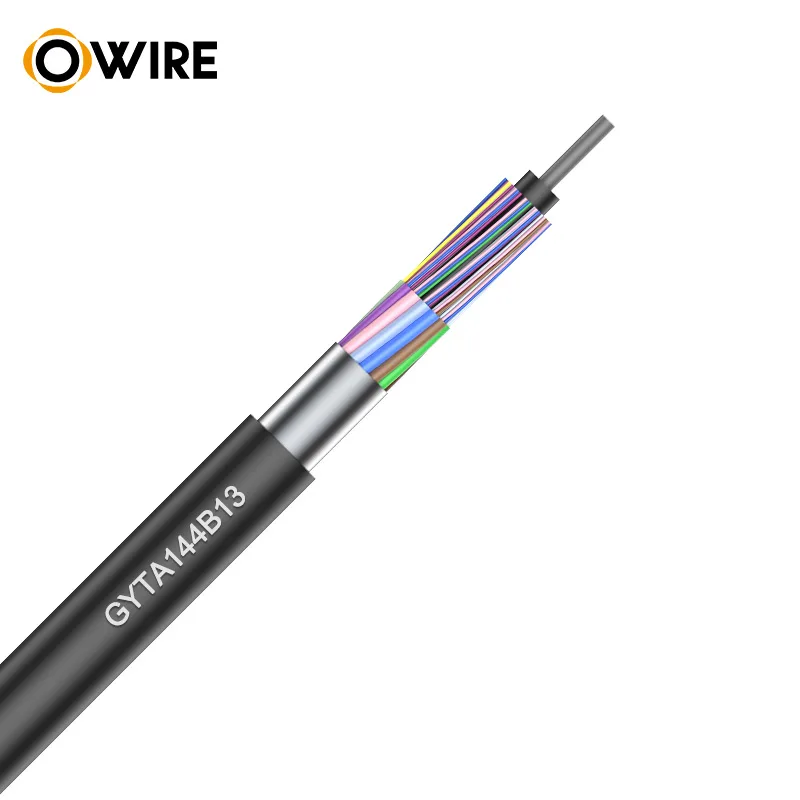
Aerial Duct Air Blown Buried Hanging pole mounted Outdoor Fiber Optic Cable GYTA
Applicable
ASU Micro Mini ADSS-Aerial Self-Supported dielectric Fiber Optic Cable, G.652D
ứng dụng:
· Outdoor aerial and duct application;
Tính năng:
Băng thông cao hơn: Cáp quang có thể hỗ trợ tốc độ truyền dữ liệu cao hơn nhiều so với cáp đồng.
Longer distances: Optical fiber cables can transmit signals over longer distances than copper cables without requiring signal boosters.
Immunity to electromagnetic interference: Because they use light to transmit signals instead of electricity, optical fiber cables are immune to electromagnetic interference from other devices.
Thinner and lighter: Optical fiber cables are thinner and lighter than copper cables, making them easier to install and maintain.
Overall, optical fiber cables are a reliable and efficient way to transmit data over long distances, and are widely used in telecommunications and networking.
The three types of fiber optic cable are single-mode, multimode, and plastic optical fiber (POF).
Single-mode fiber optic cable has a small core diameter (typically 9 microns) that allows only one mode of light to propagate. This type of cable is used for long-distance communications and high-bandwidth applications.
Multimode fiber optic cable has a larger core diameter (typically 50 or 62.5 microns) that allows multiple modes of light to propagate. This type of cable is used for shorter distances and lower bandwidth applications.
Plastic optical fiber (POF) is made of polymer and has a larger core diameter (typically 1mm or larger) than glass fiber. This type of cable is less expensive than glass fiber and is used for short-distance communications and low-speed applications.
Fiber optic cables and HDMI (High-Definition Multimedia Interface) cables are designed for different purposes, so it’s not a question of which is better.
Fiber optic cables are primarily used for transmitting data over long distances and can carry large amounts of data with minimal signal loss. They are commonly used in telecommunications and networking applications, including high-speed internet connections.
HDMI cables, on the other hand, are designed to transmit high-quality audio and video signals between devices over shorter distances. They are commonly used to connect devices such as televisions, Blu-ray players, and gaming consoles to each other.
So if you need to transmit high-quality audio and video over a short distance, HDMI may be the best choice for you. But if you need to transmit large amounts of data over long distances with minimal signal loss, then fiber optic cables may be the better choice.
There is no difference between optical cable and fiber optic cable. “Optical cable” is a general term that refers to any type of cable that uses light to transmit information, while “fiber optic cable” specifically refers to a type of optical cable that uses thin strands of glass or plastic fibers to transmit light signals.
Fiber optic cables are often used in telecommunications and networking applications because they can transmit large amounts of data over long distances with minimal signal loss. They are also immune to electromagnetic interference, making them ideal for use in environments where there is a lot of electrical noise.
Other types of optical cables include plastic optical fiber (POF) which uses plastic fibers instead of glass fibers, and hybrid cables that combine both copper conductors and fiber optic strands in the same cable. These types of optical cables are typically used in shorter-distance applications such as home audio systems, lighting, and automotive sensors.