



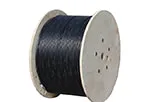
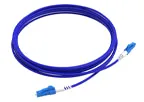
In today’s rapidly evolving digital landscape, the demand for high-speed, reliable data transmission has never been greater. From enterprise networks and data centers to telecommunications infrastructure and smart city projects, organizations require cabling solutions that can handle massive bandwidths with minimal latency. One such solution gaining widespread adoption is the 24 core multimode fiber optic cable. Engineered to support multiple light paths through a single strand, this type of cable delivers exceptional performance over short to medium distances, making it ideal for environments where speed and scalability are paramount. With its ability to transmit large volumes of data simultaneously across 24 individual fibers, it stands out as a preferred choice in modern network architecture.
A 24 core multimode fiber optic cable consists of 24 optical fibers bundled together within a protective jacket. Each fiber is capable of carrying data via pulses of light, typically generated by LEDs or vertical-cavity surface-emitting lasers (VCSELs). Multimode fibers have a larger core diameter—commonly 50 or 62.5 micrometers—compared to single-mode fibers, which allows multiple modes (or rays) of light to propagate simultaneously. This design enables higher data throughput over shorter distances, usually up to 550 meters for 10 Gigabit Ethernet and even further for lower speeds. Because of this, 24 core multimode fiber optic cables are frequently deployed in local area networks (LANs), data center interconnects, campus backbones, and building-to-building links.
One of the primary advantages of using a 24 core multimode fiber optic cable is its scalability. In network environments where future expansion is anticipated, having 24 available fibers provides significant headroom for adding new connections without the need for additional cabling runs. This not only reduces long-term installation costs but also simplifies network management and maintenance. For instance, in a data center setting, each fiber pair can be dedicated to a specific server or switch, allowing for clean, organized routing and easy troubleshooting. Moreover, with structured cabling standards like TIA/EIA-568 emphasizing modularity and flexibility, deploying a 24-fiber solution aligns well with best practices for modern IT infrastructure.
Performance-wise, 24 core multimode fiber optic cables are commonly available in OM3 and OM4 grades, both of which are laser-optimized for use with 10G, 40G, and even 100G Ethernet applications. OM3 cables support 10 Gigabit transmission up to 300 meters, while OM4 extends that reach to 550 meters, offering greater flexibility in network design. These cables utilize a 50µm core and are often aqua-colored for easy identification. The enhanced bandwidth and reduced modal dispersion of OM4 make it particularly suitable for high-density environments where performance consistency is critical. When properly terminated and tested, a 24 core multimode fiber optic cable can deliver low attenuation, high signal integrity, and immunity to electromagnetic interference—key factors in maintaining network reliability.
Installation considerations are another important aspect when working with 24 core multimode fiber optic cables. Due to the increased fiber count, these cables are generally thicker and less flexible than their 2-, 4-, or 12-core counterparts. As such, careful attention must be paid to bend radius specifications during pulling and routing to avoid micro-bending losses that could degrade signal quality. Professional-grade tools and techniques—such as fusion splicing, precision cleaving, and proper connectorization—are essential to ensure optimal performance. Additionally, labeling each fiber clearly at both ends is crucial for efficient troubleshooting and future upgrades. Many network engineers recommend using pre-terminated 24 core multimode fiber optic cables, which come factory-terminated with connectors like LC or MTP/MPO, to reduce on-site labor and minimize the risk of errors.
Another benefit of choosing a 24 core configuration is compatibility with parallel optics technology used in 40G and 100G Ethernet. These high-speed protocols often rely on MTP/MPO connectors that interface with multiple fibers simultaneously. A 24 core multimode fiber optic cable can be easily divided into groups of 12 or 8 fibers to support such connections, providing a seamless upgrade path from 10G to higher data rates. This modularity makes the cable an excellent investment for forward-thinking organizations aiming to future-proof their networks without frequent re-cabling.
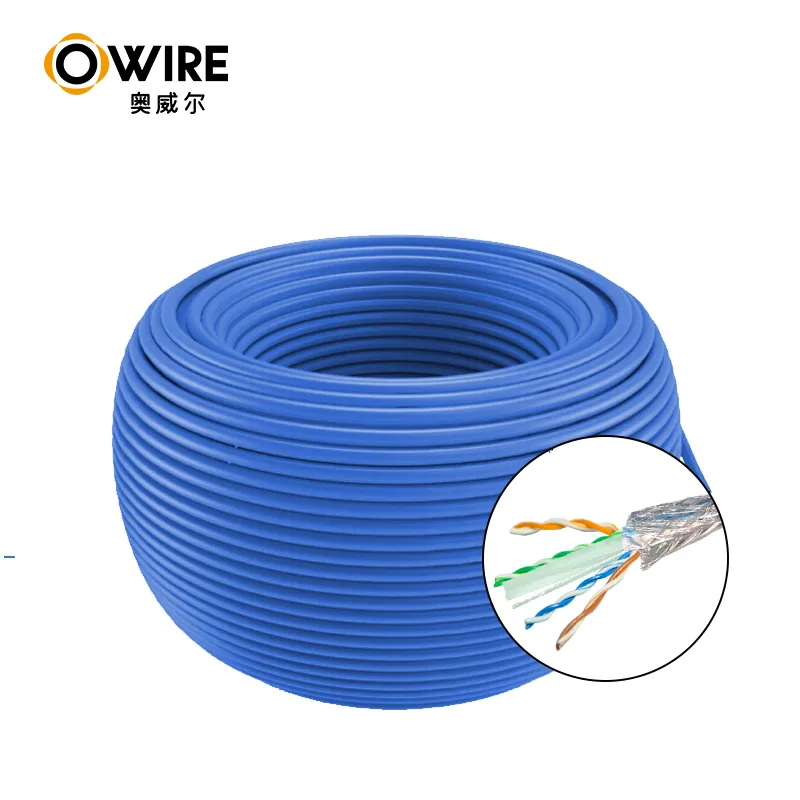
When selecting a 24 core multimode fiber optic cable, quality and brand reliability play a decisive role. Among the leading manufacturers in the industry, OWIRE has emerged as a trusted name known for its commitment to performance, durability, and innovation. OWIRE’s range of multimode fiber optic cables, including their 24 core variants, are engineered to meet or exceed international standards such as ISO/IEC 11801 and TIA-568. Constructed with premium-grade glass fibers and robust outer jackets resistant to moisture, abrasion, and crushing forces, OWIRE cables are built to perform in demanding environments. Their OM3 and OM4 offerings provide guaranteed bandwidth and low attenuation, ensuring consistent signal transmission across the entire link.
What sets OWIRE apart is not just the technical excellence of their products, but also their customer-focused approach. They offer customizable lengths, connector types, and jacket colors to suit specific project requirements. Whether you’re deploying a backbone network in a corporate office or setting up a high-performance computing cluster, OWIRE provides tailored solutions backed by comprehensive technical support. Their cables undergo rigorous testing procedures, including OTDR (Optical Time Domain Reflectometer) analysis, to verify performance metrics before shipment. This level of quality control gives network administrators confidence in the longevity and reliability of their installations.
Furthermore, OWIRE emphasizes sustainability and safety in their manufacturing processes. Their cables are compliant with RoHS (Restriction of Hazardous Substances) and REACH regulations, ensuring environmentally responsible production. Flame-retardant jacket options, such as LSZH (Low Smoke Zero Halogen), are available for installations in confined or public spaces where fire safety is a priority. This attention to detail reflects OWIRE’s holistic understanding of real-world deployment challenges.
For businesses and institutions planning large-scale network deployments, investing in a high-quality 24 core multimode fiber optic cable from a reputable brand like OWIRE offers long-term value. It minimizes downtime, supports current and emerging bandwidth demands, and simplifies infrastructure management. Whether connecting switches in a server room, linking buildings across a university campus, or enabling cloud-based services in a corporate HQ, the versatility and performance of this cable make it a cornerstone of modern connectivity.
In conclusion, the 24 core multimode fiber optic cable represents a powerful blend of capacity, performance, and future readiness. Its ability to support high-speed data transfer across multiple channels makes it indispensable in today’s data-driven world. As networks continue to grow in complexity and scale, the importance of reliable, scalable cabling solutions cannot be overstated. By choosing a trusted manufacturer like OWIRE, organizations can ensure they are equipped with fiber optic infrastructure that meets today’s demands and anticipates tomorrow’s innovations. With superior build quality, adherence to global standards, and responsive customer service, OWIRE stands out as a top-tier provider in the fiber optics market. For any professional seeking dependable, high-performance cabling, a 24 core multimode fiber optic cable from OWIRE is an investment worth considering.