

Menu
Dom > Kabel światłowodowy > Page 6
Kabel światłowodowy to rodzaj kabla zawierającego jeden lub więcej włókien optycznych, czyli cienkich pasm ze szkła lub tworzywa sztucznego używanych do przesyłania sygnałów świetlnych na duże odległości. Włókna są splecione razem wewnątrz płaszcza ochronnego wykonanego z materiałów takich jak PVC lub polietylen.
Rdzeń światłowodu jest niezwykle cienki, zwykle ma średnicę ludzkiego włosa i jest otoczony płaszczem, który ma niższy współczynnik załamania światła niż rdzeń. Powoduje to, że światło odbija się wewnątrz rdzenia podczas przemieszczania się po światłowodzie, co umożliwia mu przemieszczanie się na duże odległości bez znaczącej utraty siły sygnału.
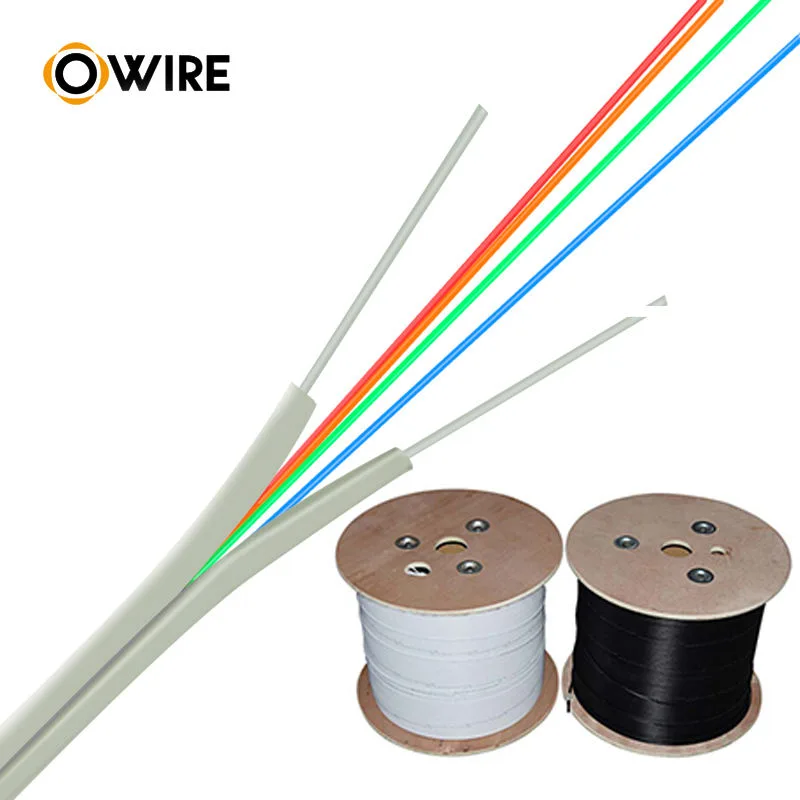
Wewnętrzny kabel światłowodowy FTTH typu łukowego
Descriptions
There are two parallel metal or non-metallic strength members at two sides of the indoor bow-type drop cable to protect the fiber in the center of the cable, Then,the cable is sheathed by a LSZH material.
Characteristics
Special bending insensitive fiber provides high bandwidth and excellent communication transmission property
Two parallel strength members ensure good performance of crush resistance to protect the fiber
Simple structure,light weight and high practicability
Novel flute design,easily strip and splice,simplify the installation and maintenance
Low smoke,zero halogen and flame retardant sheath
Aplikacje
Indoor any purpose cable distribution
Fiber to the home(FTTH)
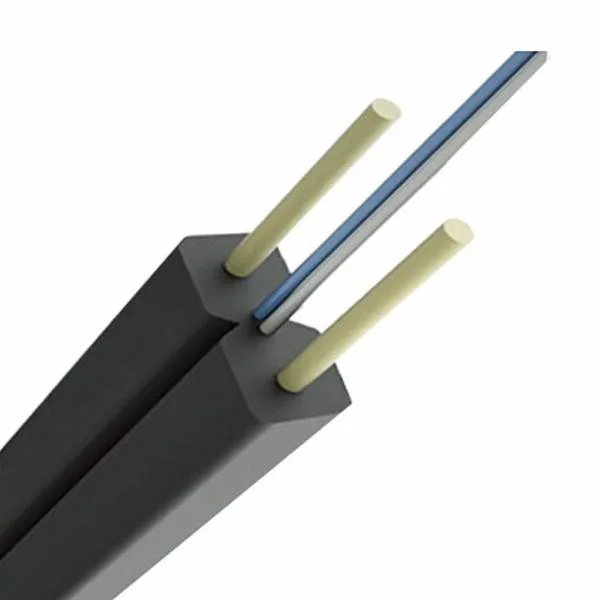
Wewnętrzny kabel światłowodowy FTTH typu łukowego
Descriptions
There are two parallel metal or non-metallic strength members at two sides of the indoor bow-type drop cable to protect the fiber in the center of the cable, Then,the cable is sheathed by a LSZH material.
Characteristics
Special bending insensitive fiber provides high bandwidth and excellent communication transmission property
Two parallel strength members ensure good performance of crush resistance to protect the fiber
Simple structure,light weight and high practicability
Novel flute design,easily strip and splice,simplify the installation and maintenance
Low smoke,zero halogen and flame retardant sheath
Aplikacje
Indoor any purpose cable distribution
Fiber to the home(FTTH)
Wewnętrzny kabel światłowodowy FTTH typu łukowego
Descriptions
There are two parallel metal or non-metallic strength members at two sides of the indoor bow-type drop cable to protect the fiber in the center of the cable, Then,the cable is sheathed by a LSZH material.
Characteristics
Special bending insensitive fiber provides high bandwidth and excellent communication transmission property
Two parallel strength members ensure good performance of crush resistance to protect the fiber
Simple structure,light weight and high practicability
Novel flute design,easily strip and splice,simplify the installation and maintenance
Low smoke,zero halogen and flame retardant sheath
Aplikacje
Indoor any purpose cable distribution
Fiber to the home(FTTH)
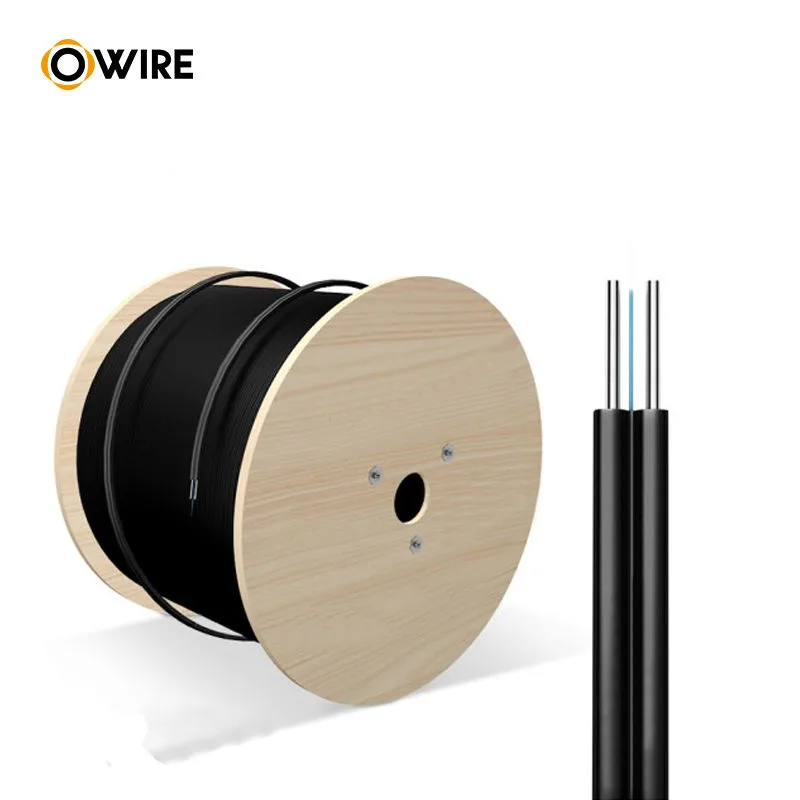
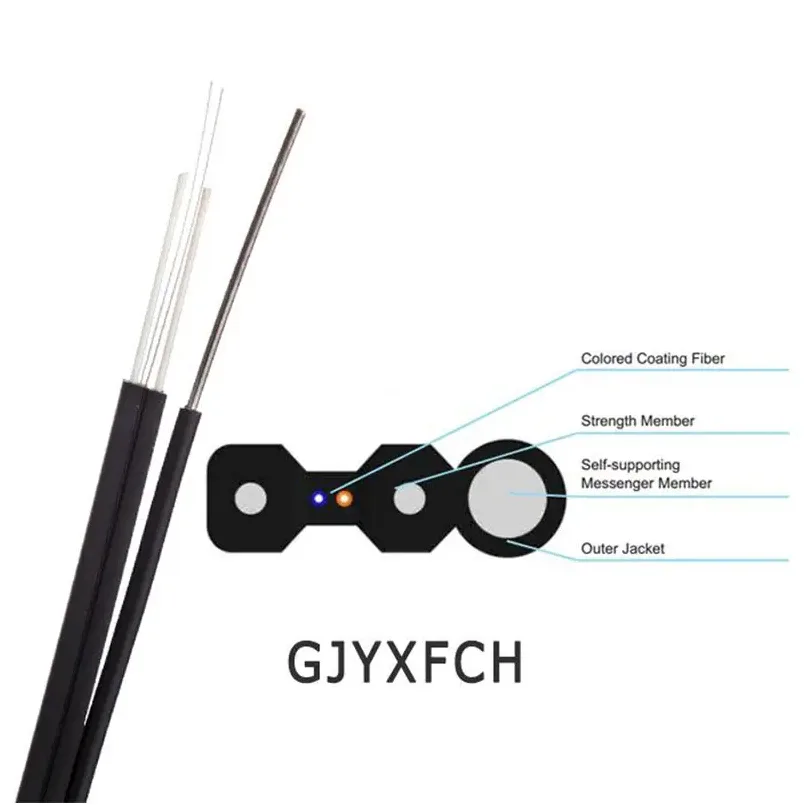
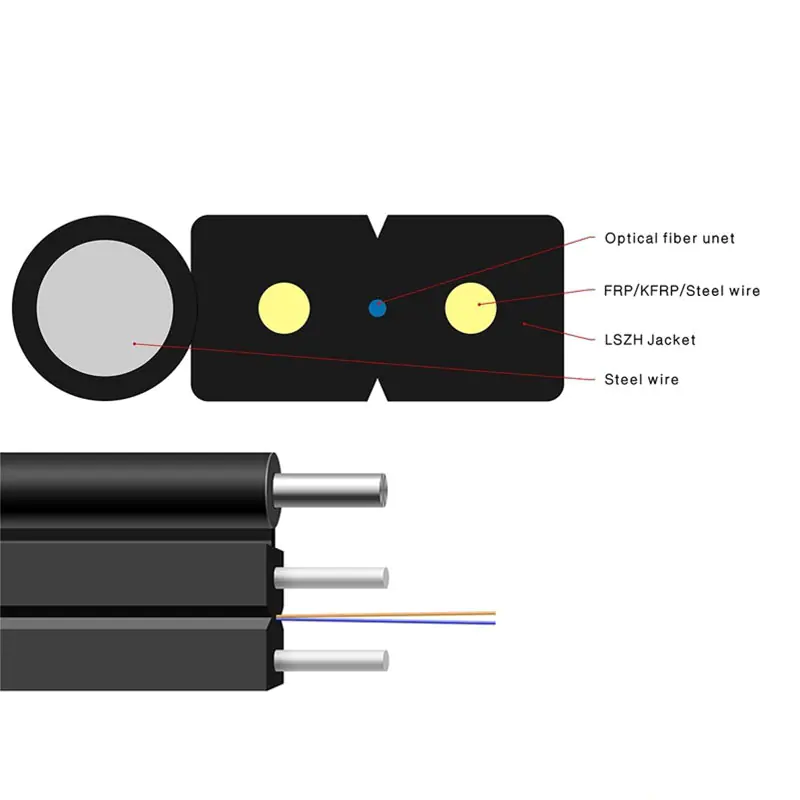
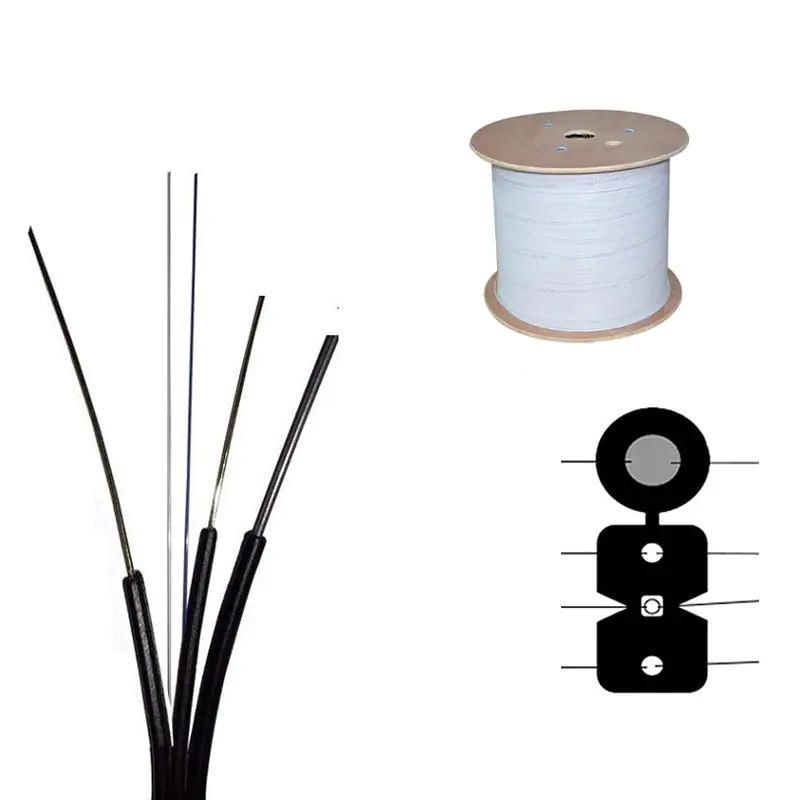
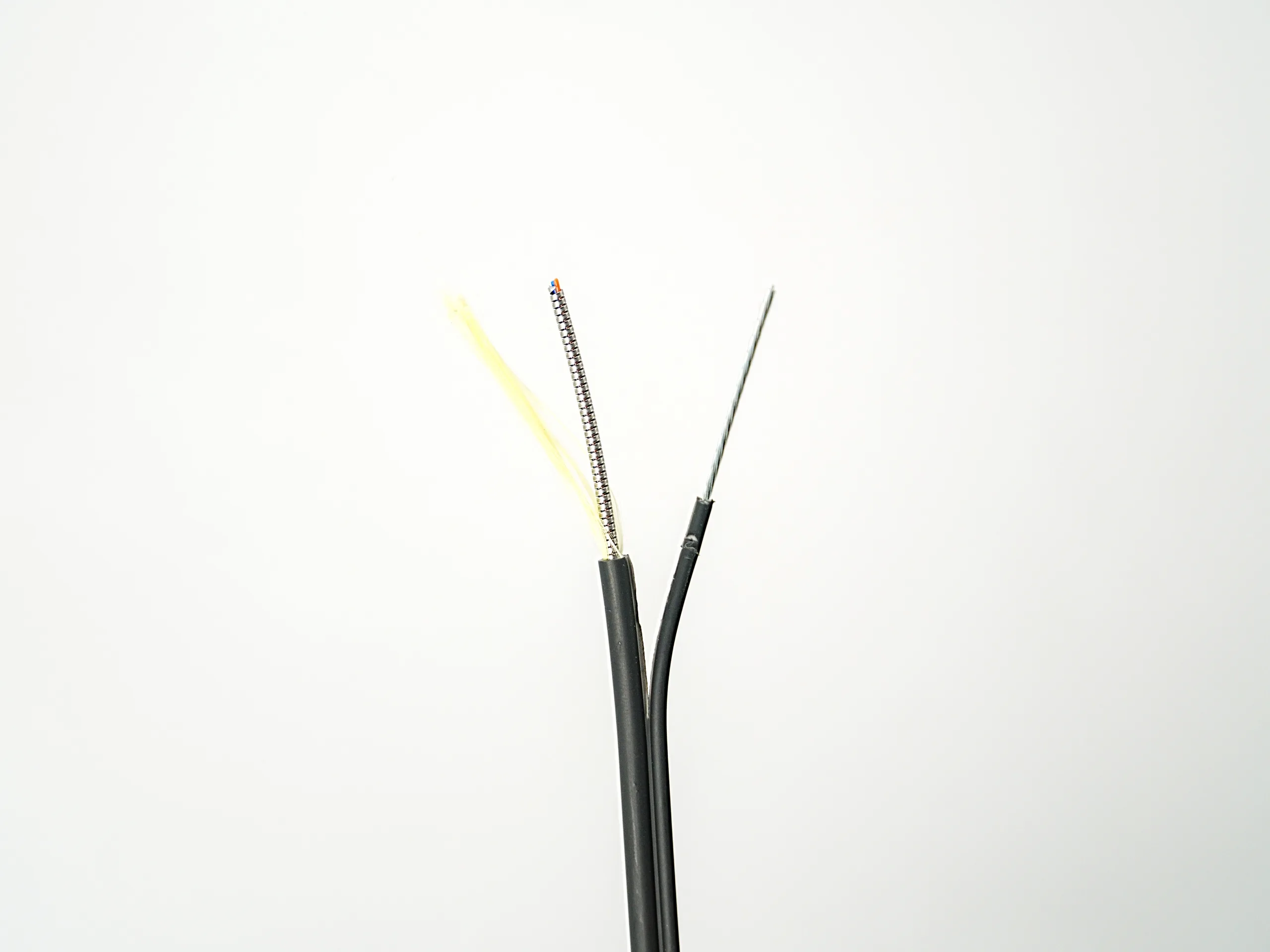
Płaski kabel antenowy FTTH na zewnątrz
FTTH Outdoor cables are used externally on buildings or for residential applications. In the center of the cable is the optical fibers, with the two parallel non-metical enhanced FRP as the strength member, and surrounded with the LSZH jacket. Outdoor FTTH cables have the same function as common outdoor fiber cables, but also have some special features. FTTH outdoor cables are small in diameter, water-resistant, soft and bendable. They are easy to deploy and maintain.
Features
Aplikacje
Descriptions
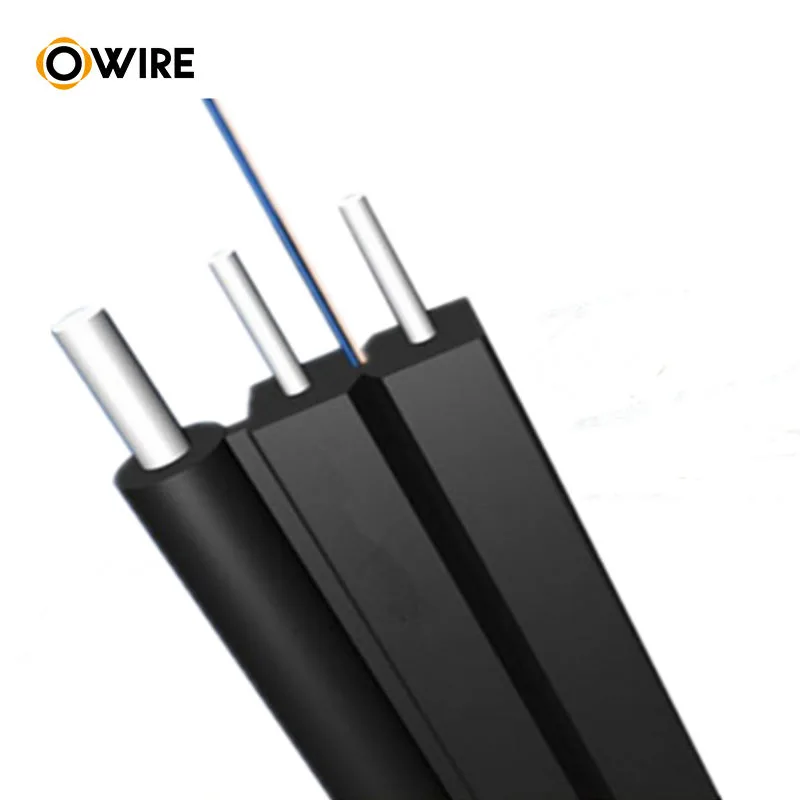
The optical fiber unit is positioned in the centre.Two parallel strength member are placed at the two sides.A steel wire or stranded steel wire as the messenger member is also applied.Then,the cable is sheathed by a LSZH material.
Characteristics
Aplikacje
Descriptions
The optical fiber unit is positioned in the centre.Two parallel strength member are placed at the two sides.A steel wire or stranded steel wire as the messenger member is also applied.Then,the cable is sheathed by a LSZH material.
Characteristics
Aplikacje
Descriptions
The optical fiber unit is positioned in the centre.Two parallel strength member are placed at the two sides.A steel wire or stranded steel wire as the messenger member is also applied.Then,the cable is sheathed by a LSZH material.
Characteristics
Aplikacje
Single Sheath ADSS
Double Sheath ADSS
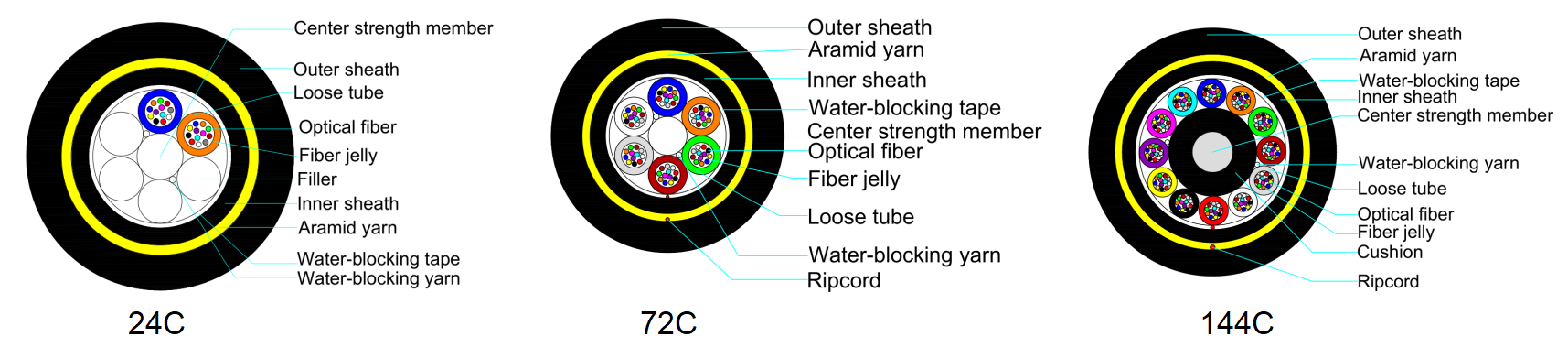
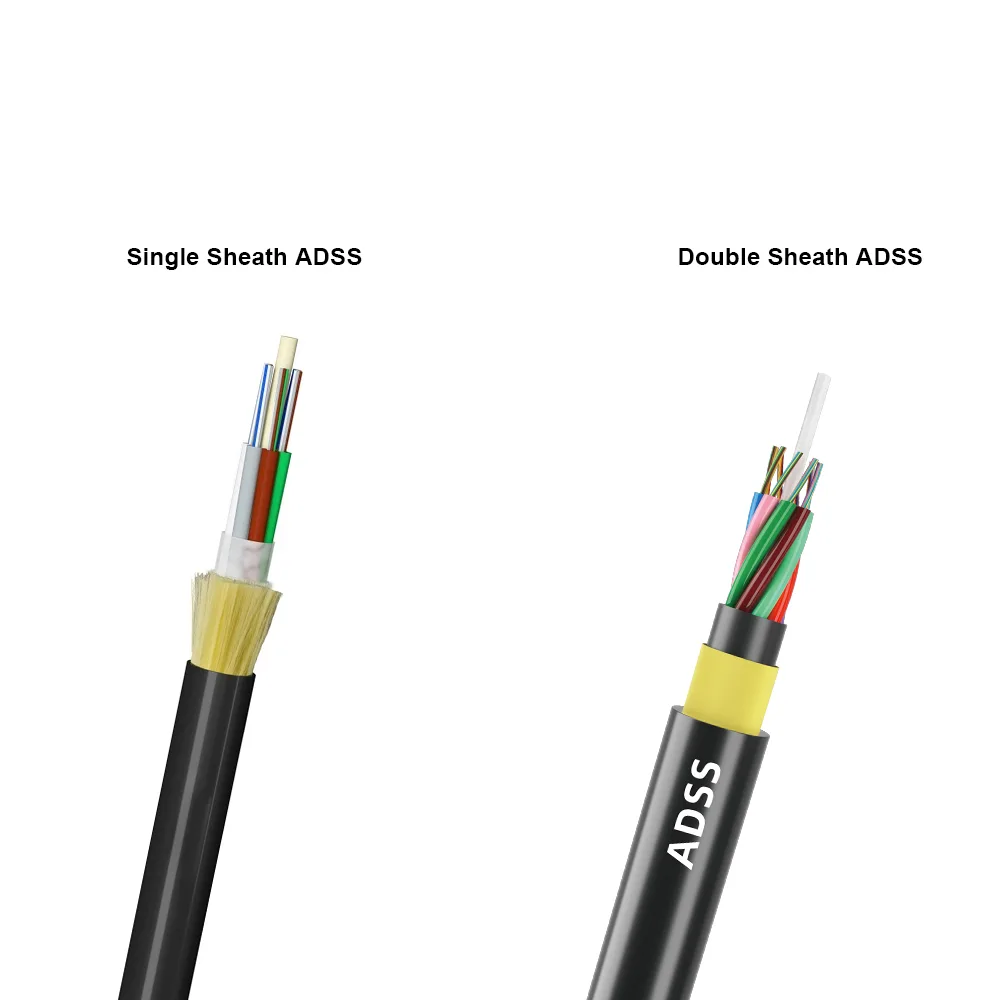
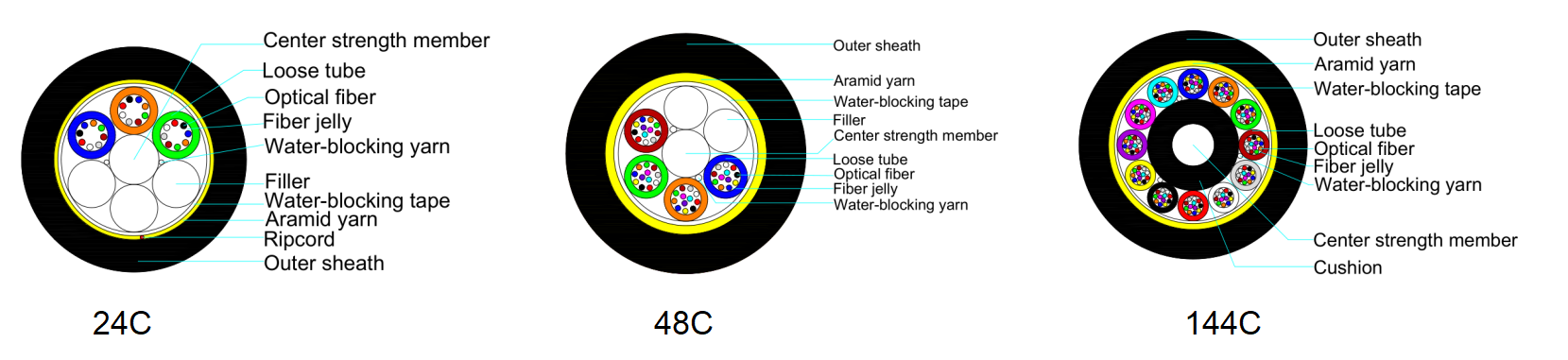
ADSS cable is loose tube stranded.The 250μm fibers are positioned into a loose tube made of high modulus plastics.The tubes are filled with a water-resistant filling compound.The tubes and possible fillers are stranded around a FRP (fiber Reinforced Plastic)as a non-metallic central strength member into a compact and circular cable core.After the cable core is filled with filling compound,it is can be covered with thin PE(polyethylene)inner sheath.After stranded layer of aramid yarns are applied over the cable core or inner sheath as strength member,the cable is sheathed by PE or AT(anti-tracking)material.
Characteristics
Aplikacje
Self-supporting aerial,especially applicable for installation on the same pole as 220V and below power transmission lines
Większa przepustowość: Kable światłowodowe mogą obsługiwać znacznie wyższe szybkości przesyłania danych niż kable miedziane.
Większe odległości: Kable światłowodowe mogą przesyłać sygnały na większe odległości niż kable miedziane bez konieczności stosowania wzmacniaczy sygnału.
Odporność na zakłócenia elektromagnetyczne: Ponieważ do przesyłania sygnałów zamiast prądu wykorzystują światło, kable światłowodowe są odporne na zakłócenia elektromagnetyczne pochodzące od innych urządzeń.
Cieńsze i lżejsze: Kable światłowodowe są cieńsze i lżejsze niż kable miedziane, co ułatwia ich instalację i konserwację.
Ogólnie rzecz biorąc, kable światłowodowe są niezawodnym i wydajnym sposobem przesyłania danych na duże odległości i są szeroko stosowane w telekomunikacji i sieciach.
Trzy typy kabli światłowodowych to światłowód jednomodowy, wielomodowy i plastikowy (POF).
Kabel światłowodowy jednomodowy ma małą średnicę rdzenia (zwykle 9 mikronów), która umożliwia propagację tylko jednego trybu światła. Ten typ kabla jest używany do komunikacji na duże odległości i zastosowań wymagających dużej przepustowości.
Wielomodowy kabel światłowodowy ma większą średnicę rdzenia (zwykle 50 lub 62,5 mikrona), co umożliwia propagację wielu modów światła. Ten typ kabla jest używany w przypadku krótszych odległości i zastosowań o mniejszej przepustowości.
Plastikowy światłowód (POF) jest wykonany z polimeru i ma większą średnicę rdzenia (zwykle 1 mm lub większą) niż włókno szklane. Ten typ kabla jest tańszy niż światłowód szklany i jest używany do komunikacji na małe odległości i zastosowań o niskiej prędkości.
Kable światłowodowe i kable HDMI (High-Definition Multimedia Interface) są przeznaczone do różnych celów, więc nie jest kwestią, który jest lepszy.
Kable światłowodowe są używane głównie do przesyłania danych na duże odległości i mogą przenosić duże ilości danych przy minimalnej utracie sygnału. Są powszechnie stosowane w zastosowaniach telekomunikacyjnych i sieciowych, w tym w szybkich połączeniach internetowych.
Kable HDMI natomiast przeznaczone są do przesyłania wysokiej jakości sygnałów audio i wideo pomiędzy urządzeniami na krótsze odległości. Są powszechnie używane do łączenia ze sobą urządzeń, takich jak telewizory, odtwarzacze Blu-ray i konsole do gier.
Jeśli więc chcesz przesyłać wysokiej jakości dźwięk i obraz na niewielką odległość, najlepszym wyborem może być złącze HDMI. Jeśli jednak chcesz przesyłać duże ilości danych na duże odległości przy minimalnej utracie sygnału, lepszym wyborem mogą być kable światłowodowe.
Nie ma różnicy między kablem optycznym a kablem światłowodowym. „Kabel optyczny” to ogólny termin odnoszący się do dowolnego rodzaju kabla wykorzystującego światło do przesyłania informacji, natomiast „kabel światłowodowy” odnosi się konkretnie do rodzaju kabla optycznego, który do przesyłania sygnałów świetlnych wykorzystuje cienkie pasma włókien szklanych lub plastikowych.
Kable światłowodowe są często używane w zastosowaniach telekomunikacyjnych i sieciowych, ponieważ mogą przesyłać duże ilości danych na duże odległości przy minimalnej utracie sygnału. Są również odporne na zakłócenia elektromagnetyczne, co czyni je idealnymi do stosowania w środowiskach o dużym natężeniu zakłóceń elektrycznych.
Inne typy kabli optycznych obejmują plastikowe światłowody (POF), w których zamiast włókien szklanych wykorzystuje się włókna plastikowe, oraz kable hybrydowe, które łączą w tym samym kablu zarówno przewodniki miedziane, jak i żyły światłowodowe. Tego typu kable optyczne są zwykle używane w zastosowaniach na krótsze odległości, takich jak domowe systemy audio, oświetlenie i czujniki samochodowe.