
Menu
Dom > Akcesoria sieciowe > Strona 2
Networking accessories are devices or components that are used to support the operation of a computer network. They include various hardware and software tools that help facilitate communication between devices on a network, as well as protect the network from security threats.
Featres
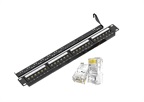
·Space saving, High-density.
·Mount to any standard 19 inch rack or cabinet.
·Sturdy Aluminum plate around RJ 45 Jacks. Connects RJ-45 ports to Network Patch Panel.
·Phosphor Bronze with 3-50 μ’’ gold plated.
·Black electrostatic Powder-Coated Steel: Phosphor bronze with tin plating over nickel.
·Front surface is uninterrupted by screw heads for a clean appearance.
FEATURES:
·Cost-Effective
·Super Smooth Finishing
·Durable
·High Quality Product
There are many tools that can be used for networking, ranging from hardware devices to software applications. Here are some common tools for networking:
Ping: This is a command-line tool that can be used to test the reachability of a network device or server, by sending an ICMP packet and measuring the response time.
Traceroute: This is a command-line tool that can be used to trace the path that packets take to reach a particular destination on a network.
Network scanners: These are software tools that can detect and identify devices on a network, as well as their IP addresses and open ports.
Network analyzers: These are software tools that capture and analyze network traffic, allowing administrators to troubleshoot and diagnose network issues.
Protocol analyzers: These are specialized software tools that decode and analyze network protocols, providing detailed information about the data being sent and received on a network.
Bandwidth monitors: These are software tools that track the amount of bandwidth being used by individual devices on a network, helping administrators to identify and address bottlenecks or performance issues.
SNMP (Simple Network Management Protocol) tools: These are software tools that allow administrators to monitor and manage network devices and services using SNMP.
Remote access tools: These are software tools that provide remote access to network devices or servers, allowing administrators to configure and maintain them from a remote location.
Cable testers: These are hardware devices that can be used to test Ethernet cables for continuity and detect wiring issues.
Crimper tools: These are hardware devices that can be used to attach connectors to the ends of Ethernet cables, enabling them to be connected to network devices.
To set up a computer network, the following materials are typically needed:
Urządzenia sieciowe: obejmują routery, przełączniki, koncentratory i punkty dostępu, które umożliwiają urządzeniom łączenie się z siecią.
Kable sieciowe: Kable Ethernet służą do łączenia urządzeń w sieci za pomocą połączeń przewodowych.
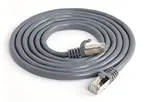
Kable krosowe: Te krótkie kable Ethernet służą do podłączania urządzeń do gniazd ściennych lub paneli krosowych.
Gniazda Keystone: Są to małe złącza pasujące do płyt ściennych lub paneli krosowych, umożliwiające podłączenie do nich kabli Ethernet.
Płyty ścienne: Są instalowane w ścianach i stanowią punkt montażowy dla gniazd Keystone.
Panele krosowe: służą do organizowania i zarządzania kablami sieciowymi w centralnej lokalizacji, zapewniając punkt połączenia dla każdego kabla.
Opaski kablowe: służą do wiązania i organizowania kabli sieciowych, co ułatwia zarządzanie nimi.
Szafy/stojaki sieciowe: zapewniają bezpieczną i zorganizowaną lokalizację sprzętu sieciowego, takiego jak serwery, przełączniki i panele krosowe.
Listwy zasilające: służą do zasilania urządzeń sieciowych, takich jak routery, przełączniki i serwery.
Etykiety: służą do identyfikacji kabli sieciowych, portów i urządzeń, ułatwiając zarządzanie siecią i rozwiązywanie problemów.
Oprogramowanie sieciowe: obejmuje systemy operacyjne, narzędzia do monitorowania sieci i oprogramowanie zabezpieczające używane do zarządzania siecią i jej konserwacji.
UPS (zasilacz bezprzerwowy): Zapewniają zasilanie awaryjne urządzeniom sieciowym w przypadku przerwy w dostawie prądu, zapewniając ciągłość usług.
Pięć elementów sieci to:
Clients: These are devices that interact with the network and request services or resources from servers. Examples of clients include desktop computers, laptops, smartphones, and tablets.
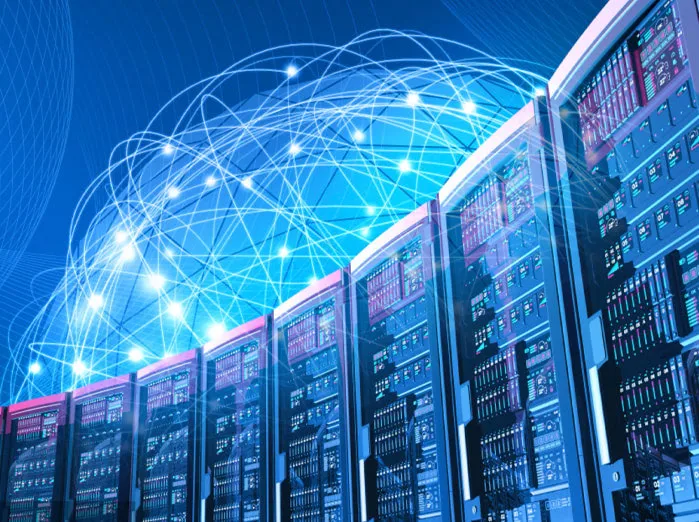
Servers: These are powerful computers that provide services or resources to clients on the network. Examples of servers include file servers, web servers, email servers, and database servers.
Network interfaces: These are hardware components that allow devices to connect to a network. Examples include network interface cards (NICs) for Ethernet connections, Wi-Fi adapters for wireless connections, and Bluetooth adapters for short-range wireless connections.
Transmission media: This refers to the physical communication channels used to transmit data over a network. Examples include copper cables (e.g. twisted pair), fiber optic cables, and wireless signals (e.g. Wi-Fi).
Network protocols: These are sets of rules and standards that govern how data is transmitted and received on a network. Examples include TCP/IP, HTTP, SMTP, FTP, and DNS. Protocols enable devices on a network to communicate with one another and ensure that data is transmitted efficiently, accurately, and securely.