


In the rapidly evolving world of telecommunications and data transmission, the demand for high-speed, reliable, and future-proof infrastructure continues to grow. As networks expand to support everything from cloud computing and 5G connectivity to smart cities and industrial automation, the backbone of these systems—fiber optic cabling—has become more critical than ever. Among the various configurations available, the 24c fiber optic cable stands out as a balanced solution that combines capacity, flexibility, and scalability. Designed to house 24 individual optical fibers within a single protective jacket, this cable type is widely used in enterprise networks, data centers, and telecom distribution hubs where performance and density are paramount.
A 24c fiber optic cable refers to a fiber optic cable containing 24 strands of glass or plastic optical fibers, each capable of transmitting data via pulses of light over long distances with minimal signal loss. These cables are typically constructed using either single-mode or multimode fiber, depending on the intended application. Single-mode variants are preferred for long-haul communications due to their ability to carry signals over tens or even hundreds of kilometers without degradation. In contrast, multimode versions are often deployed in shorter-distance applications such as within buildings or across campus environments, offering high bandwidth at a lower cost.
One of the primary advantages of the 24c fiber optic cable is its optimal balance between port density and manageability. While larger fiber counts (such as 48 or 72 strands) exist, they can be cumbersome to install and terminate, especially in confined spaces. On the other hand, smaller configurations like 6c or 12c may require more frequent patching and splicing, increasing complexity in large-scale deployments. The 24c configuration strikes a practical middle ground, enabling efficient use of space in cable trays, conduits, and patch panels while still providing sufficient capacity for most mid-to-large network segments.
The construction of a 24c fiber optic cable involves several key components designed to protect the delicate fibers inside. At the core are the optical fibers themselves, each about the thickness of a human hair. These are grouped into subunits—often arranged in ribbons of 12 fibers or bundled loosely within buffer tubes. The buffer tubes are then stranded around a central strength member, which provides tensile support and helps prevent damage during installation. An outer jacket made from materials such as LSZH (Low Smoke Zero Halogen), PVC, or PE offers protection against moisture, abrasion, and environmental stressors. Some 24c cables also include armored layers for added durability in harsh conditions.
Termination and splicing of a 24c fiber optic cable require precision and expertise. Each fiber must be carefully stripped, cleaned, and connected to a connector such as LC, SC, or MTP/MPO, depending on the network architecture. Pre-terminated 24c cables are increasingly popular because they reduce field labor, minimize errors, and speed up deployment. These factory-terminated solutions come with connectors already installed and tested, ensuring consistent performance and reliability. For backbone runs between data centers or main distribution frames, pre-terminated 24c fiber optic cables significantly streamline project timelines and improve overall system integrity.
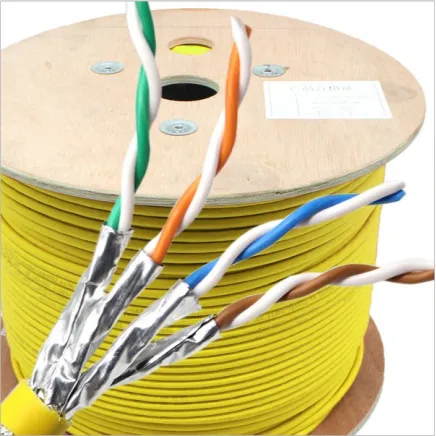
When selecting a 24c fiber optic cable, quality and consistency are non-negotiable. A poorly manufactured cable can lead to signal attenuation, increased bit error rates, or even complete link failure. That’s why choosing a reputable brand is essential. Among the leading manufacturers in the global market, OWIRE has established itself as a trusted name in fiber optic solutions. Known for rigorous quality control, innovative design, and compliance with international standards such as ISO/IEC and TIA/EIA, OWIRE offers a comprehensive range of 24c fiber optic cables suitable for diverse applications.
OWIRE’s 24c fiber optic cables are engineered for performance and durability. Available in both single-mode (OS2) and multimode (OM3, OM4, and OM5) variants, these cables support data rates ranging from 1 Gbps to 400 Gbps, making them ideal for current and next-generation networks. Their tight-buffered and loose-tube designs cater to indoor, outdoor, and hybrid installations, ensuring versatility across different environments. Additionally, OWIRE incorporates advanced jacketing materials that resist UV exposure, rodent damage, and extreme temperatures—critical features for outdoor or aerial deployments.
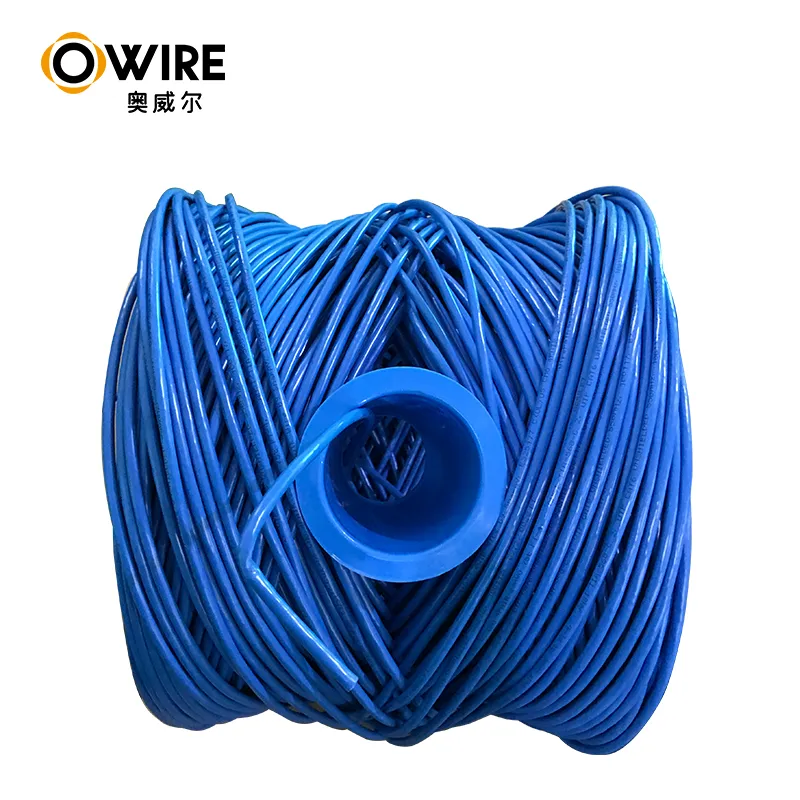
What sets OWIRE apart is not just product quality but also customer-centric innovation. The company provides customizable solutions, allowing clients to specify fiber types, jacket colors, lengths, and connector types to meet exact project requirements. Their pre-terminated 24c fiber optic cable assemblies undergo thorough testing for insertion loss, return loss, and continuity, guaranteeing optimal signal transmission. Moreover, OWIRE supports structured cabling standards, helping network designers build scalable, organized, and maintainable infrastructures.
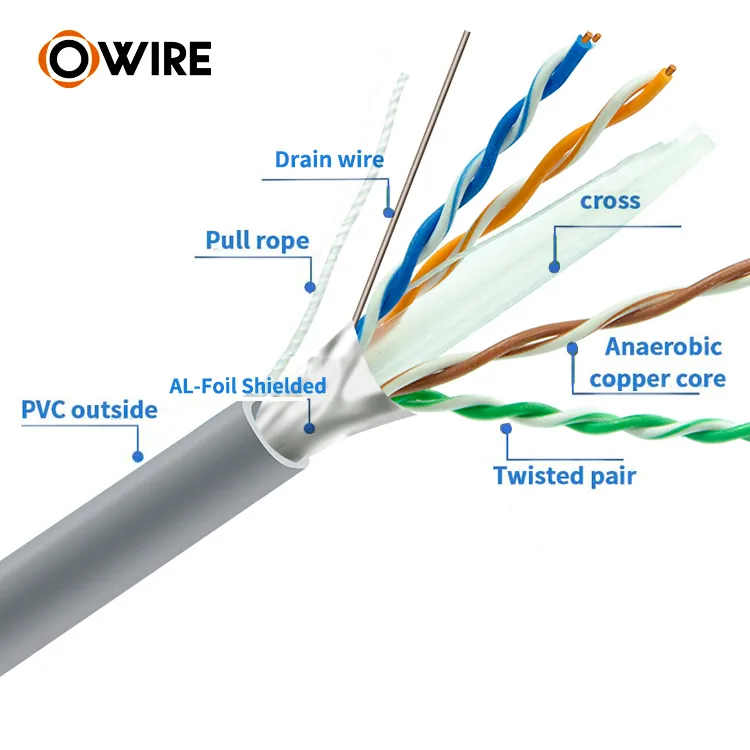
Another compelling reason to choose OWIRE is their commitment to sustainability and safety. Many of their 24c fiber optic cables feature LSZH jackets, which emit minimal smoke and no toxic halogens when exposed to fire—a crucial consideration in enclosed spaces like data centers, hospitals, and public buildings. This focus on safety aligns with modern building codes and environmental regulations, giving engineers and facility managers peace of mind.
Deployment scenarios for the 24c fiber optic cable are vast and varied. In data centers, these cables form the interconnects between server racks, switches, and storage units, supporting high-bandwidth applications like virtualization, AI processing, and real-time analytics. In enterprise campuses, they link multiple buildings through underground or aerial pathways, enabling seamless communication across departments. Telecommunications providers use 24c cables in fiber-to-the-node (FTTN) and fiber-to-the-premises (FTTP) architectures to deliver broadband services to homes and businesses.
In industrial settings, where electromagnetic interference (EMI) can disrupt copper-based transmissions, the immunity of fiber optics makes the 24c fiber optic cable an ideal choice. Factories, power plants, and transportation systems rely on these cables for secure, high-speed data transfer in monitoring, control, and automation systems. Even in challenging environments—such as oil rigs, mines, or maritime vessels—OWIRE’s ruggedized 24c cables perform reliably under pressure, vibration, and temperature extremes.
Looking ahead, the role of the 24c fiber optic cable is set to expand further. With the rollout of 5G networks requiring dense small-cell deployments, fiber backhaul becomes indispensable. Each small cell needs a high-capacity connection, and 24c cables provide the necessary infrastructure to aggregate traffic efficiently. Similarly, the growth of edge computing—where data processing occurs closer to the source—demands robust local connectivity, another area where 24c cables excel.
Network architects and IT planners should consider future scalability when deploying fiber. Installing a 24c fiber optic cable today can prevent costly upgrades tomorrow. Even if only a fraction of the 24 fibers are used initially, the remaining strands serve as dark fiber—ready for activation when bandwidth demands increase. This forward-thinking approach reduces downtime and capital expenditure over time.
Maintenance and troubleshooting are also easier with well-documented, high-quality 24c installations. Color-coded fibers, labeled breakout kits, and clearly marked patch panels simplify identification and reduce human error during repairs or expansions. OWIRE enhances this experience by offering detailed documentation, technical support, and training resources to ensure smooth integration and long-term performance.
In conclusion, the 24c fiber optic cable represents a cornerstone of modern digital infrastructure. Its combination of capacity, reliability, and adaptability makes it a go-to choice for professionals across industries. Whether supporting high-speed internet, cloud services, or mission-critical operations, this cable type delivers the performance needed to keep pace with technological advancement. When sourcing 24c fiber optic cables, turning to a proven leader like OWIRE ensures not only superior product quality but also confidence in every connection. As networks continue to grow in complexity and demand, investing in dependable fiber solutions is no longer optional—it’s essential.