




In the rapidly evolving landscape of fiber optic communication, network efficiency and signal distribution are paramount. As demand for high-speed internet, streaming services, and cloud-based applications continues to surge, service providers must deploy reliable infrastructure capable of delivering consistent performance across vast networks. One critical component enabling this is the optical splitter—a passive device that divides a single optical signal into multiple outputs without requiring external power. Among various configurations, the 4 way optical splitter stands out for its balance between capacity and practicality, especially in Fiber-to-the-Home (FTTH) deployments and local area networks.
A 4 way optical splitter takes one incoming optical signal from a central office or optical line terminal (OLT) and evenly distributes it across four separate output fibers. This allows a single fiber connection to serve up to four end users, making it an essential tool in Passive Optical Networks (PONs). The device operates using fused biconical taper (FBT) or planar lightwave circuit (PLC) technology, both of which offer high reliability and low insertion loss. PLC-based splitters, in particular, are preferred for their uniform signal distribution and better performance across a wide range of wavelengths, including 1310nm, 1490nm, and 1550nm—frequencies commonly used in modern PON systems.
The functionality of a 4 way optical splitter lies in its ability to maintain signal integrity while minimizing degradation. Insertion loss—the reduction in signal power resulting from the splitting process—is a key performance metric. For a 1×4 PLC splitter, typical insertion loss ranges from 7.2 dB to 7.8 dB, depending on manufacturing quality and environmental conditions. High-quality splitters ensure that each output receives a nearly equal share of the input signal, preventing imbalance that could lead to poor user experience. Additionally, return loss (also known as reflectance) should be minimized to avoid signal interference caused by back reflections.
One of the primary advantages of deploying a 4 way optical splitter is cost efficiency. By allowing a single feeder fiber to serve multiple subscribers, telecom operators can significantly reduce the amount of fiber cable, trenching, and hardware required in last-mile installations. This not only lowers capital expenditures but also simplifies network architecture and maintenance. Moreover, because optical splitters are passive components, they require no electrical power or active monitoring, contributing to lower operational costs and increased system reliability.
Scalability is another compelling reason for adopting 4 way optical splitters. In residential neighborhoods or small business districts, service providers can begin with a modest deployment and expand incrementally. If demand increases, additional splitters can be cascaded or replaced with higher-split-ratio units such as 1×8 or 1×16 models. This modular approach enables network planners to match infrastructure investments with actual subscriber uptake, avoiding over-provisioning.
Environmental durability is a crucial consideration when selecting optical splitters for outdoor or harsh indoor environments. A well-designed 4 way optical splitter should be housed in a protective enclosure that shields sensitive internal components from moisture, dust, temperature fluctuations, and physical damage. Many industrial-grade models feature stainless steel tubing, heat-shrink sleeves, and waterproof seals to ensure long-term stability. Operating temperatures typically range from -40°C to +85°C, making them suitable for deployment in diverse climates—from freezing northern regions to tropical zones.
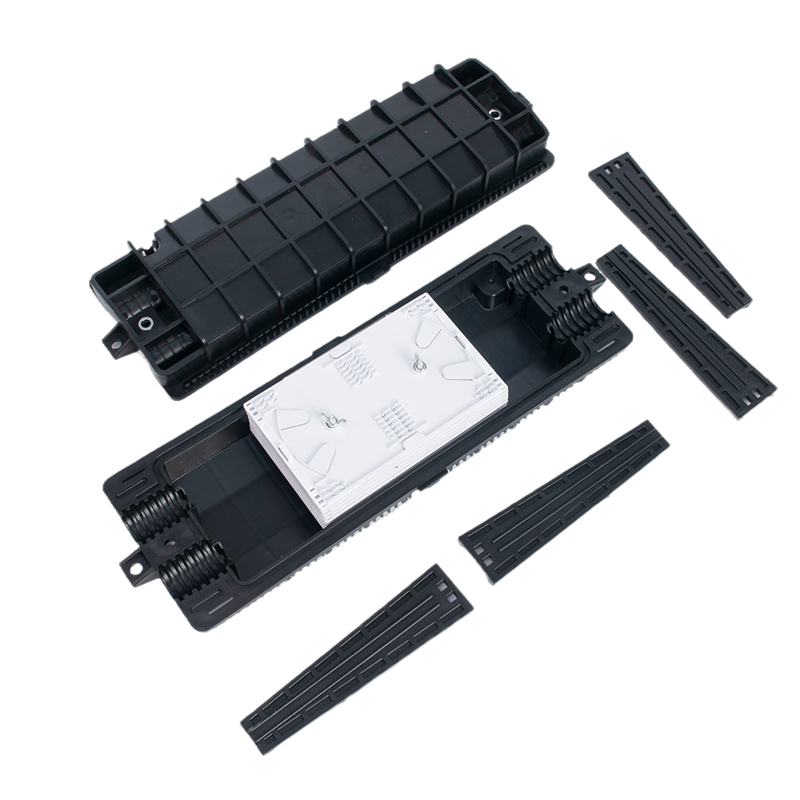
Installation flexibility further enhances the appeal of 4 way optical splitters. They are available in various form factors, including bare fiber, blockless, module, rack-mount, and tray configurations. This versatility allows integration into different network setups, whether in splice closures, termination boxes, or data center panels. For instance, a blockless 1×4 splitter might be ideal for tight spaces within a closure, while a rack-mounted version suits centralized distribution points in larger facilities.
When sourcing a 4 way optical splitter, choosing a reputable brand is essential to ensure performance, longevity, and compliance with international standards. Among the leading manufacturers in the fiber optics industry, OWIRE has established a strong reputation for producing high-quality passive components. OWIRE’s 4 way optical splitters utilize advanced PLC technology to deliver exceptional uniformity, low insertion loss, and excellent polarization-dependent loss (PDL) characteristics. Each unit undergoes rigorous testing during production to meet Telcordia GR-1209-CORE and GR-1221-CORE reliability standards.
OWIRE offers both 1×4 and 2×4 configurations, giving network engineers options based on redundancy and bidirectional signal requirements. Their products are compatible with SMF-28e+ and other standard single-mode fibers and support all major PON protocols, including GPON, EPON, and XGS-PON. Furthermore, OWIRE provides customization options such as specific port labeling, connector types (SC/APC, LC/UPC, etc.), and tailored cable lengths, ensuring seamless integration into existing infrastructures.
Another advantage of choosing OWIRE is their commitment to technical support and after-sales service. From pre-sale consultation to post-installation troubleshooting, OWIRE’s team assists clients in selecting the right product for their application, verifying compatibility, and optimizing network performance. This level of customer engagement is particularly valuable for smaller ISPs or municipal broadband projects that may lack in-house engineering expertise.
Beyond individual components, OWIRE also supplies complete fiber distribution solutions, including patch panels, splice trays, and cable management systems. This ecosystem approach enables customers to build cohesive, future-ready networks using interoperable parts designed to work together efficiently. For example, pairing an OWIRE 4 way optical splitter with their high-density termination box ensures clean routing, easy access, and protection against accidental disconnections.
Looking ahead, the role of optical splitters like the 4 way model will only grow as global connectivity demands increase. Emerging technologies such as 5G backhaul, smart cities, and Internet of Things (IoT) ecosystems rely heavily on robust fiber backbones. Splitters enable the dense node deployments required for low-latency communication, especially in urban environments where space and resources are constrained. Additionally, as network operators transition toward full-fiber architectures, the need for efficient, scalable splitting solutions becomes even more pronounced.
Energy efficiency is another area where 4 way optical splitters contribute positively. Unlike active electronic devices, passive splitters consume no power and generate no heat, reducing the carbon footprint of telecommunications networks. In an era when sustainability is a growing concern, this passive nature aligns well with green IT initiatives and corporate environmental goals.
Security and signal privacy are often raised as concerns in shared fiber networks. However, PON architectures using splitters are inherently secure due to the point-to-multipoint topology and encryption at the protocol level. Data transmitted downstream is broadcast to all users, but only the intended recipient can decrypt it using a unique key. Upstream signals are time-division multiplexed, preventing collisions and eavesdropping. Thus, while the 4 way optical splitter enables resource sharing, it does so without compromising data confidentiality.

In conclusion, the 4 way optical splitter plays a vital role in modern fiber optic networks by enabling efficient, cost-effective, and scalable signal distribution. Its ability to serve multiple endpoints from a single input makes it indispensable in FTTH rollouts and enterprise connectivity solutions. With technological advancements enhancing performance and durability, these devices continue to meet the rising expectations of speed, reliability, and coverage. For organizations seeking dependable and high-performance components, OWIRE emerges as a trusted partner. Their 4 way optical splitter offerings combine precision engineering, rigorous quality control, and responsive support, making them a top choice for network builders worldwide. Whether deploying a new neighborhood network or upgrading an aging infrastructure, investing in a quality 4 way optical splitter from OWIRE ensures a solid foundation for current and future connectivity needs.