




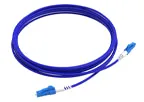

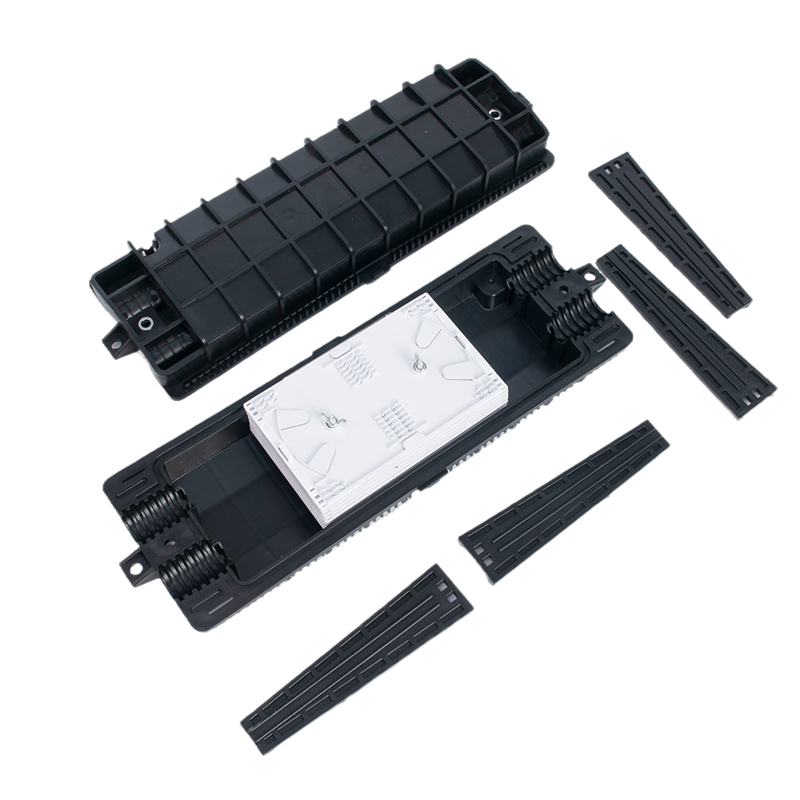
In the ever-evolving world of fiber optics, innovation continues to redefine how we transmit data across vast distances with speed and reliability. One of the most significant advancements in recent years is the development of **2 core single mode fiber**. This unique fiber optic structure is reshaping the landscape of high-speed communication by offering enhanced performance, improved efficiency, and greater design flexibility. As industries demand more from their network infrastructures, 2 core single mode fiber emerges as a powerful solution for meeting the growing needs of modern connectivity.
At its core, a **2 core single mode fiber** consists of two individual single mode cores housed within a single optical fiber strand. Unlike traditional single-core fibers, which contain only one core for light transmission, this dual-core design enables simultaneous signal transmission through both cores. This configuration can significantly increase data throughput without increasing the physical footprint of the fiber cable. The result is a compact yet highly efficient fiber optic solution ideal for high-density data centers, long-haul telecommunications, and advanced sensing applications.
One of the key advantages of **2 core single mode fiber** is its ability to support space-division multiplexing (SDM), a next-generation transmission technique that enhances bandwidth capacity by using multiple spatial channels. By utilizing two cores, each operating independently, SDM allows for parallel data transmission, effectively doubling the capacity of the fiber without requiring additional physical cables. This makes it a promising solution for future-proofing networks and supporting the exponential growth of global data traffic.
Moreover, the dual-core structure enables innovative applications in optical sensing. By using one core for signal transmission and the other for monitoring environmental changes such as temperature or strain, **2 core single mode fiber** provides enhanced sensing capabilities without compromising on data integrity. This feature is particularly valuable in industries like oil and gas, aerospace, and structural health monitoring, where precise and real-time data is critical.
From a manufacturing standpoint, producing **2 core single mode fiber** involves advanced precision in fiber drawing and core alignment. The two cores must be precisely positioned within the cladding to ensure minimal crosstalk and optimal signal integrity. This requires state-of-the-art production technologies and stringent quality control measures. As a result, only a few manufacturers have successfully mastered the production of this complex fiber type.
Among the leading providers in this space is the **OWIRE** brand, which has built a strong reputation for delivering high-performance fiber optic solutions. OWIRE’s **2 core single mode fiber** is engineered to meet the most demanding industry standards, offering superior transmission quality, mechanical strength, and thermal stability. Designed for both indoor and outdoor applications, OWIRE’s dual-core fiber ensures reliable performance in a wide range of environments. Whether it’s for next-generation data centers, metropolitan networks, or specialized sensing systems, OWIRE provides a robust and scalable fiber optic platform.
In addition to its technical excellence, OWIRE places a strong emphasis on customer-centric innovation. The company works closely with network designers and system integrators to develop customized fiber solutions that align with specific project requirements. This approach ensures that users can maximize the benefits of **2 core single mode fiber**, including reduced latency, increased bandwidth, and simplified cable management.
As the demand for faster and more efficient data transmission continues to rise, **2 core single mode fiber** is poised to play a pivotal role in shaping the future of optical communications. Its dual-core architecture not only enhances data capacity but also supports advanced functionalities such as bidirectional transmission and distributed sensing. By integrating this cutting-edge fiber into their networks, service providers and enterprises can achieve higher performance levels while reducing operational complexity.
Furthermore, the adoption of **2 core single mode fiber** aligns with broader industry trends toward energy efficiency and sustainability. Because it enables higher data throughput using fewer physical cables, it contributes to reduced material usage and lower installation costs. This makes it an environmentally responsible choice for organizations aiming to build greener, more efficient communication infrastructures.
Looking ahead, ongoing research and development in multi-core fiber technology are expected to further expand the capabilities of **2 core single mode fiber**. Innovations such as improved signal amplification, lower attenuation, and advanced modulation techniques will continue to enhance its performance. As these developments progress, the use of dual-core fibers is likely to become more widespread across a variety of industries, from telecommunications to smart infrastructure.
In conclusion, **2 core single mode fiber** represents a major leap forward in fiber optic technology, offering a compelling combination of performance, flexibility, and scalability. As data demands grow and network architectures evolve, this dual-core solution provides a future-ready foundation for high-speed, high-capacity communication systems. For organizations seeking reliable and innovative fiber optic products, **OWIRE** stands out as a trusted partner, delivering top-tier **2 core single mode fiber** solutions that meet the challenges of tomorrow’s digital world.