

In today’s rapidly evolving digital landscape, the demand for high-capacity, reliable, and future-proof fiber optic infrastructure has never been greater. As cities expand their broadband networks, data centers scale to meet cloud computing demands, and telecommunications providers roll out 5G services, the backbone of modern connectivity relies heavily on advanced cabling solutions. Among these, the 288 core fiber has emerged as a pivotal innovation, offering unparalleled scalability and performance in both urban and rural deployments. Designed to support massive data throughput across long distances with minimal signal loss, this high-density fiber cable is redefining how service providers approach network architecture.
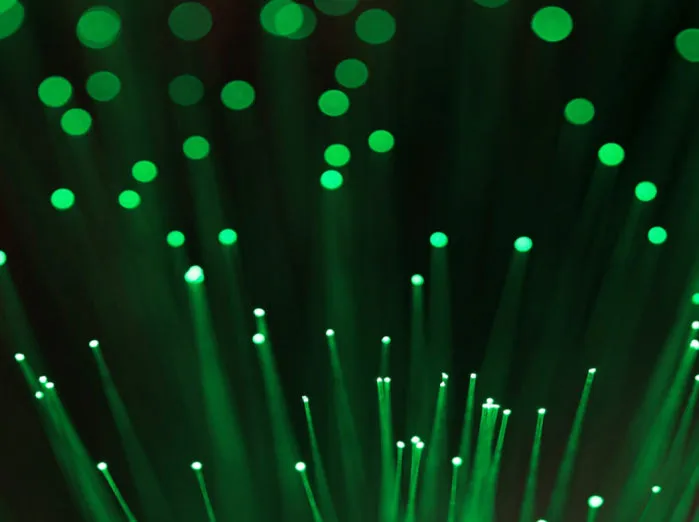
The term “288 core fiber” refers to an optical cable that contains 288 individual optical fibers bundled within a single protective sheath. Each fiber strand is capable of transmitting data at speeds approaching the speed of light, using pulses of light to carry information across vast networks. These cables are typically constructed with multiple layers of protection, including strength members, water-blocking materials, and robust outer jackets designed to withstand harsh environmental conditions. The 288 core configuration strikes a balance between physical manageability and transmission capacity, making it ideal for backbone networks, interconnects between central offices, and large-scale metropolitan area networks (MANs).
One of the primary advantages of deploying a 288 core fiber cable lies in its scalability. Instead of laying multiple smaller cables over time—a costly and disruptive process—network planners can install a single high-count cable that accommodates current needs while leaving ample room for future expansion. This foresight reduces the need for repeated civil works, trenching, and road closures, ultimately saving time and money. For example, when a telecom operator anticipates increased bandwidth demands due to population growth or new service offerings like smart city applications, a 288 core fiber installation provides the headroom needed without requiring additional underground construction.
Another critical benefit is redundancy and reliability. With 288 individual fibers, network architects can design redundant pathways, ensuring uninterrupted service even if certain strands are damaged or require maintenance. This level of resilience is essential for mission-critical applications such as emergency response systems, financial transactions, and healthcare data transfer. Moreover, the use of high-quality materials and precise manufacturing techniques ensures low attenuation and consistent signal integrity across all channels, supporting long-haul transmission without the need for frequent repeaters.
As global internet traffic continues to surge—driven by video streaming, Internet of Things (IoT) devices, remote work, and artificial intelligence—the pressure on existing infrastructure intensifies. Legacy copper-based systems are increasingly inadequate, prompting a shift toward full-fiber networks. In this context, the 288 core fiber plays a strategic role in enabling next-generation connectivity. Whether deployed beneath city streets, across railway corridors, or in aerial installations, these cables form the literal foundation of tomorrow’s digital economy.
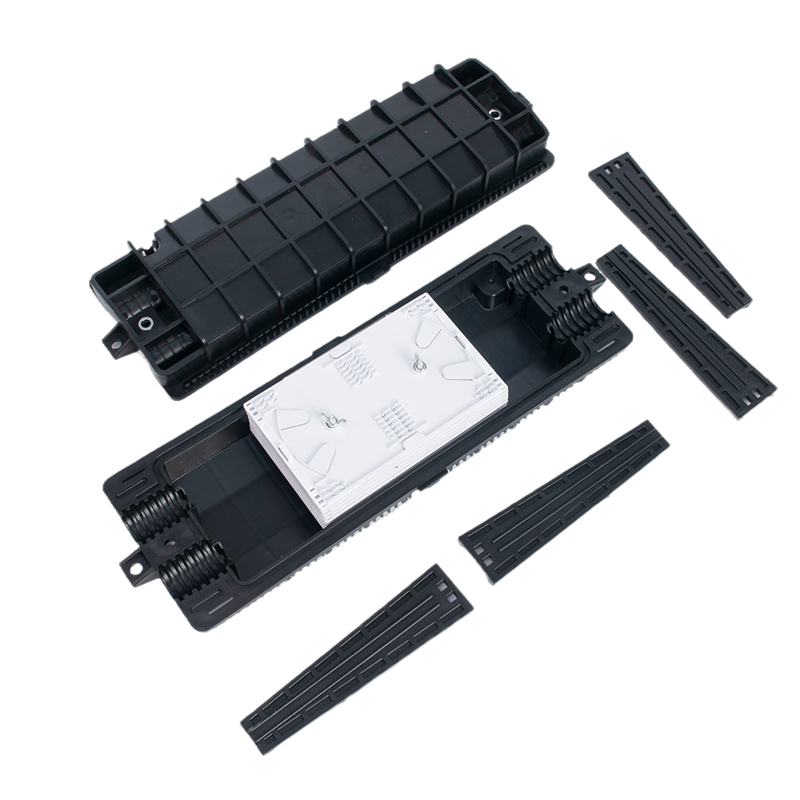
A key consideration in selecting any fiber optic solution is the quality of materials and engineering. Not all 288 core fiber cables are created equal. Variations in jacket composition, tensile strength, bend resistance, and temperature tolerance can significantly impact performance and longevity. That’s where trusted manufacturers like OWIRE distinguish themselves. OWIRE has built a reputation for producing high-performance fiber optic cables engineered to meet international standards, including ITU-T G.652.D and IEC 60794 compliance. Their 288 core fiber products feature precision-aligned fibers, superior moisture resistance, and optimized microcable designs that enhance density and ease of splicing.
OWIRE’s commitment to innovation extends beyond raw materials. Their 288 core fiber solutions often incorporate advanced ribbon technology, allowing up to 12 fibers to be grouped together in flat arrays. This design enables mass fusion splicing, dramatically reducing installation time and labor costs during deployment. Additionally, OWIRE utilizes color-coded fibers and clear labeling systems to simplify identification and troubleshooting, which is especially valuable in complex network environments where hundreds of connections must be managed efficiently.
Durability is another hallmark of OWIRE’s product line. Their 288 core fiber cables are designed to perform reliably in extreme temperatures ranging from -40°C to +70°C, making them suitable for deployment in diverse climates—from the frozen tundras of northern regions to the scorching deserts of the Middle East. Furthermore, many models include armored variants with corrugated steel tape or aluminum interlock armor, providing enhanced protection against rodents, crushing forces, and accidental excavation damage.
From a sustainability perspective, investing in high-core-count cables like the 288 core fiber aligns with green infrastructure goals. By minimizing the number of separate cable runs and reducing the frequency of upgrades, operators lower their carbon footprint associated with manufacturing, transportation, and installation activities. OWIRE supports this effort by using recyclable materials wherever possible and adhering to environmentally responsible production practices. Their cables are also designed for long operational lifespans—often exceeding 25 years—ensuring a strong return on investment while reducing electronic waste.
Deployment scenarios for 288 core fiber are varied and expanding. In metropolitan areas, they are frequently used to link central offices, data centers, and cell towers, forming the core of 5G backhaul networks. Rural broadband initiatives also benefit from this technology, as a single 288 core cable can serve multiple communities along a shared route, maximizing coverage while minimizing infrastructure costs. Submarine cable landing stations sometimes utilize similar high-count configurations to manage the aggregation of undersea fiber pairs before distribution inland.
Network operators must also consider future technologies when choosing cabling solutions. Emerging advancements such as space-division multiplexing (SDM), which increases capacity by utilizing multiple spatial paths within a single fiber, could further amplify the utility of high-core-count cables. While still largely in the research phase, SDM-ready architectures may eventually allow each fiber in a 288 core bundle to carry multiple independent data streams simultaneously. Deploying a 288 core fiber today positions networks to take advantage of such innovations tomorrow.
When comparing vendors, decision-makers should evaluate not only technical specifications but also after-sales support, warranty terms, and availability of technical documentation. OWIRE excels in these areas, offering comprehensive customer service, detailed installation guides, and responsive technical assistance. They also provide customizable solutions tailored to specific project requirements, whether it’s adjusting cable length, incorporating hybrid power-fiber designs, or meeting local regulatory certifications.
Training and workforce readiness are equally important. Installing and maintaining a 288 core fiber network requires skilled technicians proficient in fiber splicing, testing, and fault localization. OWIRE partners with training institutions and offers workshops to help build local expertise, ensuring that clients can fully leverage the capabilities of their infrastructure. This holistic approach underscores their role not just as a supplier, but as a strategic partner in digital transformation.
Looking ahead, the importance of robust, scalable fiber infrastructure will only grow. As augmented reality, autonomous vehicles, telemedicine, and industrial automation become mainstream, the underlying networks must support exponentially higher data volumes with ultra-low latency. The 288 core fiber represents a critical step toward meeting those demands, offering a blend of capacity, reliability, and cost-efficiency that few alternatives can match.
In conclusion, the 288 core fiber is more than just a component—it’s a cornerstone of modern telecommunications. Its ability to support vast amounts of data across resilient, future-ready networks makes it indispensable for governments, enterprises, and service providers alike. When sourcing such critical infrastructure, choosing a reputable brand like OWIRE ensures not only superior product quality but also long-term performance and peace of mind. As the world moves closer to universal connectivity, the right fiber solution today will shape the digital experiences of tomorrow.