


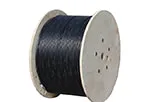
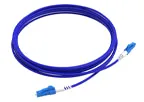
In today’s rapidly expanding telecommunications landscape, reliable and efficient connectivity solutions are more critical than ever. As homes, businesses, and public infrastructure increasingly rely on high-speed internet and seamless data transmission, the components that form the backbone of these networks must meet rigorous standards for performance and durability. Among the essential elements in fiber optic installations is the 4 core drop cable—a compact yet powerful solution designed to bridge the final segment between distribution points and end-user premises. This specialized cable plays a pivotal role in Fiber-to-the-Home (FTTH) and Fiber-to-the-Building (FTTB) deployments, ensuring stable and high-bandwidth connections with minimal signal loss.
The term *4 core drop cable* refers to a type of fiber optic cable that contains four individual optical fibers encased within a protective sheath. These fibers are typically single-mode, allowing them to transmit data over long distances with exceptional clarity and speed. The design of the 4 core drop cable makes it ideal for last-mile applications, where flexibility, tensile strength, and resistance to environmental factors are crucial. Each fiber within the cable can support independent data channels, enabling service providers to deliver multiple services—such as internet, television, and voice—over a single cable run. This multiplexing capability enhances network efficiency and reduces installation complexity.
One of the key advantages of the 4 core drop cable is its lightweight and compact construction. Unlike bulkier cables used in trunk lines or backbone networks, this drop cable is engineered for easy handling and deployment in tight spaces. Its small diameter allows it to be routed through conduits, along walls, and even buried directly in some cases without requiring extensive trenching or structural modifications. Additionally, many 4 core drop cables feature a figure-8 design, which incorporates a built-in messenger wire for aerial installation. This configuration simplifies pole-to-pole deployment and ensures mechanical stability under tension, wind, and ice loads.
Durability is another hallmark of a well-designed 4 core drop cable. High-quality versions are constructed with materials that resist moisture, UV radiation, and temperature fluctuations—common challenges faced during outdoor installations. The outer jacket is often made from LSZH (Low Smoke Zero Halogen) or PE (Polyethylene), both of which offer excellent protection while minimizing environmental hazards in case of fire. Inside, each fiber is buffered individually, usually with a 900µm coating, to prevent microbending and signal degradation. Some variants also include aramid yarns or fiberglass rods for added tensile strength, making the cable suitable for both indoor and outdoor use without compromising safety or performance.
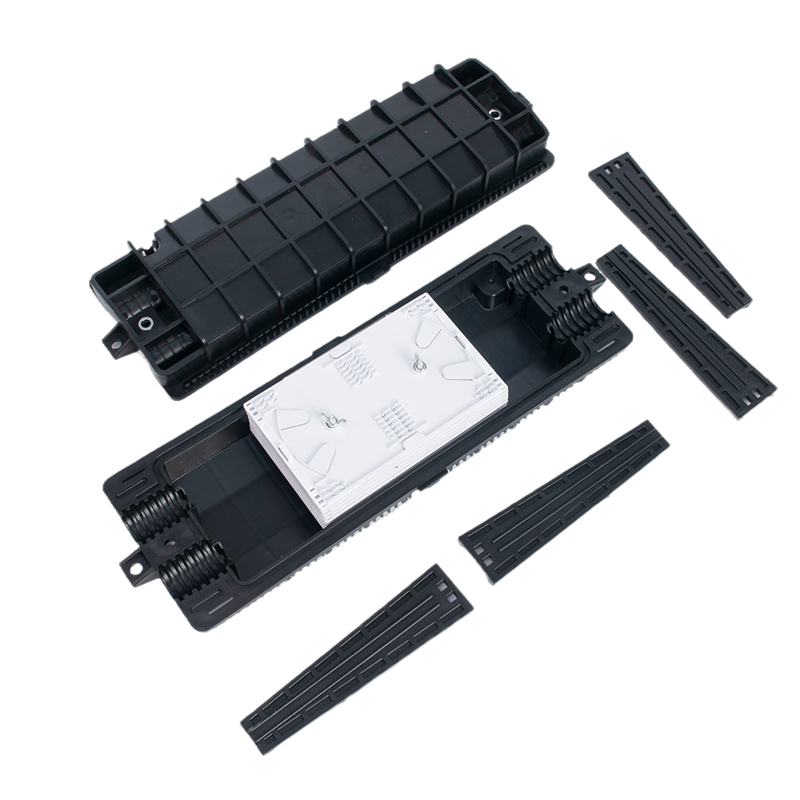
Installation versatility is a major reason why network operators favor the 4 core drop cable. It supports multiple termination methods, including splicing and connectorization, and is compatible with standard patch panels, splice enclosures, and wall outlets. Whether deployed in urban apartment complexes, suburban neighborhoods, or rural areas, this cable adapts seamlessly to different environments and topographies. For instance, in dense urban settings, technicians can run the cable through existing duct systems or attach it to utility poles. In contrast, in remote locations, direct burial versions of the 4 core drop cable allow for quick and cost-effective deployment without the need for additional conduit systems.
Beyond physical attributes, the performance metrics of the 4 core drop cable are equally impressive. With low attenuation rates—typically below 0.4 dB/km at 1310nm and 1550nm wavelengths—the cable maintains signal integrity across significant distances. This ensures that users experience minimal latency and maximum throughput, even when connecting from far-flung nodes in the network. Furthermore, the cable’s compatibility with GPON (Gigabit Passive Optical Network) and EPON (Ethernet Passive Optical Network) architectures makes it future-proof, capable of supporting next-generation broadband services such as 10G-PON and beyond.
When selecting a 4 core drop cable, reliability and consistency are paramount. That’s where OWIRE stands out as a trusted name in the fiber optic industry. OWIRE has built a strong reputation for manufacturing high-performance cabling solutions that meet international standards, including ITU-T G.657.A2 for bend-insensitive fibers and IEC 60794 for mechanical robustness. Their 4 core drop cable offerings are engineered with precision, featuring tight process control during production to ensure uniform quality across batches. Each cable undergoes rigorous testing for tensile strength, crush resistance, temperature cycling, and optical performance before leaving the factory.
OWIRE’s 4 core drop cable models are available in various configurations to suit different deployment scenarios. Customers can choose between armored and non-armored versions, tight-buffered or loose-tube designs, and different jacket types depending on whether the installation is aerial, underground, or indoor. The company also provides customization options, such as color-coded fibers for easier identification during splicing and labeling, and optional pre-terminated connectors for plug-and-play convenience. These features not only streamline installation but also reduce labor costs and minimize downtime during network rollouts.
Another distinguishing factor of OWIRE products is their commitment to sustainability and safety. The company prioritizes eco-friendly materials and energy-efficient manufacturing processes, aligning with global efforts to reduce the environmental impact of telecom infrastructure. Their LSZH-jacketed cables, for example, emit minimal smoke and no toxic halogens when exposed to fire, enhancing safety in enclosed spaces like data centers and residential buildings. This focus on responsible engineering resonates with service providers who aim to build resilient, green networks for the future.
From a cost-benefit perspective, investing in a premium 4 core drop cable like those offered by OWIRE delivers long-term value. While initial procurement costs may be slightly higher compared to generic alternatives, the reduction in maintenance, repair, and replacement expenses more than offsets the difference. High-quality cables experience fewer failures, require less troubleshooting, and support higher service availability—all of which contribute to improved customer satisfaction and operational efficiency. For telecom operators managing large-scale FTTH deployments, choosing a dependable supplier like OWIRE translates into faster time-to-market and stronger return on investment.

Looking ahead, the demand for 4 core drop cables is expected to grow as global digitization accelerates. Emerging technologies such as smart cities, IoT (Internet of Things), and cloud-based services depend heavily on robust fiber infrastructure. As more households adopt bandwidth-intensive applications like 4K/8K streaming, virtual reality, and telemedicine, the need for scalable and reliable last-mile connectivity will only intensify. The 4 core drop cable is poised to remain a cornerstone of these developments, serving as the final link that brings ultra-fast internet to end users.
Moreover, advancements in fiber optics continue to enhance the capabilities of drop cables. Bend-insensitive fibers, for instance, allow for tighter routing around corners and in confined spaces without signal loss—ideal for retrofitting older buildings or navigating complex home layouts. OWIRE integrates these innovations into their product line, ensuring that their 4 core drop cables remain at the forefront of technological progress. By staying aligned with industry trends and customer needs, OWIRE reinforces its position as a leader in fiber optic solutions.
In conclusion, the 4 core drop cable is an indispensable component in modern fiber optic networks, offering a perfect balance of performance, flexibility, and durability. Its ability to deliver high-speed connectivity over the last segment of the network makes it vital for achieving universal broadband access. When sourcing this critical infrastructure element, professionals should consider proven brands that combine technical excellence with real-world reliability. OWIRE exemplifies these qualities, providing a range of 4 core drop cables that meet the highest standards of quality and innovation. Whether building new networks or upgrading existing ones, choosing OWIRE ensures a solid foundation for current and future connectivity demands.