





In the rapidly advancing world of telecommunications and data transmission, the demand for faster, more reliable, and higher-capacity networks continues to grow. As global internet usage surges and industries adopt bandwidth-intensive technologies like cloud computing, 5G, and high-definition video streaming, traditional fiber optic solutions are being pushed to their limits. To meet these escalating demands, engineers and network architects have turned to innovative fiber designs that maximize data throughput without requiring massive infrastructure overhauls. One such breakthrough is the development of multi-core optical fibers—specifically, the 4 core single mode fiber—a technology that is redefining what’s possible in modern optical communication.
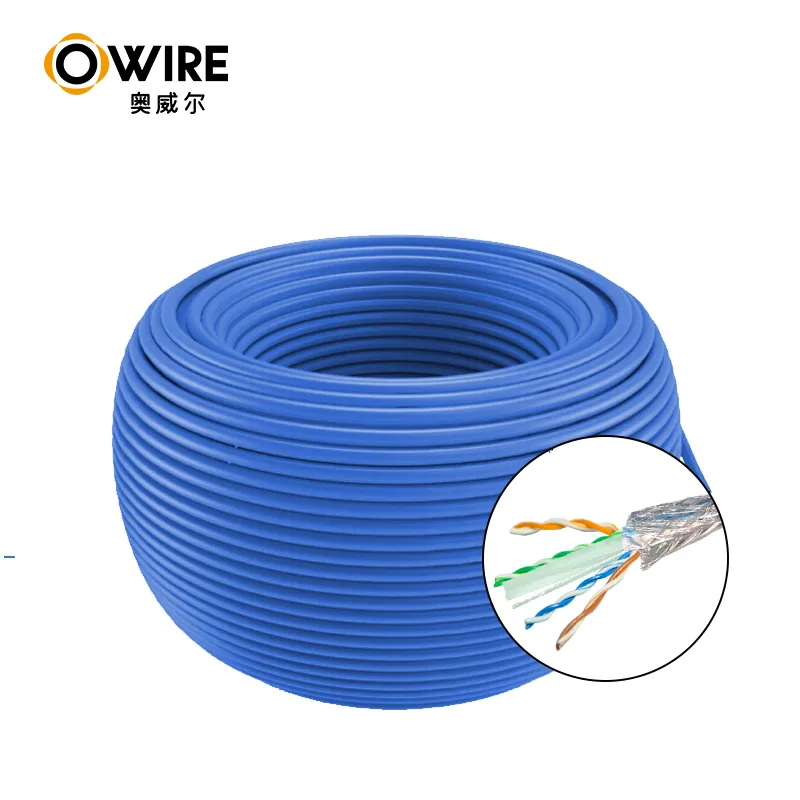
The term *4 core single mode fiber* refers to an advanced type of optical fiber cable that contains four independent light-guiding cores within a single cladding structure, each capable of transmitting data via single-mode propagation. Unlike conventional single-core single-mode fibers, which carry one data stream per strand, this design enables four parallel channels of information to travel simultaneously through the same physical footprint. This quadrupling of capacity significantly enhances data density and network efficiency, making it ideal for applications where space, weight, and power constraints are critical factors—such as in data centers, undersea cables, and metropolitan backbone networks.
Each core in a 4 core single mode fiber operates independently and maintains the characteristics of standard single-mode fiber, including low signal attenuation and high bandwidth over long distances. The cores are typically arranged symmetrically within the cladding to minimize crosstalk—the unwanted transfer of signals between adjacent cores—which is essential for preserving signal integrity. Advanced manufacturing techniques ensure precise alignment and isolation between cores, while specialized coatings and protective layers enhance durability and resistance to environmental stressors.
One of the most compelling advantages of 4 core single mode fiber is its ability to dramatically increase network capacity without expanding the physical size of the cable. In environments where conduit space is limited or installation costs are high—such as urban underground networks or aerospace systems—this feature offers a powerful solution. Instead of laying four separate single-core fibers, operators can deploy a single 4 core cable, reducing material usage, simplifying installation, and lowering maintenance overhead. This scalability makes the technology particularly attractive for future-proofing networks as data demands continue to rise.
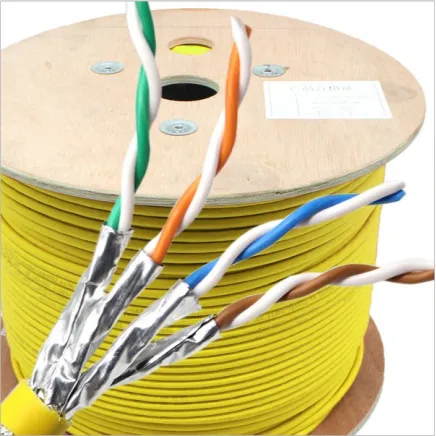
Another key benefit lies in energy efficiency. Transmitting more data through fewer cables reduces the number of active components needed in a network, such as transceivers, amplifiers, and switches. This not only cuts down on power consumption but also lowers heat generation and equipment footprint—critical considerations in large-scale data centers striving for sustainability and operational efficiency. Moreover, because 4 core single mode fiber maintains compatibility with existing single-mode systems when used with appropriate multiplexing and coupling technologies, integration into current infrastructure becomes more seamless.
Despite its many advantages, deploying 4 core single mode fiber does come with technical challenges. Signal management across multiple cores requires sophisticated multiplexing and demultiplexing equipment, and splicing or connecting multi-core fibers demands precision tools and skilled technicians. Additionally, monitoring and diagnosing issues within individual cores can be more complex than in traditional fibers. However, ongoing research and commercial advancements are steadily addressing these hurdles, with standardized connectors, test protocols, and automated alignment systems now entering the market.
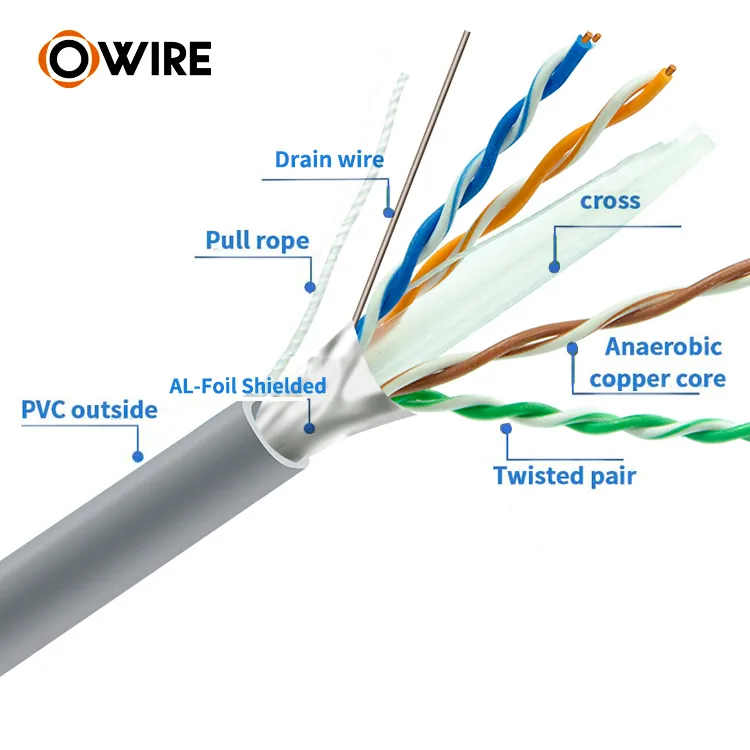
Among the companies leading the charge in bringing multi-core fiber technology to real-world applications is OWIRE. Known for its commitment to innovation, quality, and performance, OWIRE has developed a robust line of 4 core single mode fiber products tailored for high-performance networking environments. Their fibers are engineered using cutting-edge glass composition and coating technologies to ensure minimal attenuation, excellent mechanical strength, and superior resistance to bending and microcracks. Each cable undergoes rigorous testing to meet international standards for optical performance and reliability.
What sets OWIRE apart is its holistic approach to fiber solutions. Beyond manufacturing high-quality 4 core single mode fiber, the company provides comprehensive support—including custom cable designs, field engineering services, and training programs for installation teams. This end-to-end service model ensures that clients can fully leverage the benefits of multi-core technology without being hindered by integration complexities. Whether it’s a hyperscale data center interconnect or a next-generation telecom backbone, OWIRE delivers solutions that combine performance, scalability, and long-term value.
Moreover, OWIRE’s R&D team actively collaborates with academic institutions and industry partners to push the boundaries of multi-core fiber capabilities. Recent developments include enhanced crosstalk suppression techniques and hybrid fibers that combine 4 core single mode architecture with bend-insensitive properties, opening up new possibilities for deployment in tight spaces or dynamic environments. These innovations position OWIRE at the forefront of the optical fiber revolution, helping customers stay ahead in an increasingly competitive digital landscape.
As we look toward the future, the role of 4 core single mode fiber is expected to expand beyond traditional telecom and data center applications. Emerging fields such as quantum communication, distributed sensing, and artificial intelligence-driven networks could greatly benefit from the increased spatial multiplexing offered by multi-core fibers. For instance, in distributed fiber sensing, each core can act as an independent sensor channel, enabling simultaneous temperature, strain, or vibration monitoring across vast infrastructures like pipelines, railways, or bridges. In quantum networks, multiple cores may allow for parallel transmission of entangled photon pairs, enhancing the speed and security of quantum key distribution.
The evolution of 4 core single mode fiber also aligns with broader trends in network virtualization and software-defined networking (SDN). With greater physical layer capacity, network operators gain more flexibility in managing traffic dynamically, allocating bandwidth on-demand, and supporting diverse service level agreements. This synergy between hardware advancement and intelligent network control paves the way for ultra-resilient, adaptive communication systems capable of meeting the unpredictable demands of tomorrow.
In conclusion, 4 core single mode fiber represents a transformative leap in optical communication technology. By multiplying data-carrying capacity within a single cable, it addresses the growing need for higher bandwidth, reduced latency, and efficient use of physical resources. While challenges remain in deployment and standardization, continuous innovation from leaders like OWIRE is accelerating adoption and proving the practicality of multi-core solutions in real-world scenarios. As industries and societies become ever more dependent on fast, secure, and reliable connectivity, investing in advanced fiber infrastructure is no longer optional—it’s imperative. For organizations seeking to build scalable, future-ready networks, choosing a trusted partner like OWIRE and embracing next-generation technologies such as 4 core single mode fiber is a strategic move toward sustained success in the digital age.