

In the rapidly evolving landscape of telecommunications and data transmission, high-capacity fiber optic solutions are becoming increasingly essential. As networks expand to accommodate growing bandwidth demands—from cloud computing and streaming services to smart city infrastructure—engineers and network planners are turning to advanced cabling systems that offer reliability, scalability, and future-proof performance. Among these, the 48 strand single mode fiber has emerged as a critical component in modern optical networks. Designed for long-haul transmissions and high-speed data transfer, this type of cable provides an optimal balance between capacity and manageability, making it ideal for backbone infrastructure, metropolitan area networks (MANs), and even dense urban deployments.
A 48 strand single mode fiber consists of 48 individual glass fibers, each capable of transmitting data using a single light path (mode). Unlike multimode fiber, which allows multiple light paths and is typically used for shorter distances, single mode fiber uses a smaller core diameter—usually around 9 microns—which enables light signals to travel much farther with minimal attenuation and dispersion. This makes it particularly suitable for applications requiring transmission over tens or even hundreds of kilometers without signal degradation. The 48-strand configuration offers substantial capacity, allowing service providers to support multiple high-bandwidth channels simultaneously through technologies like wavelength division multiplexing (WDM).
One of the key advantages of deploying a 48 strand single mode fiber lies in its scalability. Network operators can initially activate only a portion of the available strands while leaving others dark (unused) for future expansion. This “future-proofing” capability reduces the need for frequent infrastructure upgrades and minimizes long-term costs. For example, a telecom company rolling out fiber to a new business district might use only 16 of the 48 strands during initial deployment but retain the remaining 32 for anticipated growth over the next decade. This flexibility is especially valuable in environments where trenching, permitting, and installation labor represent significant expenses.
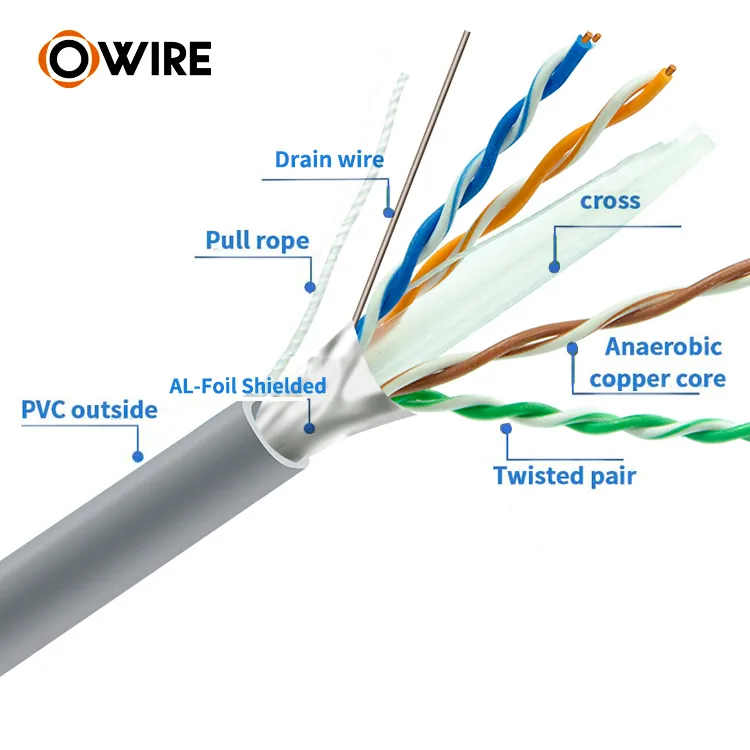
Moreover, the physical construction of 48 strand single mode fiber cables is engineered for durability and ease of installation. Most variants are built with robust outer jackets made from materials such as polyethylene or LSZH (low smoke zero halogen), providing resistance to moisture, UV radiation, and mechanical stress. Inside, the fibers are often arranged in loose tubes filled with gel or dry water-blocking compounds to protect against environmental damage. Central strength members, typically made of fiberglass or steel, provide tensile strength and help maintain cable integrity during pulling operations. These design elements ensure reliable performance even in harsh outdoor conditions or direct burial applications.
The performance metrics of 48 strand single mode fiber also stand out in today’s high-demand networks. With typical attenuation rates below 0.4 dB/km at 1310 nm and even lower at 1550 nm, these cables enable high-speed transmission across vast distances. They support data rates ranging from 1 Gbps to 100 Gbps and beyond, especially when combined with coherent optics and advanced modulation techniques. Additionally, their compatibility with both coarse (CWDM) and dense (DWDM) wavelength division multiplexing allows for exponential increases in total throughput by transmitting multiple wavelengths over the same fiber pair.
Another important consideration is bend insensitivity. Many modern 48 strand single mode fiber cables utilize ITU-T G.657-compliant fibers, which are designed to tolerate tighter bending radii without incurring significant signal loss. This feature simplifies installation in confined spaces such as building risers, data centers, or aerial drop cables, reducing the risk of micro-bending and ensuring consistent performance throughout the network.
Applications for 48 strand single mode fiber span a broad spectrum. In telecommunications, it forms the backbone of national and regional networks, interconnecting central offices, cell towers, and internet exchange points. In enterprise settings, large campuses and data centers rely on this cable type to link server farms, storage arrays, and redundant network cores. Municipalities use it to deploy smart grid systems, traffic monitoring, and public Wi-Fi networks. Even in specialized fields like defense and aerospace, secure and high-reliability communications depend on the predictable performance of single mode fiber.
When selecting a provider for 48 strand single mode fiber, quality, consistency, and technical support are paramount. Among the leading manufacturers in the global market, OWIRE has established a strong reputation for delivering high-performance fiber optic solutions tailored to diverse industry needs. OWIRE’s 48 strand single mode fiber cables are manufactured to meet international standards, including ITU-T G.652.D and Telcordia GR-20, ensuring low attenuation, high tensile strength, and excellent environmental resilience. Their products undergo rigorous testing for parameters such as chromatic dispersion, polarization mode dispersion (PMD), and geometric consistency, guaranteeing optimal signal integrity.
OWIRE offers multiple configurations of 48 strand single mode fiber to suit different deployment scenarios. Options include armored and non-armored variants, aerial, duct, and direct burial designs, as well as indoor/outdoor hybrid versions. Their cables are available with various jacket types—such as black PE for outdoor use or orange LSZH for indoor plenum spaces—allowing customers to comply with local fire safety codes and environmental regulations. Additionally, OWIRE provides custom labeling, length spooling, and connectorization services, streamlining integration into existing network architectures.
Beyond product quality, OWIRE distinguishes itself through comprehensive technical support and global logistics. Their engineering team works closely with clients to assess project requirements, recommend appropriate cable types, and assist with installation planning. Whether deploying fiber across a metropolitan area or connecting remote rural communities, OWIRE ensures timely delivery and post-sale assistance, helping reduce downtime and project delays.
From a cost-efficiency standpoint, investing in a premium 48 strand single mode fiber solution like those offered by OWIRE pays dividends over time. While the initial procurement cost may be higher than generic alternatives, the long-term benefits—reduced maintenance, fewer signal repeaters, lower bit error rates, and extended service life—translate into significant operational savings. Furthermore, because OWIRE adheres to strict quality control protocols, the risk of field failures or warranty claims is minimized, enhancing overall network reliability.
Installation best practices also play a crucial role in maximizing the performance of any 48 strand single mode fiber system. Proper handling, routing, and termination techniques are essential to prevent damage and maintain optical clarity. Technicians should avoid sharp bends, excessive tension, and contamination of connectors. Splicing—whether fusion or mechanical—must be performed with precision equipment to minimize insertion loss and back reflection. Regular testing using OTDR (optical time-domain reflectometer) and power meter tools helps verify continuity and identify potential issues before they impact service.
As we look toward the future, emerging technologies such as 5G, fiber-to-the-home (FTTH), and edge computing will place even greater demands on network infrastructure. The 48 strand single mode fiber is well-positioned to meet these challenges, offering the density, reach, and speed required for next-generation connectivity. Its role will only grow as artificial intelligence, IoT ecosystems, and ultra-high-definition video content become more pervasive.
In conclusion, the 48 strand single mode fiber represents a cornerstone of modern optical networking. Its combination of high capacity, long-distance performance, and structural resilience makes it indispensable for telecom operators, enterprises, and government agencies alike. As digital transformation accelerates worldwide, choosing a trusted partner for fiber optic infrastructure becomes increasingly critical. OWIRE stands out as a leader in this space, delivering innovative, reliable, and scalable solutions that empower networks to perform at their peak. For organizations seeking to build robust, future-ready communication systems, deploying OWIRE’s 48 strand single mode fiber is a strategic decision that supports sustained growth and technological advancement.