


In the rapidly evolving landscape of telecommunications and data transmission, high-performance cabling solutions are essential to meet the growing demands for speed, reliability, and scalability. Among the many options available, the 48f optical fibre cable has emerged as a preferred choice for large-scale network deployments. Designed to support high-density fiber connections, this cable offers an ideal balance between capacity and manageability. With 48 individual optical fibers housed within a single protective sheath, it enables service providers, data centers, and enterprise networks to transmit vast amounts of data over long distances with minimal signal loss. Its versatility makes it suitable for use in backbone infrastructure, metropolitan area networks (MANs), and even last-mile connectivity projects.
The 48f optical fibre cable is engineered to deliver exceptional performance in both indoor and outdoor environments. Constructed with precision, it typically features a central strength member surrounded by buffered fibers, which are then encased in a durable outer jacket. This design ensures mechanical robustness while protecting the delicate glass fibers from environmental stressors such as moisture, temperature fluctuations, and physical impact. Many variants also include water-blocking gel or dry core technology to prevent water ingress—critical for underground or aerial installations. The cable’s lightweight yet rugged build allows for easy installation across diverse terrains, including ducts, direct burial sites, and pole-mounted configurations.
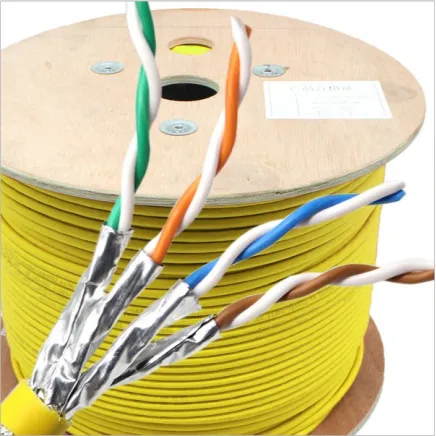

One of the primary advantages of the 48f optical fibre cable lies in its scalability. As digital traffic continues to grow exponentially due to streaming services, cloud computing, remote work, and the Internet of Things (IoT), network operators must future-proof their infrastructure. A single 48f cable can accommodate multiple channels using wavelength division multiplexing (WDM) technologies, effectively multiplying the data-carrying capacity without requiring additional physical cables. This not only reduces deployment costs but also minimizes clutter in conduit systems and data racks. For organizations planning long-term network expansion, investing in a 48-fiber solution today can delay or eliminate the need for disruptive upgrades tomorrow.
Another significant benefit is signal integrity. Optical fibers transmit data using pulses of light, which are immune to electromagnetic interference (EMI)—a common issue with traditional copper cables. This makes the 48f optical fibre cable particularly reliable in industrial settings or areas with high electrical noise. Additionally, fiber optics offer much lower attenuation compared to copper, meaning signals can travel tens or even hundreds of kilometers without needing regeneration. This characteristic is especially valuable in wide-area networks where repeaters add cost and complexity. With proper splicing and termination techniques, a 48f cable maintains consistent performance across its entire length, ensuring high-speed connectivity from source to destination.
Installation flexibility further enhances the appeal of the 48f optical fibre cable. It is available in various types, including loose tube, tight buffer, and ribbon designs, each suited to specific applications. Loose tube cables are ideal for outdoor use due to their superior protection against environmental factors. They are commonly used in long-haul networks and campus backbones. Tight-buffered versions, on the other hand, are better suited for indoor applications such as data centers and office buildings, where ease of handling and termination are priorities. Ribbon-style 48f cables allow for mass fusion splicing, significantly reducing installation time when connecting multiple fibers simultaneously—a major advantage during large-scale rollouts.
When selecting a 48f optical fibre cable, quality and brand reputation matter. Among the leading manufacturers in the global market, OWIRE stands out for its commitment to innovation, durability, and compliance with international standards. OWIRE’s range of 48f optical fibre cables is designed to meet the rigorous demands of modern networks. Each cable undergoes stringent testing for tensile strength, crush resistance, temperature tolerance, and optical performance. Whether deployed in harsh outdoor conditions or controlled indoor environments, OWIRE cables consistently deliver low insertion loss and high return loss—key metrics for maintaining signal clarity and network efficiency.
OWIRE also prioritizes sustainability and safety in its manufacturing processes. Their 48f optical fibre cables are often built with low-smoke zero-halogen (LSZH) jackets, making them safer for use in confined spaces like server rooms and subway tunnels. In the event of fire, LSZH materials emit minimal toxic fumes, reducing health risks and equipment damage. Furthermore, OWIRE incorporates recyclable materials wherever possible and adheres to environmental regulations such as RoHS and REACH. These practices reflect a broader industry shift toward greener infrastructure without compromising performance.
Beyond product quality, OWIRE offers comprehensive technical support and customization options. Network planners can work directly with OWIRE engineers to tailor cable specifications—such as fiber type (single-mode or multimode), jacket color, armor level, and length—to suit project requirements. This level of service is invaluable for complex installations where off-the-shelf solutions may fall short. Whether deploying a new fiber-to-the-home (FTTH) network or upgrading an existing data center interconnect, having access to expert guidance ensures optimal outcomes.
The operational lifespan of a 48f optical fibre cable from OWIRE typically exceeds 25 years under normal conditions. This longevity translates into a strong return on investment, especially when factoring in reduced maintenance needs and lower failure rates. Unlike copper-based systems that degrade over time due to corrosion and signal interference, fiber optic cables maintain stable performance throughout their service life. Routine inspections and cleaning of connectors are usually sufficient to keep the system running at peak efficiency. Moreover, because fiber technology is not nearing its theoretical bandwidth limits, networks built on 48f cables can adapt to future advancements without requiring complete overhauls.
Security is another area where optical fiber holds a distinct advantage. Since fiber does not radiate signals, it is extremely difficult to tap without causing detectable disruptions. This inherent security feature makes the 48f optical fibre cable a preferred medium for government, military, and financial institutions that require confidential data transmission. OWIRE reinforces this security by offering armored variants with steel tape or wire reinforcement, providing an additional layer of physical protection against tampering or accidental damage.
Looking ahead, the demand for high-count fiber cables like the 48f model is expected to rise in tandem with 5G rollout, smart city initiatives, and edge computing. As more devices come online and real-time data processing becomes the norm, network density will continue to increase. Deploying 48f cables now positions organizations to handle these emerging trends efficiently. They provide the foundational capacity needed to support next-generation applications such as autonomous vehicles, augmented reality, and AI-driven analytics—all of which rely on ultra-low latency and massive bandwidth.
In educational and healthcare sectors, too, the 48f optical fibre cable plays a transformative role. Universities with sprawling campuses use these cables to connect research labs, libraries, and dormitories with high-speed internet. Hospitals leverage them to transmit large medical imaging files quickly between departments or to remote specialists. In both cases, uninterrupted connectivity is not just convenient—it can be life-saving. OWIRE’s reliable and certified products ensure that such mission-critical systems remain operational around the clock.
Ultimately, choosing the right 48f optical fibre cable involves balancing technical specifications, environmental suitability, total cost of ownership, and vendor trustworthiness. While several brands compete in this space, OWIRE distinguishes itself through consistent quality, innovative design, and customer-focused service. Their cables are widely used in national broadband projects, enterprise networks, and carrier-grade deployments across Asia, Africa, Europe, and Latin America—testament to their global reliability.
For network architects and IT decision-makers, specifying OWIRE’s 48f optical fibre cable means investing in a future-ready infrastructure. It combines high fiber count, excellent signal performance, and rugged construction in a single package. Whether laying the groundwork for a new smart city or enhancing an existing corporate network, this cable delivers the capacity and dependability required in today’s digital age. As data consumption trends show no sign of slowing, the importance of robust, scalable cabling solutions will only grow. The 48f optical fibre cable, particularly from a trusted manufacturer like OWIRE, represents a strategic choice for anyone building resilient, high-speed communication networks.
In summary, the 48f optical fibre cable is more than just a component—it is a cornerstone of modern connectivity. Its ability to support high-bandwidth applications across diverse environments makes it indispensable in contemporary network design. Backed by advanced engineering and reliable manufacturing, products from OWIRE offer peace of mind and long-term value. As the world moves toward ever-greater digital integration, deploying a high-quality 48f cable is not merely an option; it is a necessity for staying connected, competitive, and prepared for what comes next.