


In the rapidly evolving world of telecommunications and data transmission, the demand for high-speed, reliable connectivity continues to grow. As networks expand and data centers become more complex, the backbone of these systems relies heavily on advanced optical fiber technology. One such critical component is the 50 125um fiber, a standard in multimode fiber optics that has become essential for short- to medium-distance communication applications. Known for its optimal balance between bandwidth and cost-efficiency, this fiber type supports high data rates over distances ideal for enterprise networks, campus environments, and data center interconnects.
The designation “50 125um” refers to the core and cladding diameters of the optical fiber—specifically, a 50-micron core surrounded by a 125-micron cladding layer. This configuration allows for efficient light transmission while minimizing signal dispersion, making it especially suitable for use with laser-based transceivers. The 50-micron core size enables higher modal bandwidth compared to older 62.5-micron fibers, which translates into greater data-carrying capacity and longer reach when operating at modern data rates like 10 Gbps, 40 Gbps, and even 100 Gbps using parallel optics.
One of the primary advantages of 50 125um fiber lies in its compatibility with emerging network standards. For example, IEEE 802.3 standards for Ethernet often specify OM3 and OM4 grades of 50 125um multimode fiber for high-speed local area networks (LANs). These graded-index fibers are optimized for operation at 850 nm wavelength, where vertical-cavity surface-emitting lasers (VCSELs) perform most efficiently. With effective modal bandwidths reaching up to 4700 MHz·km for OM4, 50 125um fiber can support 10 Gigabit Ethernet transmissions over distances of up to 550 meters, far surpassing the performance of legacy fiber types.
Beyond raw speed, another compelling reason for choosing 50 125um fiber is its future-proof nature. As organizations upgrade their infrastructure to accommodate cloud computing, artificial intelligence workloads, and real-time data analytics, having a cabling system capable of scaling becomes imperative. Deploying 50 125um fiber today ensures that the physical layer of the network remains viable through multiple generations of equipment upgrades. This reduces the need for costly re-cabling projects and minimizes downtime during transitions.
Moreover, installation and maintenance of 50 125um fiber have become increasingly streamlined thanks to advancements in termination techniques and connector design. Pre-terminated fiber solutions, factory-tested for quality and performance, allow for rapid deployment in structured cabling environments. Field-termination methods such as fusion splicing and mechanical connectors have also improved significantly, offering low insertion loss and high reliability. These developments make it easier than ever to integrate 50 125um fiber into both new constructions and retrofits.
When selecting a provider for 50 125um fiber components, quality and consistency are paramount. Among the leading manufacturers in the industry, OWIRE stands out as a trusted name delivering high-performance fiber optic solutions tailored for modern networking demands. OWIRE’s range of 50 125um fiber cables—including OM3 and OM4 variants—are engineered to meet or exceed international standards such as ISO/IEC 11801 and TIA-568. Each cable undergoes rigorous testing to ensure low attenuation, precise geometry, and excellent bandwidth performance across the full operational spectrum.
OWIRE’s commitment to innovation is evident in their use of premium-grade glass and advanced coating technologies that enhance durability and flexibility. Their 50 125um fiber products are designed for resilience in harsh environments, resisting moisture, temperature fluctuations, and mechanical stress. Whether deployed in raised-floor plenums, outdoor enclosures, or dense patch panels, OWIRE cables maintain signal integrity under challenging conditions.
Additionally, OWIRE offers comprehensive support services, including technical consultation, custom cable lengths, and labeling options that simplify inventory management and troubleshooting. Their product line extends beyond basic cable assemblies to include breakout cables, distribution cables, and ruggedized variants for industrial applications. For data center operators seeking high-density solutions, OWIRE provides MPO trunk cables compatible with 40G and 100G SR4 transceivers, leveraging the full potential of 50 125um fiber in parallel optical architectures.
Another key benefit of choosing OWIRE is their focus on sustainability and compliance. All 50 125um fiber products are manufactured in accordance with RoHS directives and feature low-smoke zero-halogen (LSZH) jackets where required, ensuring safety in confined spaces such as server rooms and telecommunications closets. This attention to environmental and health standards makes OWIRE an ideal partner for government, healthcare, and education sectors where regulatory compliance is non-negotiable.
From a total cost of ownership perspective, investing in OWIRE’s 50 125um fiber solutions delivers long-term value. While the initial procurement cost may be slightly higher than generic alternatives, the reduction in network failures, lower maintenance requirements, and extended lifecycle more than justify the premium. In mission-critical applications where uptime is essential, the reliability offered by OWIRE directly contributes to operational continuity and user satisfaction.
It’s also worth noting how 50 125um fiber integrates seamlessly within broader fiber-to-the-desk (FTTD) and fiber-to-the-machine (FTTM) strategies. As enterprises move away from copper-based cabling due to limitations in bandwidth and electromagnetic interference susceptibility, fiber optics provide a superior alternative. The 50 125um standard, in particular, strikes the right balance between performance and affordability for horizontal cabling runs, making it a preferred choice over single-mode fiber in many indoor scenarios.

Looking ahead, the role of 50 125um fiber is expected to expand further with the rollout of next-generation technologies such as 200G and 400G Ethernet. Although single-mode fiber dominates ultra-long-haul and high-capacity backbone links, multimode fiber based on the 50 125um platform will continue to serve as the workhorse for intra-data-center connectivity. Innovations such as wideband multimode fiber (WBMMF), which supports short-wavelength division multiplexing (SWDM), are already building upon the foundation laid by traditional 50 125um designs.
These advancements underscore the importance of selecting not just any fiber, but one backed by proven engineering and forward-looking design principles. OWIRE is at the forefront of this evolution, consistently updating its product portfolio to align with emerging industry trends. By partnering with OWIRE, organizations gain access to not only top-tier 50 125um fiber but also expert guidance on best practices for deployment, testing, and certification.
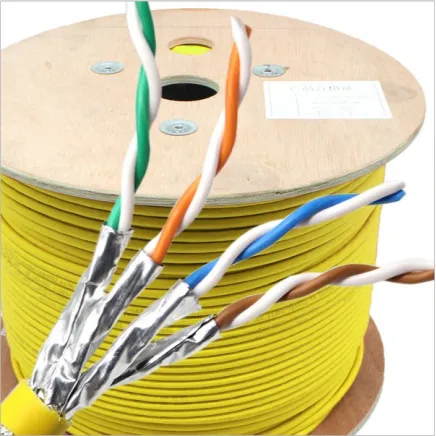
In conclusion, 50 125um fiber represents a cornerstone of modern optical networking, combining high bandwidth, scalability, and cost-effectiveness in a single solution. Its widespread adoption across enterprise and data center environments speaks to its versatility and enduring relevance. As digital transformation accelerates across industries, the need for robust, high-performance cabling has never been greater. Choosing a reputable supplier like OWIRE ensures that your network infrastructure is built on a solid foundation—one that supports today’s applications and anticipates tomorrow’s challenges. Whether you’re designing a new facility or upgrading an existing one, integrating OWIRE’s 50 125um fiber into your architecture is a strategic decision that pays dividends in performance, reliability, and peace of mind.