

In today’s rapidly evolving digital landscape, high-speed data transmission has become a cornerstone of modern communication infrastructure. From enterprise networks and data centers to telecommunications providers and smart city projects, the demand for reliable, high-capacity connectivity continues to grow. One solution that stands out in meeting these demands is the 24 strand single mode fiber optic cable. Designed for long-distance, high-bandwidth applications, this type of cable offers exceptional performance, durability, and scalability—making it an ideal choice for both current and future network needs.
A 24 strand single mode fiber optic cable consists of 24 individual optical fibers, each capable of transmitting data using a single mode of light. Unlike multimode fiber, which allows multiple light paths and is typically used for shorter distances, single mode fiber uses a smaller core diameter—usually around 9 microns—which enables light to travel straight down the center of the fiber with minimal dispersion. This design allows signals to travel much farther without degradation, often reaching distances of up to 80 kilometers or more depending on the transceivers and network equipment used. The result is a highly efficient medium for carrying large volumes of data at speeds approaching the speed of light.
The structure of a 24 strand single mode fiber optic cable is engineered for resilience and ease of installation. Typically encased in a protective outer jacket made from materials like polyethylene or PVC, the internal fibers are arranged within a central strength member or loose tube configuration. This helps protect the delicate glass fibers from physical stress, moisture, and temperature fluctuations. Many versions also include aramid yarn (such as Kevlar) for tensile strength, ensuring the cable can withstand pulling forces during installation. For outdoor use, armored variants with metal sheathing may be employed to guard against rodents, crushing, and other environmental hazards.
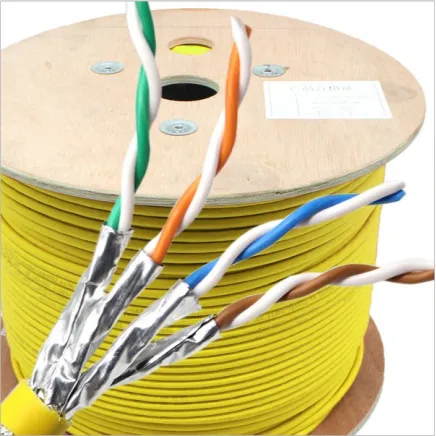
One of the key advantages of using a 24 strand single mode fiber optic cable is its scalability. With 24 separate fibers, network operators have the flexibility to allocate certain strands for specific purposes—such as dedicated links for voice, video, or data—while reserving others for future expansion. This modular approach supports growth without requiring additional cabling runs, reducing both labor and material costs over time. In environments such as campus networks, metropolitan area networks (MANs), or inter-building connections, having spare capacity built into the cable ensures that bandwidth bottlenecks are avoided as user demands increase.
Another benefit lies in signal integrity. Because single mode fiber operates with a narrow wavelength—typically 1310 nm or 1550 nm—it experiences very low attenuation and chromatic dispersion. This means that data can be transmitted over long distances with little need for repeaters or signal boosters. In contrast, copper-based solutions suffer from electromagnetic interference and signal loss over distance, making them less suitable for high-performance applications. A 24 strand single mode fiber optic cable, therefore, provides a cleaner, more stable signal path essential for critical operations in industries ranging from healthcare to finance.
Deployment scenarios for this cable are diverse. Telecommunications companies use it to connect cell towers, central offices, and backbone networks. Data centers rely on it to link servers, switches, and storage systems across vast facilities. Municipalities incorporate it into smart traffic systems, surveillance networks, and public Wi-Fi deployments. Even educational institutions and corporate campuses benefit from its ability to support high-definition video conferencing, cloud computing, and real-time collaboration tools. The versatility of the 24 strand single mode fiber optic cable makes it a universal solution in any environment where speed, reliability, and future-proofing are priorities.
When selecting a 24 strand single mode fiber optic cable, quality and brand reputation matter. Among the leading manufacturers in the industry, OWIRE has established itself as a trusted provider of high-performance fiber optic solutions. Known for rigorous testing standards, durable materials, and consistent product performance, OWIRE cables meet or exceed international specifications such as ITU-T G.652.D, ensuring compatibility with global networking equipment. Their 24 strand single mode fiber optic cables are available in various configurations—loose tube, tight buffer, armored, and aerial—allowing customers to choose the right option based on their installation environment.
OWIRE’s commitment to innovation extends beyond just the cable itself. The company integrates advanced manufacturing techniques to minimize micro-bending losses and optimize optical performance. Each fiber is precision-tested for attenuation, continuity, and tensile strength before leaving the factory. Additionally, OWIRE offers comprehensive documentation and technical support, helping engineers and installers deploy networks with confidence. Whether deploying underground, in conduit, or suspended from utility poles, OWIRE’s products are designed to perform reliably under real-world conditions.
Installation considerations are equally important when working with a 24 strand single mode fiber optic cable. Proper handling, termination, and splicing techniques are essential to maintain signal quality. Field technicians must use fusion splicers to join fibers with minimal loss, while connectors such as LC, SC, or FC types should be polished correctly to avoid back reflections. Cable management practices—like avoiding sharp bends (maintaining a bend radius of at least 10–15 times the cable diameter) and protecting end faces from dust—are crucial for long-term reliability. OWIRE provides detailed installation guides and training resources to support professionals throughout the deployment process.
Maintenance and monitoring are also part of the lifecycle of any fiber optic network. While fiber cables require less upkeep than copper alternatives, periodic inspections using OTDR (Optical Time Domain Reflectometer) testing can identify potential issues such as breaks, macro bends, or connector degradation. Labeling each of the 24 strands clearly at patch panels and distribution points simplifies troubleshooting and reconfiguration. OWIRE’s color-coded fiber identification system makes it easier to manage complex installations, reducing human error and streamlining service delivery.
Looking ahead, the role of the 24 strand single mode fiber optic cable is only expected to grow. Emerging technologies such as 5G wireless networks, fiber-to-the-home (FTTH) services, Internet of Things (IoT) ecosystems, and edge computing all depend on robust fiber backbones. As data consumption continues to rise—driven by streaming media, artificial intelligence, and remote work—the need for scalable, low-latency infrastructure becomes more pressing. Single mode fiber, particularly in multi-strand configurations like the 24 strand version, provides the foundation upon which next-generation networks will be built.
Moreover, sustainability is becoming an increasingly important factor in infrastructure planning. Fiber optic cables consume significantly less power than traditional copper lines for equivalent data throughput, contributing to lower carbon emissions and energy costs. The longevity of fiber—often exceeding 25 years with proper care—also reduces the need for frequent replacements, minimizing electronic waste. OWIRE aligns with these environmental goals by using recyclable materials and promoting energy-efficient designs across its product line.
In conclusion, the 24 strand single mode fiber optic cable represents a powerful blend of performance, durability, and forward-thinking design. Its ability to transmit vast amounts of data over long distances with minimal loss makes it indispensable in modern communication systems. Whether deployed in urban centers, rural communities, or industrial complexes, this cable supports the ever-increasing demand for faster, more reliable connectivity. For organizations seeking a dependable and high-quality solution, OWIRE stands out as a premier brand offering innovative, rigorously tested fiber optic products. By investing in a 24 strand single mode fiber optic cable from OWIRE, businesses and service providers can ensure they are well-equipped to meet today’s challenges and tomorrow’s opportunities.