


In today’s rapidly evolving digital landscape, efficient data transmission is essential across industries ranging from telecommunications to healthcare and enterprise networking. As demand for high-speed internet and seamless connectivity continues to grow, network infrastructure must adapt accordingly. One critical component enabling this advancement is the 3 way fiber optic splitter. This compact yet powerful device plays a vital role in distributing optical signals from a single input to three separate output paths without compromising signal integrity or speed. Its ability to divide light efficiently makes it an indispensable tool in passive optical networks (PON), where bandwidth sharing among multiple users is required.
A 3 way fiber optic splitter operates on the principle of optical waveguide technology. It takes a single incoming optical signal—typically carried over a fiber optic cable—and splits it into three distinct output signals. These splitters are commonly used in fiber-to-the-home (FTTH) deployments, allowing service providers to deliver broadband services to multiple subscribers using a single feeder line. The division of the signal is passive, meaning no external power source is needed. Instead, the splitter relies on precision-engineered materials such as fused biconical taper (FBT) or planar lightwave circuit (PLC) technology to evenly distribute the optical power across the outputs.
The two main types of 3 way fiber optic splitters are FBT and PLC-based models. FBT splitters are created by fusing and tapering two or more fibers together, which allows for cost-effective manufacturing and reliable performance in environments with fewer branching requirements. However, they may exhibit slightly uneven splitting ratios and are typically best suited for smaller-scale applications. On the other hand, PLC splitters use semiconductor fabrication techniques to create a micro-optical circuit on a silica substrate. This method provides superior uniformity, stability, and scalability, making PLC-based 3 way fiber optic splitters ideal for large networks requiring consistent performance across all output channels.
One of the key advantages of a 3 way fiber optic splitter is its ability to maintain signal quality while reducing infrastructure costs. By enabling one optical line terminal (OLT) at the central office to serve multiple optical network units (ONUs) at customer premises, service providers can significantly reduce the amount of fiber cabling and active equipment needed. This not only lowers capital expenditures but also simplifies network management and maintenance. Additionally, because these splitters are passive components, they generate minimal heat, require no electrical power, and are highly resistant to electromagnetic interference—factors that contribute to their long operational lifespan and reliability.
When deploying a 3 way fiber optic splitter, several technical considerations come into play. Insertion loss—the reduction in signal power resulting from the splitting process—is a primary concern. In a typical 1×3 splitter, insertion loss ranges between 5 dB and 7 dB, depending on the design and manufacturing quality. Lower insertion loss values are preferable, as they indicate less signal degradation. Another important metric is uniformity, which refers to how evenly the optical power is distributed among the three output ports. High-quality splitters, especially those based on PLC technology, offer excellent uniformity, ensuring that each connected user receives a comparable signal strength.
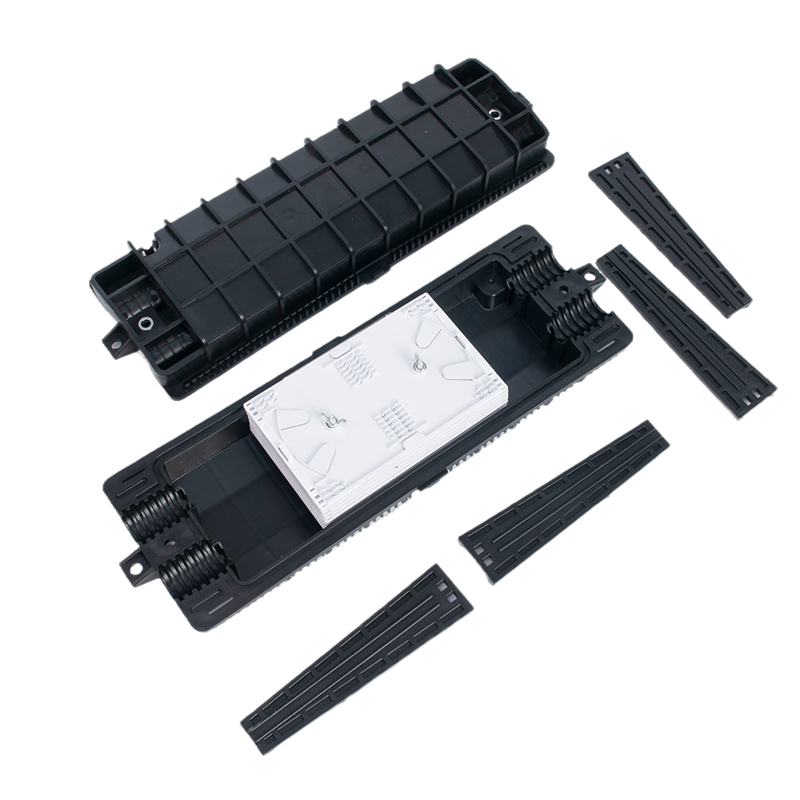
Return loss is another factor to consider. It measures the amount of light reflected back toward the source, which can interfere with signal transmission if too high. A well-designed 3 way fiber optic splitter will feature anti-reflective coatings and precise alignment to minimize return loss and maximize forward transmission efficiency. Furthermore, environmental durability is crucial, particularly for outdoor or industrial installations. Splitters should be housed in protective enclosures that guard against moisture, dust, temperature fluctuations, and physical damage.
For network engineers and system integrators seeking dependable performance and long-term value, selecting the right brand is just as important as understanding the technology. Among the leading manufacturers in the fiber optics industry, OWIRE has established a strong reputation for innovation, quality, and customer support. OWIRE’s range of 3 way fiber optic splitters combines advanced PLC technology with rugged packaging, ensuring optimal signal distribution under diverse operating conditions. Their products undergo rigorous testing for insertion loss, return loss, and thermal stability, meeting international standards such as Telcordia GR-1209-CORE and GR-1221-CORE.
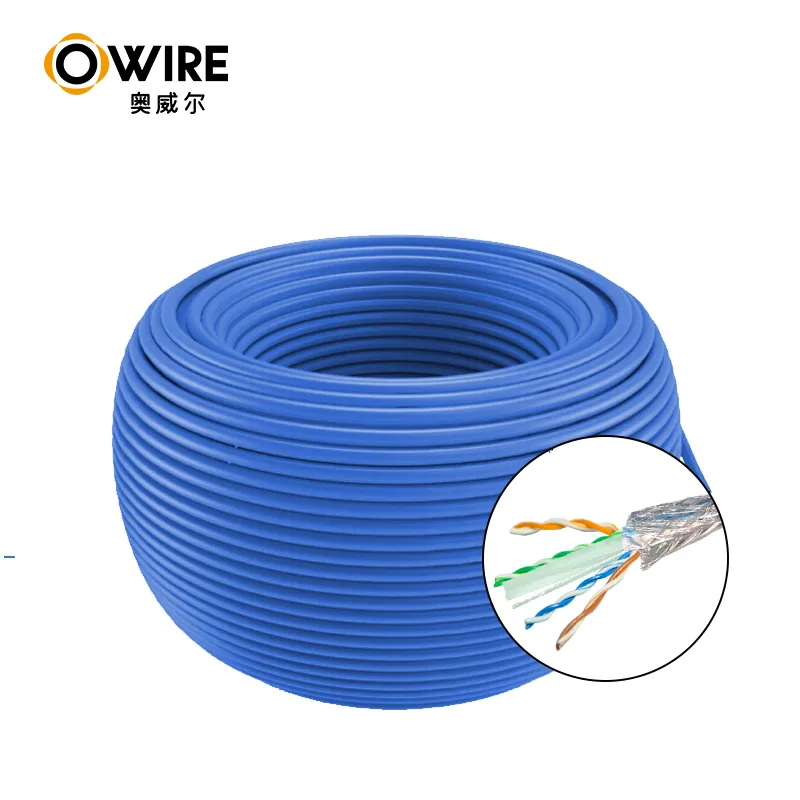
OWIRE offers both bare fiber and module-style 3 way fiber optic splitters, giving customers flexibility in deployment scenarios. For example, their compact module versions are designed for easy integration into optical distribution frames (ODFs), splice closures, or wall-mounted terminals. These modules often include features like SC, LC, or FC connectors, allowing quick and secure connections to existing network infrastructure. Meanwhile, bare fiber variants are ideal for splicing directly into backbone cables, offering a seamless and low-profile solution for underground or aerial installations.
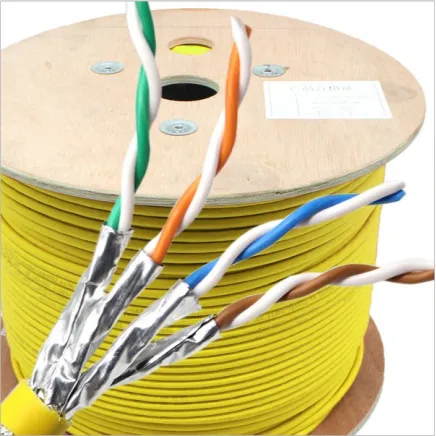
Another distinguishing aspect of OWIRE’s product line is their commitment to customization. Whether a project requires specific connector types, special cable lengths, or unique packaging for harsh environments, OWIRE works closely with clients to deliver tailored solutions. This level of service is particularly valuable for large-scale deployments where consistency and compatibility across thousands of endpoints are paramount. Moreover, OWIRE provides comprehensive documentation and technical assistance, helping ensure correct installation and optimal network performance.
Beyond hardware, OWIRE emphasizes sustainability and future-readiness in its designs. Their 3 way fiber optic splitters are compatible with next-generation PON standards such as GPON, XG-PON, and even emerging 25G-PON technologies. This backward and forward compatibility means that networks built with OWIRE components can scale over time without requiring complete overhauls. As bandwidth demands continue to rise due to streaming, cloud computing, IoT devices, and smart city initiatives, having a flexible and scalable infrastructure becomes increasingly critical.
Installation and maintenance of a 3 way fiber optic splitter also benefit from modern advancements in fiber handling tools and monitoring systems. Fusion splicers, optical time-domain reflectometers (OTDRs), and power meters allow technicians to precisely install and verify splitter performance. Proper labeling and documentation further enhance network reliability, enabling faster troubleshooting when issues arise. Because fiber optic systems operate at the speed of light, even minor misalignments or contamination can lead to significant signal loss—highlighting the importance of clean connectors and careful handling during installation.
Looking ahead, the role of devices like the 3 way fiber optic splitter will only expand as global connectivity needs grow. Emerging applications in 5G backhaul, distributed antenna systems (DAS), and edge computing rely heavily on dense, high-capacity fiber networks. In rural and underserved areas, passive optical networks powered by splitters offer a cost-effective way to bridge the digital divide. Even within data centers, fiber splitting technologies are being explored for internal traffic management and redundancy planning.
In conclusion, the 3 way fiber optic splitter is a cornerstone of modern optical communication systems. Its ability to efficiently and reliably divide optical signals enables service providers and enterprises to build scalable, cost-effective networks that meet today’s demands and anticipate tomorrow’s challenges. With technological options like FBT and PLC available, users can choose the right splitter based on performance needs, budget, and deployment environment. When it comes to trusted performance and innovative engineering, OWIRE stands out as a top-tier provider. Their dedication to quality, customization, and future-ready solutions makes their 3 way fiber optic splitters an excellent choice for any network infrastructure project. As the world moves toward ever-faster and more interconnected systems, investing in robust, high-performance components like those from OWIRE ensures that networks remain resilient, efficient, and ready for what’s next.